After 55: podiatrists explain why going barefoot at home might be hurting your knees
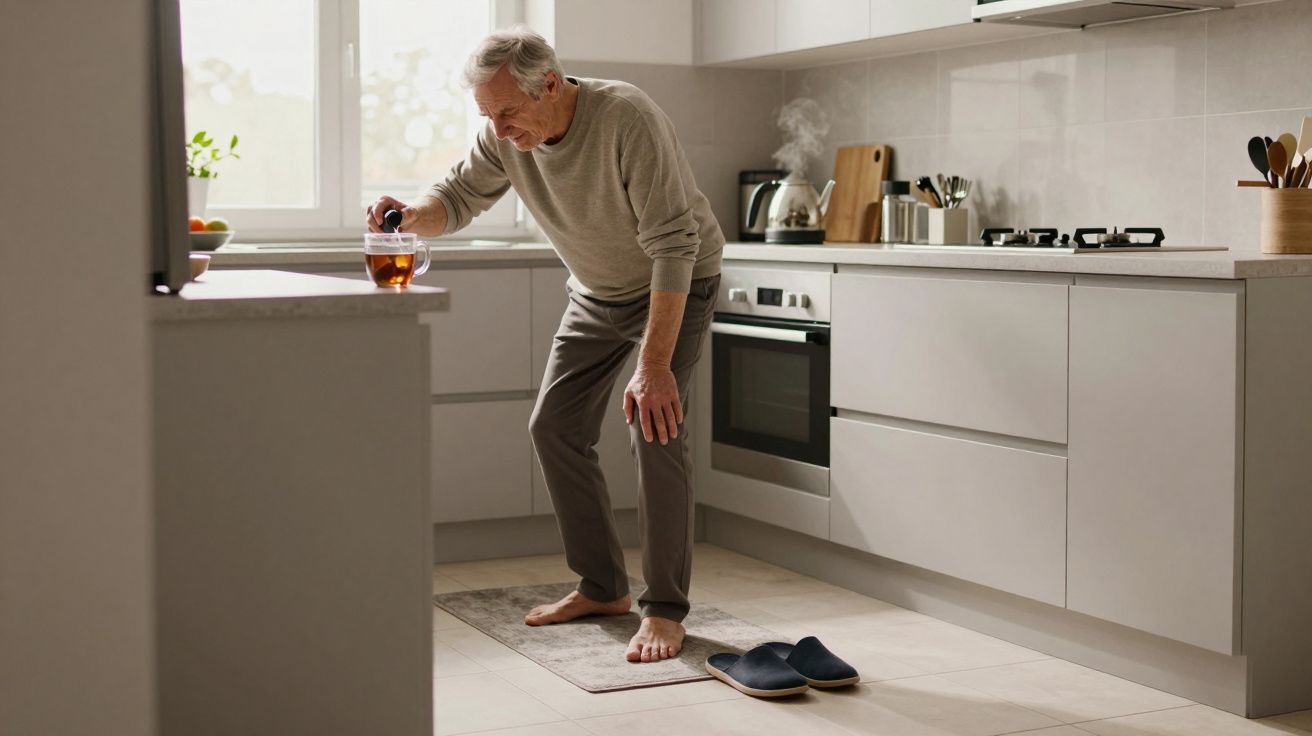
The hallway tiles are cool under Peter’s feet as he shuffles to put the kettle on. Slippers are somewhere by the front door, or perhaps under a chair; he can’t quite remember. At 68, retired and mostly at home, he likes the feeling of walking barefoot, the way it reminds him of summers in the garden with the hose on. Freedom, he calls it.
By the time the tea has brewed, his knees are humming with that familiar, dull ache. He blames the weather, or the years, or that old football injury. What he doesn’t connect – not really – is the silent role of the hard floor beneath his bare heels, hour after hour, day after day.
“But I’m only in the house – how bad can it be?”
For many of us, home is where we relax our guard. We take off the shoes, unbuckle the day, and pad around in socks or bare feet because it feels gentler. That makes it hard to believe that those quiet steps to the fridge or the bathroom could be feeding into noisy knees and hips.
Podiatrists see a different picture. They see a steady stream of people in their late 50s, 60s and 70s with sore knees, stiff backs and aching heels. The common theme isn’t marathons or hill walks. It’s hours on hard floors with no shock absorption, on feet that have lost some of their natural spring.
Ageing changes the scaffolding under us. The fat pads beneath our heels thin, arches can flatten, and the muscles that steady each step may not fire as crisply as they once did. When you add laminate or concrete floors and no cushioning, the extra load has to go somewhere. Often, it travels up to the knees.
The surprise for many is that “just pottering about” can add up fast. Those short, frequent trips from kitchen to lounge, bedroom to bathroom, washing line to back door quietly clock thousands of steps a day. If each of those is a tiny jolt with no support, joints notice before we do.
How feet and knees share the strain
Think of your foot as the first shock absorber your body ever had. With every step, it should spread, flex and roll just enough to soften impact before the force reaches your knees and hips. When the system is working well, you hardly feel the choreography. When it’s tired or compromised, the knees start picking up the tab.
There are a few common patterns podiatrists point out:
Flattening arches
As arches drop with age or weight gain, the foot rolls inwards more. That slight twist can pull the lower leg in too, nudging the knee out of its ideal alignment. Over time, cartilage and ligaments can grumble.Stiff ankles
Old sprains, arthritis or simply years of underuse can limit ankle movement. If the ankle can’t bend enough, the body cheats. It turns the foot out or locks the knee straighter, which can shift stress to one side of the joint.Thinner heel pads
The natural cushioning under the heel bones becomes less plump with age. On tiles or wooden floors, that means more of the impact wave travels directly upwards with each heel strike.
Barefoot on grass or sand, those forces spread out. Barefoot on kitchen tiles, they don’t. The knee, a hinge joint never designed to be the hero of every step, absorbs the mismatch. It’s no wonder so many people over 55 describe a deep, tired ache at the end of the day, even when they “haven’t done much”.
Why “I’ve always gone barefoot” is different after 55
There’s a quiet, understandable protest that podiatrists hear almost every week: “I’ve always gone barefoot at home and I was fine.” And for years, that may have been true. Bodies are wonderfully forgiving – until they aren’t.
From your mid‑50s onwards, several shifts often happen at once:
- Muscle mass declines (unless you actively work against it).
- Balance reactions slow slightly.
- Joints may already carry a few decades of micro‑wear.
- Weight might creep up, even by a few kilos.
Each change on its own is modest. Together, they narrow the margin for error. What your 30‑year‑old knees shrugged off without comment, your 65‑year‑old knees register as “too much”, especially when repeated day after day.
There is also the matter of time. Being retired or working less means more hours at home, which often means more time on your feet in a small area. You’re not necessarily walking farther; you’re walking differently – with more turns, more standing, more short bursts on unforgiving surfaces.
None of this makes going barefoot “bad” in a moral sense. It simply means the cost of each barefoot hour is higher when your natural padding and alignment are less forgiving.
The floors under your feet: not all surfaces are equal
If you close your eyes and picture “barefoot”, your mind might still wander to warm sand or a soft garden lawn. Modern houses rarely give us that. Instead, we have a patchwork of surfaces that each talk to our joints in their own language.
Ceramic tiles and stone are attractive, easy to clean… and utterly unyielding. Every step on them sends a crisp impact wave up the leg. In winter, the cold can also tighten muscles and tendons, making them less supple.
Laminate and vinyl offer a tiny bit more give, but not much. They can encourage shuffling steps in socks, which changes gait and increases fall risk.
Old, thin carpets lose much of their cushioning over time. They may feel soft to the hand but still allow jolts through the heel.
A common pattern in clinic notes looks like this: knee or hip pain that flares when someone moves to a new build with hard floors throughout, or after ripping out the last wall‑to‑wall carpet. The shoes did not change. The body did not change overnight. The floors did.
Small changes that protect your knees (without living in trainers)
The good news is that protecting your knees indoors does not mean stomping around the house in hiking boots. Podiatrists tend to suggest modest, realistic shifts rather than overnight revolutions.
Consider these tweaks:
Upgrade your “house shoes”
Swap floppy slippers or bare feet for a light, secure shoe with:- A firm heel cup.
- A cushioned sole.
- A strap or laces so it stays put.
Think supportive trainer or well‑fitted slipper with structure, not loose mules.
Add simple cushioning where you stand most
A small anti‑fatigue mat in front of the kitchen counter or sink can make a noticeable difference. So can a thicker rug by the bed or in the TV corner where you often stand up and down.Rotate your barefoot time
If you love the feeling of bare feet, keep it for short, deliberate bursts on the safest, softest surface you have – perhaps the bedroom carpet – and wear support for the rest.Check your walking “posture” indoors
Avoid persistent shuffling in socks or slippers that slide. Short, careful steps with the whole foot contacting the floor – not just the toes or the heel – spread force more evenly.
The aim is not to sterilise your home or march around like you’re on a treadmill. It’s to give your knees allies, so they’re not absorbing every careless jolt alone.
When knee pain might actually start in your feet
One of the quiet frustrations for people in their 60s and 70s is going from appointment to appointment with a sore knee and coming away with painkillers but no real explanation. X‑rays might show “a bit of wear and tear”, which is common, but not always the whole story.
Podiatrists often start where others don’t: at the floor and the foot. In clinic, they might:
- Watch you walk barefoot and in shoes along a short corridor.
- Gently test how much your ankles, toes and hips move.
- Look at the shape and flexibility of your arches.
- Ask detailed questions about your flooring at home and how often you’re on your feet there.
Sometimes, the picture is clear. A collapsing arch on one side, a stiff ankle on the other, or a pronounced twist in the way the foot hits the ground can all drive an uneven load through the knee. In these cases, small supports – insoles, exercises, or different house footwear – can reduce strain at the knee even before any injections or surgery are discussed.
It can be oddly relieving to discover that the knee is not “failing” in isolation. It is reacting to instructions from the ground up. Change the instructions, and over time, the reaction can soften.
Practical steps you can try this week
Rather than overhauling your entire routine, podiatrists often suggest one or two manageable experiments. The aim is to listen to your body with a bit more structure.
You might:
Do a three‑day “floor and footwear diary”
Note what you wear on your feet at home, how long you’re on each type of floor, and when your knees feel best or worst. Patterns often appear.Designate one pair of supportive shoes as “indoors only”
Keep them by the kitchen or in the hallway and put them on whenever you know you’ll be pottering for more than a few minutes.Build a 5‑minute daily foot routine
Simple calf stretches, gentle heel raises at the counter, and rolling your arch over a soft ball can wake up the muscles that stabilise the knee.Test a change in one room first
Add a mat or rug in the place you stand most and see over a fortnight whether your evening knee ache eases by even a small amount.
None of this replaces medical care. But it can turn you from a passive passenger in your own discomfort into an active observer, which makes conversations with professionals more precise and useful.
What this means for ageing well on your own two feet
Knee pain after 55 is often spoken about as if it were an automatic sentence. “Wear and tear”, people say, with a shrug that hides the frustration of stairs taken one at a time and evenings spent choosing chairs by how easy they are to get out of.
Yet the story is rarely only about age. It is also about habits, surfaces, small daily choices and the quiet ways we stop supporting ourselves without realising. Going barefoot at home feels harmless, even wholesome. In some seasons of life, it can be. In others, especially with harder floors and more time indoors, it becomes one more straw on a joint that is already doing its best.
You do not have to stop loving the feeling of bare feet to start being kinder to your knees. You only have to widen the frame: include the floor, the shoe, the arch, the ankle. Ageing well is less about grand gestures and more about a hundred subtle adjustments that help your body keep doing the ordinary things – boiling the kettle, answering the door, standing at the sink – without a constant low‑grade protest.
A simple rule of thumb many podiatrists quietly offer is this: if your knees always feel better in decent shoes outdoors than they do barefoot indoors, your home might be asking too much of them.
| Key point | Detail | Why it matters after 55 |
|---|---|---|
| Feet and knees are a team | Flattened arches, stiff ankles and thin heel pads shift load upwards | Helps explain why “mysterious” knee pain often has a foot‑floor cause |
| Hard floors amplify impact | Tiles, stone and worn carpets give joints little to work with | Shows why more time at home can worsen aches even with fewer big outings |
| Small supports, big gains | Structured house shoes, mats and simple exercises soften strain | Offers practical ways to feel better without drastic lifestyle changes |
FAQ:
- Is going barefoot always bad for my knees after 55? Not necessarily. Short periods on soft, safe surfaces can be fine. The issue is prolonged barefoot time on hard floors when your feet and joints have less natural cushioning and strength.
- Do I need expensive orthotics just to walk around the house? Often no. Many people feel a real difference from well‑fitted, supportive house shoes and basic insoles. A podiatrist can advise if you’d benefit from something more custom.
- My knees hurt even in good shoes – is it too late for changes to help? It’s rarely “too late”. Footwear tweaks, simple strength and flexibility work, and better floor choices can still reduce pain, even if joint wear is already present.
- Can walking barefoot help strengthen my feet instead? In some people and on the right surfaces, yes. But after 55, especially with arthritis, diabetes or balance issues, unstructured barefoot time on hard floors can do more harm than good.
- When should I see a professional about knee pain? If pain lasts more than a few weeks, wakes you at night, causes your knee to give way, or stops you doing everyday tasks, speak to your GP or a podiatrist or physiotherapist for a proper assessment.


Comments (0)
No comments yet. Be the first to comment!
Leave a Comment