After 65: why geriatricians now recommend “snack exercise” instead of gym sessions
You sit down “for a minute” after lunch, and suddenly it is 4 p.m. The crossword is half-done, the washing is still in the machine, and your legs feel heavier than they did this morning. Your GP has mentioned “doing 150 minutes a week”, but the thought of a gym session, fluorescent lights and thumping music feels like a dare, not a prescription.
Geriatricians are quietly changing the script. Instead of telling people in their sixties, seventies and beyond to join a gym, more of them are prescribing something smaller and sneakier: “snack exercise”. Tiny bouts of movement, slipped into the day like a biscuit with tea, are beginning to replace the fantasy of the perfect workout.
You do not need Lycra, a membership card or a spin class. You need pockets of two, three, five minutes - and a reminder that your muscles care more about what you do often than what you do heroically once a fortnight.
Why long workouts fail after 65 - and snack exercise works
For decades, public health advice has focused on weekly totals: 150 minutes of moderate activity, plus strength work twice a week. On paper, it is tidy. In real life, especially after retirement, it collides with arthritis, caring duties, fear of falling and a body that no longer forgives over-ambitious Mondays. Many people do exactly what you might be doing: nothing at all, because “proper exercise” feels out of reach.
Geriatricians see the consequences in clinic. Eighty-year-olds who used to walk miles now struggle to stand from a chair without using their hands. Blood pressure climbs. Sleep frays. The bitter twist is that much of this decline is not inevitable ageing; it is deconditioning. Muscles and balance fade through disuse, not birthdays.
Snack exercise works with, not against, this reality. Very small, very frequent bursts of movement are enough to wake up muscle fibres, re-train balance and nudge blood sugar and blood pressure in the right direction. Two minutes of brisk walking, done ten times a day, can deliver similar cardiovascular benefits to a single 20-minute session. A handful of “stand up, sit down” repetitions from your armchair, scattered through the day, can preserve the leg strength that keeps you out of hospital.
Under the microscope, the logic is simple. Each movement “snack” squeezes and releases your muscles, acting like a pump for blood and lymph. That improves circulation, keeps joints lubricated and reminds your nervous system how to co-ordinate arms, legs and trunk. You are not training for a marathon; you are rehearsing the everyday actions that let you keep living on your own terms.
What doctors now mean by a “movement snack”
When a geriatrician talks about snack exercise, they are not being cute. They are borrowing from nutrition: small servings, repeated often, tailored to appetite. The ideal movement snack is short enough that you are willing to start it, and gentle enough that you are happy to repeat it later.
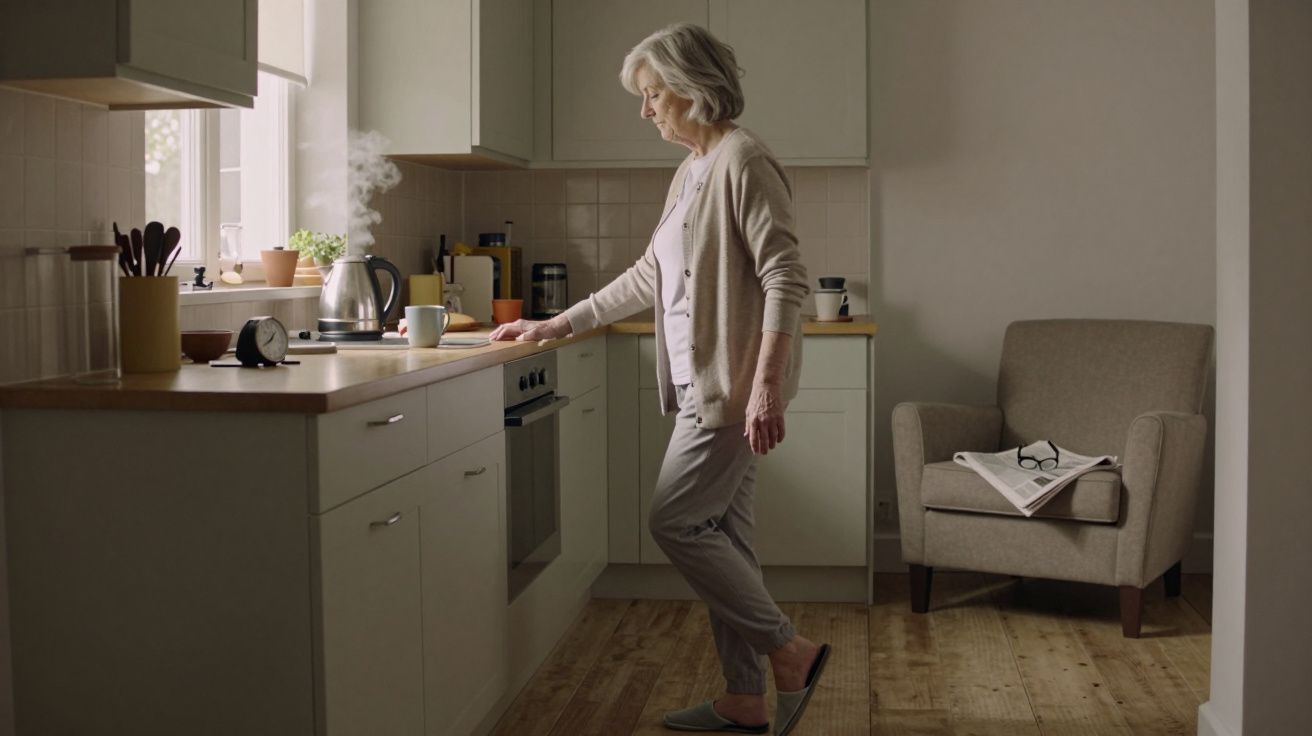
In practice, that looks like this. Every time the kettle boils, you do ten slow heel raises, holding the counter for balance. Each ad break in the evening is a prompt to stand up and sit down from your chair five times. Waiting for the microwave? March on the spot until it beeps, lifting your knees as high as feels safe. None of this requires changing clothes or leaving the house.
Clinicians are also shifting their targets. Rather than asking “are you getting 30 minutes a day?”, they ask “how many hours are you sitting?”. The new aim is to break up long sitting spells. Two minutes of movement every half hour - a lap of the hallway, a trip up and down the stairs, hanging the washing one item at a time - is enough to lower post-meal blood sugar spikes and ease stiff backs.
“We used to talk about exercise like homework,” says a geriatrician in Manchester. “Now we talk about movement snacks - small, pleasant things you can repeat. The body responds to nudges, not lectures.”
- Choose moves that fit what you already do (kettle, telly, phone calls).
- Keep each snack under five minutes so it never feels like a “session”.
- Use furniture and walls for support; feeling safe is non-negotiable.
- Aim to move a different joint each time - ankles now, shoulders later.
- Count reps out loud; it keeps your breathing steady and your brain engaged.
How to build a snack-exercise day without thinking about it
The easiest way to start is to chain movement to habits you already have. You do not need willpower at 3 p.m. if your body learns that “cup of tea equals three stretches” and “news headlines equals hallway walk”. The cue does the work.
In the morning, before you check your phone, stand by the bed and gently march on the spot for 60 seconds. After breakfast, hold the kitchen counter and perform ten slow mini-squats, as if you are about to sit on an invisible stool. Each loo visit becomes a prompt to do five wall push-ups on the way back to your chair. By lunchtime, you have already collected several minutes of strength, balance and co-ordination training without leaving your home.
We have all had that moment when the stairs look steeper than they did last year. Use that as information, not a verdict. If climbing them once leaves you puffed, turn that into a snack: one flight now, one flight later, one more before bed. Over days and weeks, the staircase becomes a training partner, not an enemy.
Common stumbles are entirely human. People try to start with too many snacks and burn out by Thursday. Others wait for motivation or for the “right” shoes. Let’s be honest: nobody does that every day. Start with two snacks you can tie to something you never miss - your morning cuppa, the evening news - and let success do the persuading.
Simple snack ideas you can steal today
- While brushing your teeth, shift your weight from one foot to the other, holding the sink for support.
- During a phone call, walk laps of the room instead of sitting.
- At the sink, alternate between standing on your toes and your heels ten times.
- Before you get into bed, gently roll your shoulders backwards ten times to ease upper back tension.
- After opening the front door for post, hold the frame and practise one or two single-leg stands, even if only for a couple of seconds.
Why geriatricians like snacks better than gyms
Clinically, snack exercise solves three problems at once: fear, fatigue and follow-through. Many older adults are afraid of falling in a busy gym, or of aggravating a heart or joint condition. Moving at home, in familiar surroundings, with solid furniture to hold, lowers that barrier. Short spells also respect the reality of limited energy; it is far easier to find three minutes than thirty when pain, breathlessness or caring duties are in the mix.
Follow-through is where snacks shine. A fancy programme that lasts a week is less effective than a scruffy routine you keep for a year. Studies on “incidental activity” - the steps, lifts and pushes you do without thinking - show that it is strongly linked to lower mortality and better function in older adults. In other words, the housework you slightly resent is quietly acting like a health intervention, especially if you do it briskly.
From a geriatrician’s point of view, the win is not a six-pack. It is something quieter: walking to the shops without stopping, getting out of a low sofa without help, catching yourself when you trip on a rug. Every snack that loads your legs, hips and ankles is a tiny rehearsal for not falling. Every arm press from the armrest is a rehearsal for pushing yourself up from the bath.
There is also a cognitive bonus. Coordinated movements - stepping sideways, reaching, turning - light up brain circuits that handle attention and planning. Movement snacks that mix balance and thought, like counting backwards while you heel-toe along the worktop, work the body and the brain together. You are not just keeping your muscles; you are refreshing your map of where they are in space.
A five-minute starter plan your GP would approve
You do not need permission to begin, but a simple structure helps. Think in three pillars: strength, balance and puff (what doctors call “aerobic” work). Then sprinkle them through your day.
Morning:
- After getting dressed, do 8–10 sit-to-stands from a sturdy chair, using your hands if needed.
- At the sink, hold the edge and perform 10 calf raises, slow up and slow down.
Afternoon:
- After lunch, walk your hallway or garden for two minutes at a pace that makes you a little breathless but still able to talk.
- Hold the kitchen counter and practise stepping one foot in front of the other, heel to toe, for 30–60 seconds.
Evening:
- During the adverts, do 10 wall push-ups: hands on the wall, body at an angle, bending and straightening your elbows.
- Before bed, stand on one leg for a few seconds each side, holding the bed frame. Even two seconds counts.
That is it. No gym bag, no commute, no instructor. Just five minutes or so, stitched into a day you are already living. The reward, over months, is disproportionate to the effort.
What you gain when you stop chasing “proper workouts”
When you stop aiming for the mythical perfect session, your world quietly widens. The stairs stop feeling like a test. Buses that once seemed too far from the house slide back into reach. You breathe more easily walking with grandchildren. You recover faster after a cold or a spell in hospital because your muscles never completely “switched off”.
There is psychological ease too. Instead of feeling guilty for what you did not do (“I still haven’t joined that class”), you start to notice what you are doing: six snacks yesterday, eight today. The numbers are small enough to track, but big enough to matter. It is like trading a yearly resolution for a daily nudge.
You do not need a smartwatch to count, or a selfie to prove it. A scrap of paper on the fridge, a tick in a diary, or simply pairing each snack with a routine you already have is enough. Once your body recognises the rhythm - kettle, move, chair, move - the effort shifts from “remembering” to “continuing”.
| Key point | Detail | Why it matters after 65 |
|---|---|---|
| Small, frequent bouts | 2–5 minute “snacks” tied to daily habits | Easier to start and repeat than full workouts |
| Function over fitness | Focus on standing, walking, balance, getting up | Directly preserves independence and confidence |
| Home as a gym | Furniture and chores become training tools | No travel, no kit, fewer excuses |
FAQ:
- Is snack exercise really enough to improve my health? For many older adults, yes. Frequent short bursts of movement can lower blood pressure, improve blood sugar, maintain muscle and reduce fall risk, especially if you were mostly sedentary before. Your doctor may still recommend extra activity for specific conditions, but snacks are a powerful baseline.
- What if I have arthritis or joint replacements? Snack exercise can be adapted: choose low-impact moves, use support, and keep the range of motion comfortable, not painful. In many cases, little and often is kinder to joints than occasional big efforts. Check with your physiotherapist if you are unsure which moves suit you.
- How hard should I push myself? You should feel mildly warm and a bit puffed during “puff” snacks, and aware of your muscles working during strength snacks, but you should still be able to talk. Sharp pain, chest discomfort or dizziness are red flags to stop and seek medical advice.
- Can I still go to the gym if I enjoy it? Absolutely. Snack exercise is a foundation, not a ban on structured workouts. If you like classes or swimming, keep them - just add movement snacks on the days in between to avoid long stretches of sitting.
- How do I remember to do it? Tie each snack to something you already do: boiling the kettle, using the loo, watching the news, answering the phone. Put a small note on the fridge or the remote as a prompt. Once the pairing sticks, the cue will do the remembering for you.
Comments (0)
No comments yet. Be the first to comment!
Leave a Comment