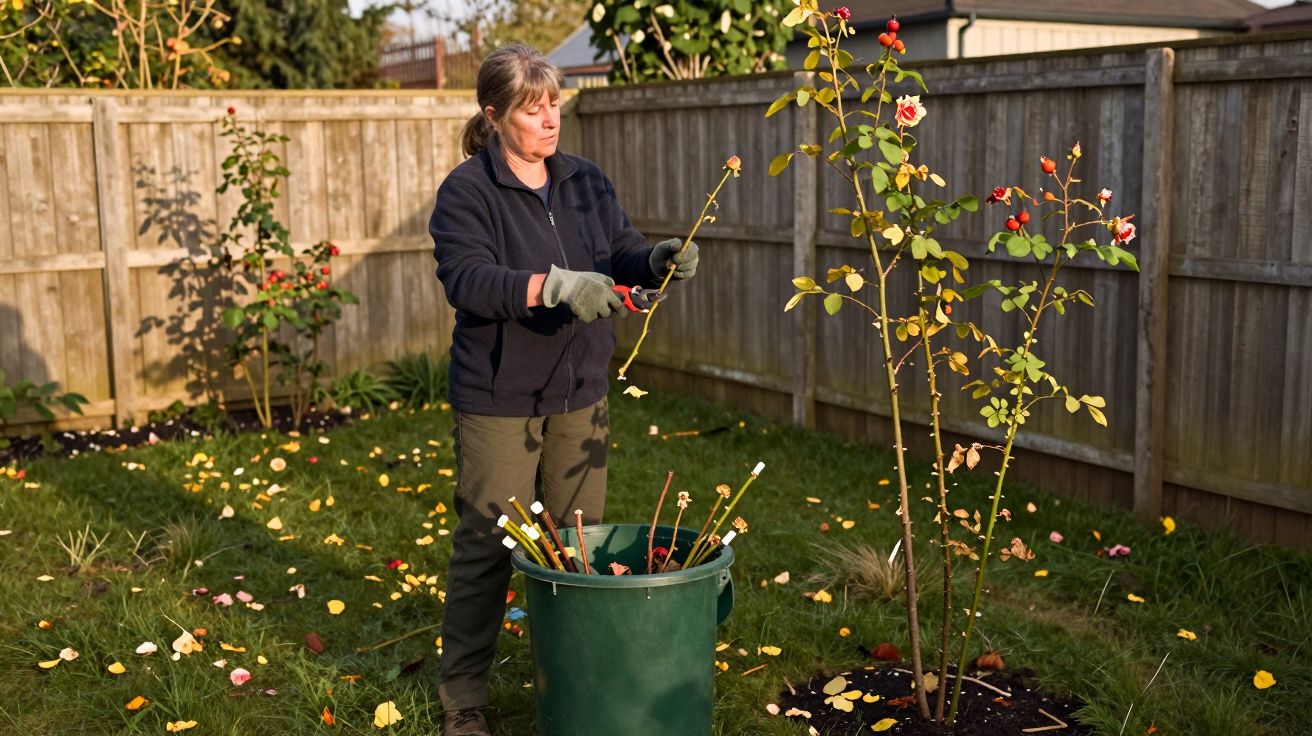
Gardeners warn against pruning roses in early autumn: “you’re stressing them before winter’s worst cold”
The secateurs come out as the first leaves turn. A few yellowed petals, a tangle of stems, and the urge is to “tidy everything up before winter”. On allotments and in back gardens, it looks brisk and sensible. To many rose growers, it looks like trouble.
A woman in fleece and gardening gloves eyes a leggy hybrid tea by the back fence. September sun, slight breeze, the last flowers blowing out. She snips hard, shaping the plant into a neat dome, cutting long stems to half their height. Two gardens down, someone else does the same, filling the green bin, satisfied. The plants stand clipped and exposed just as the light begins to drop. The damage starts here.
Why early‑autumn pruning backfires
Roses don’t read the calendar; they follow temperature and day length. A heavy prune in early autumn tells the plant the same story as a spring cut: “grow now”. It pushes out soft, sappy shoots that look fresh for a few weeks and then face the first real frost with no time to harden.
Those new shoots use up stored carbohydrates that the plant needs to ride out winter. When the cold bites, they blacken, split or die back, creating dead tips and wounds that invite disease. What looked like “getting ahead” in September can mean more dieback, weaker flowering and extra work the following spring.
Many British gardens sit in a mild bubble through October, which makes this mistake easy. A warm spell after an early cut convinces you the plant is “responding well”. Underground, roots and crown are losing reserves on a flush that winter won’t let keep.
“You’re effectively asking the plant to sprint before the hardest part of the marathon,” says a rose specialist in Kent. “Then you’re surprised when it crawls through spring.”
What roses actually need before winter
Roses heading into winter want stability more than style. They need time to ripen wood, move energy down into the root system and seal over the season’s cuts. Your job is to help them stand firm, not to sculpt them.
That means leaving most structural pruning until late winter or very early spring, when the worst frosts have passed but growth has not yet restarted in earnest. In much of the UK, that’s roughly February to early March, adjusted for local climate and exposure. You cut once, decisively, when the plant can respond in the right direction.
Autumn care is lighter and more about prevention. You reduce the risk of wind rock, clear disease, and feed the soil. The plant goes into the cold months with a full pantry and a solid frame, even if it looks a bit scruffy.
The difference between a trim and a prune
There is one nuance that experienced gardeners lean on: not all cutting is equal. A hard prune reshapes the plant, taking stems down by a third to a half or more. A stabilising trim just removes the most vulnerable growth.
In exposed gardens, many rose growers do a light “wind‑check” in late autumn, once leaves start to fall. They shorten only the tallest, whippiest stems by 15–30 cm to stop them acting like sails in winter gales. The aim is to prevent the whole plant rocking in the soil and loosening roots, not to encourage new growth.
Spent flowers can be deadheaded through early autumn, but even that can be gentler after September. On once‑flowering shrub roses, you may leave hips for wildlife and winter colour. On repeat‑flowering types, you snip with restraint and accept that the final flush will be modest.
A simple seasonal plan for UK roses
You don’t need a complicated schedule. You do need to shift the big cuts away from early autumn and into the window when plants can actually use them. Think of the year in three clean steps.
Late summer to early autumn (August–September)
Light deadheading, feeding if needed, and watering in dry spells. No heavy shaping. Let stems ripen.Late autumn (October–November)
Remove clearly diseased leaves and stems, clear fallen foliage from around the base, and apply a mulch once the soil is moist and cold, not warm. Only lightly shorten very tall stems in windy spots.Late winter to early spring (February–March)
Main prune: remove dead, damaged or crossing wood, reduce height to the recommended level for the rose type, and shape the plant over an open centre. Feed and check ties or supports.
Let’s be honest: few home gardeners follow a textbook for every plant. If you move most serious pruning out of September and into late winter for the bulk of your roses, you’ve already fixed the biggest problem.
Common mistakes that quietly weaken roses
The early‑autumn prune rarely comes alone. It often travels with a set of well‑meant but unhelpful habits that stack stress on the plant just when it needs reserves.
- Cutting back hard in September and then feeding with high‑nitrogen fertiliser “to help recovery”, which drives even more soft growth.
- Stripping every last leaf from the plant in late autumn “to be tidy”, which removes the final stages of nutrient drawdown and can leave stems sun‑scorched in bright, cold weather.
- Leaving prunings and diseased leaves at the base of the plant, a perfect overwintering site for black spot and rust.
- Pruning during or just before a hard frost snap, when cuts struggle to seal and stems can die back below the wound.
A few small changes go a long way. You prune once, properly, when the plant can respond. You resist the urge to over‑clean. You keep the base clear and the soil fed.
Key moves at a glance
| Action | When to do it | Why it matters |
|---|---|---|
| Heavy structural pruning | Late winter / very early spring | Encourages strong new growth when frosts are easing, not rising |
| Light stem shortening (wind‑check) | Late autumn, if needed | Reduces wind rock without triggering a growth flush |
| Mulching and clean‑up | Late autumn to early winter | Protects roots, improves soil, and lowers disease carry‑over |
How to prune well when the time is right
When the calendar finally lines up with the plant, technique matters. Clean, sharp tools mean cleaner cuts that heal faster. You prune back to outward‑facing buds to create an open, airy structure that light and air can move through.
For most modern bush roses, you aim to leave three to five strong stems, reduced by about a third to a half depending on vigour. Old shrub roses are often pruned more lightly, focusing on taking out one or two of the oldest stems at the base to encourage young replacement shoots, rather than cutting everything to the same height.
Climbers and ramblers are another story. They are usually pruned after flowering, tying in new long canes horizontally and removing one or two spent older canes. Even there, the same principle holds: avoid major reshaping just before the hardest freezes, and don’t drive new, soft growth into deep winter.
Who really needs to worry, and who can relax
Not every garden faces the same winter. Coastal Cornwall is not the same as a high, exposed plot in the Pennines. Roses in pots on a balcony experience cold and drying winds differently from those in deep, sheltered borders.
If your garden is frost‑prone, windy, or on thin soil, early‑autumn pruning penalties hit harder. Plants already work harder to hold moisture and maintain root contact; an unnecessary growth flush can tip them over the edge. In mild, urban pockets, you get away with more, but the underlying biology doesn’t change. Even there, deferring the big cuts stacks the odds in your favour.
The test isn’t what looks neat in October. It’s how fast and full your roses break bud in April, and how well they flower through June and July. Planning with that in mind is less about rules and more about rhythm.
FAQ:
- So when should I absolutely avoid pruning my roses? Avoid heavy pruning in early autumn, especially September and early October, when cuts encourage new growth that won’t harden before winter.
- Is a light tidy in autumn really that bad? A gentle shortening of very tall stems in late autumn is fine in windy spots; the problem is cutting back hard across the whole plant while the soil is still warm.
- Do all types of roses follow the same rule? The “no hard pruning in early autumn” rule is broadly true across bush, shrub and climbing roses, though climbers and ramblers have different ideal pruning times tied to flowering.
- What if I’ve already pruned in early autumn this year? Stop feeding, avoid further cuts, protect the base with mulch once the soil is cool, and be ready to remove any dead or damaged tips in late winter.
- Why do some gardeners say they’ve always pruned in autumn and been fine? Milder microclimates, sheltered positions and forgiving varieties can mask the harm, but even there, shifting main pruning to late winter usually improves vigour and flowering.






Comments (0)
No comments yet. Be the first to comment!
Leave a Comment