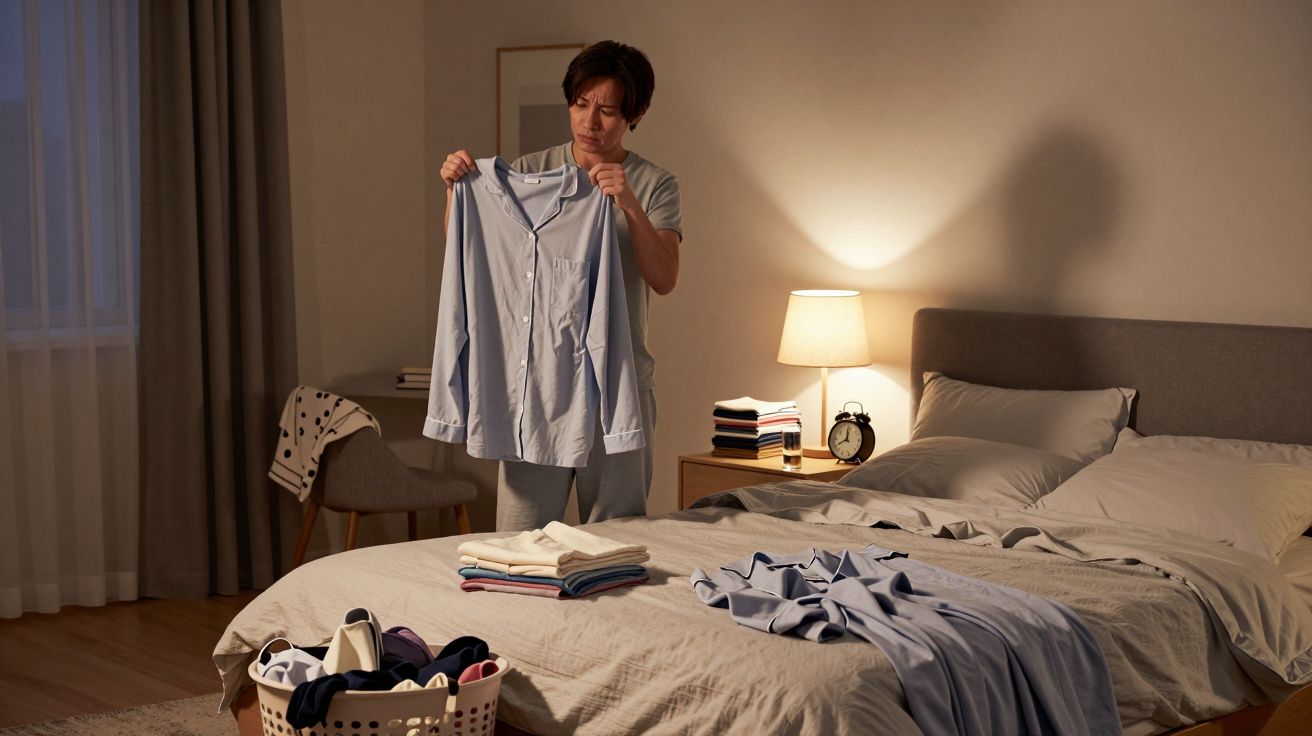
How often you should really wash pyjamas, according to dermatologists
By mid‑week, the waistband feels a bit looser and the fabric less fresh against your skin.
Most of us shrug and tell ourselves we’ll change them “tomorrow night”. Dermatologists are far less relaxed. To them, pyjamas sit at the crossroads of sweat, dead skin, bacteria and friction – a place where minor neglect can quietly turn into irritation, spots or infections.
This doesn’t mean you need a fresh set every single night. It does mean your current “when I remember” system probably needs tightening up.
The quiet build‑up happening while you sleep
You may feel clean when you get into bed, but your skin is busy overnight. It sheds microscopic flakes, releases natural oils and, in many people, sweats more than they realise. All of that ends up in your pyjamas.
Add in the odd evening you skip a shower, a late‑night snack in bed or a run to the loo at 3am, and the picture changes again. The fabric gradually loads up with:
- Dead skin cells, which feed bacteria and dust mites
- Sweat and sebum, which can clog pores and smell over time
- Environmental debris such as pollen, pet dander or make‑up traces
Dermatologists describe it bluntly: worn for long enough, pyjamas become a warm, slightly damp micro‑environment. That’s exactly what bacteria and yeast like.
You don’t see the build‑up from night to night, but your skin does. Redness, itch and breakouts often start with small, repeated irritations.
The simple rule most dermatologists recommend
There is no single magic number, because bodies and habits differ. Yet when specialists are pushed to give clear advice, their rule of thumb is surprisingly consistent.
For most healthy adults:
- Wash pyjamas every 3–4 nights of wear
- Change more often if you sweat, have skin issues or sleep in them during the day
Think of this as a maximum, not a target to exceed. A shorter cycle is fine; a much longer one slowly pushes your risk upwards.
Factors that mean you should wash more often
Dermatologists tend to nudge people towards the “every 1–2 wears” end of the scale if they:
- Have acne on the chest, back or shoulders
- Live with eczema, psoriasis or very sensitive skin
- Sweat heavily at night or are going through menopause
- Sleep in a warm room or under very heavy bedding
- Wear tight‑fitting or synthetic pyjamas
In those situations, fabric sits closer to the skin and traps more moisture. Washing more frequently reduces contact time between your skin and irritants.
How often is too rarely? What the risks look like
Wearing the same pyjamas for a week or more is common in busy households. To dermatologists, that pattern starts to look like a quiet experiment in over‑exposure.
Here’s what they actually worry about:
Folliculitis and spots
Bacteria and yeast thriving in warm, used fabric can enter hair follicles, especially where there’s friction. That shows up as red, pimple‑like bumps on the thighs, bottom and back.Flares of eczema or dermatitis
Dry, inflamed skin reacts quickly to sweat, detergent residue and trapped heat. Re‑wearing pyjamas repeatedly without washing layers those triggers.Vaginal and groin infections
For people with vulvas, very tight or synthetic bottoms worn for many nights in a row can encourage yeast overgrowth. Men can also experience fungal rashes in the groin if damp fabric sits in place for hours.Body odour and “shadow dirt”
Even if you can’t see grime, the combination of sweat breakdown and micro‑organisms creates odour. Some dermatologists describe it as a “film” that transfers back onto freshly washed skin.
Most issues do not appear after one extra night. They tend to build when three or four extra nights become the norm.
What about children, teens and older adults?
Different life stages change both sweat patterns and immune defences. Dermatologists adapt their advice slightly rather than rewriting it.
Children
Younger children often sweat less than teenagers and adults, but they are more likely to spill food, dribble or climb into bed after playing on the floor.
- Wash every 2–3 wears as a baseline
- Wash immediately after bed‑wetting, illness or visible spills
Loose cotton pyjamas washed with a mild detergent usually work well for most children’s skin.
Teenagers
Hormones increase oil production and sweat, particularly in boys. Spots on the shoulders, chest and back are common, so fabric cleanliness matters.
- Aim for every 1–2 wears, especially if they sleep in T‑shirts they also wear in the day
- Encourage them to change pyjamas after sports evenings or sweaty late nights
Older adults
Older skin tends to be thinner and drier, and some people move less at night. There may also be issues with continence, mobility or wound care.
- For healthy older adults: every 3 nights is a reasonable maximum
- In case of incontinence, skin breakdown or frequent night sweats, switch to daily changes and gentle detergents
Fabric, fit and season: why they change the equation
Dermatologists focus as much on what your pyjamas are made of as on how often you wash them. Fabric determines how much sweat stays on the skin and how fast items need refreshing.
Fabrics that play nicely with skin
Natural, breathable fibres usually give you a bit more leeway:
- Cotton and bamboo allow airflow and absorb moisture away from the skin
- Lightweight linen works well for hot sleepers
- Modal or lyocell blends can be soft against sensitive skin
These can typically manage 3–4 wears between washes in cool weather, provided you shower before bed.
Fabrics that demand a stricter routine
Some materials trap heat and moisture, particularly when cut close to the body:
- Polyester and other synthetics
- Satin or silk imitations that don’t breathe
- Tight, elasticated loungewear worn as pyjamas
In these cases, dermatologists often advise washing after 1–2 wears, particularly in summer or if you have any skin complaints.
Night‑time habits that change how often you should wash
You can’t change how your skin behaves overnight, but you can adjust what you do in the hours before bed. Small shifts here may buy you an extra wear or two out of each set without compromising skin health.
Shower before bed
Going to sleep clean – especially after exercise or commuting – means less sweat, dirt and pollution on the fabric.Remove make‑up properly
Left‑over foundation or fake tan rubs off on collars and pillowcases. That residue can sit close to facial and neck skin night after night.Avoid going to bed damp
Putting pyjamas on straight after a bath without drying fully leaves extra moisture in fabric folds, particularly in the groin and under the breasts.Keep pets off the bed if you have allergies
Fur and dander collect quickly in both bedding and nightwear. For reactive skin, that can be enough to need more frequent washing.
The cleaner and drier your skin is at bedtime, the longer your pyjamas can safely last between washes.
How to wash pyjamas without upsetting your skin
Dermatologists care about frequency, but they also care about how you wash. Harsh detergents and hot cycles can irritate skin even when you’re doing the “right” thing by changing often.
Temperature and cycle
- Use a 30–40°C wash for most cotton and blends. That’s usually enough to remove sweat, oil and normal bacteria.
- Go warmer (up to 60°C) only when dealing with illness, incontinence or fungal infections, and follow garment labels.
Detergent choices
- Pick a fragrance‑free or low‑fragrance detergent if you have eczema, asthma or sensitive skin.
- Use fabric softener sparingly, or skip it altogether, as residues can cling to fibres and provoke itching.
Dry pyjamas fully before folding. Slightly damp fabric, especially in a stack, is an easy home for mould and mildew.
A simple rotation that actually works
Many people stretch pyjama use simply because the washing pile feels endless. Dermatologists suggest a small, realistic system rather than aiming for perfection you won’t keep up.
- Keep three to four comfortable sets in regular rotation per person.
- Store clean pyjamas separately from loungewear you wear on the sofa.
- When you take a set off in the morning, place it either on a dedicated hook (to re‑wear once or twice) or straight into the laundry basket.
A small note on sharing: occasionally borrowing a partner’s T‑shirt won’t transform your skin. Consistently swapping, however, can spread yeast or bacteria if one person has an unresolved skin infection or recurrent thrush.
Quick reference: how often to wash
| Situation / skin type | Suggested frequency |
|---|---|
| Healthy adult, cool room, cotton pyjamas | Every 3–4 wears |
| Acne‑prone or very sweaty sleeper | Every 1–2 wears |
| Child with no skin issues | Every 2–3 wears |
| Teen with body acne | Every 1–2 wears |
| Illness, incontinence or fungal infection | After each wear |
When to ignore the “rules” and wash immediately
There are moments when dermatologists would like you to skip the mental calculation and head straight for the laundry basket.
Change your pyjamas right away if:
- You wake up sweaty or chilled after a feverish night
- You’ve had any leakage, including menstrual blood or urine
- You’ve applied thick ointments or medicated creams that transfer heavily
- You’ve worn them outdoors, on public transport or at the gym
In these cases, the fabric simply carries more than an overnight’s normal load. Fresh skin deserves fresh cloth.
FAQ:
- If I shower every night, can I keep the same pyjamas all week? Regular night‑time showers help, but most dermatologists still advise changing and washing pyjamas after 3–4 wears at most. Beyond that, sweat, skin cells and natural oils still build up in the fabric, even on a clean body.
- Do I really need to wash a dressing gown as often as pyjamas? Dressing gowns that sit over bare skin, especially around the neck and chest, benefit from a wash every couple of weeks if worn daily. If you only throw one on briefly over clothes, you can stretch that longer, but treat belt and cuff areas like you would pyjamas.
- Is it better to sleep naked for my skin? For some people with recurrent groin or vaginal infections, sleeping without tight clothing can help ventilation. However, you still need to wash bedding regularly, as skin cells and sweat transfer straight to the sheets instead of to pyjamas.
- Can dirty pyjamas cause serious infections? In healthy people, serious infections from pyjamas alone are rare. Problems usually appear as rashes, blocked pores or yeast overgrowth. In hospital or care settings, or for people with very weak immune systems, stricter hygiene rules apply and nightwear may need daily washing.
- Should I use antibacterial detergent for pyjamas? For most households, standard detergent at the right temperature is enough. Antibacterial products are usually reserved for specific situations such as contagious infections or medical advice, as overuse can irritate skin and isn’t necessary for routine washing.


Comments (0)
No comments yet. Be the first to comment!
Leave a Comment