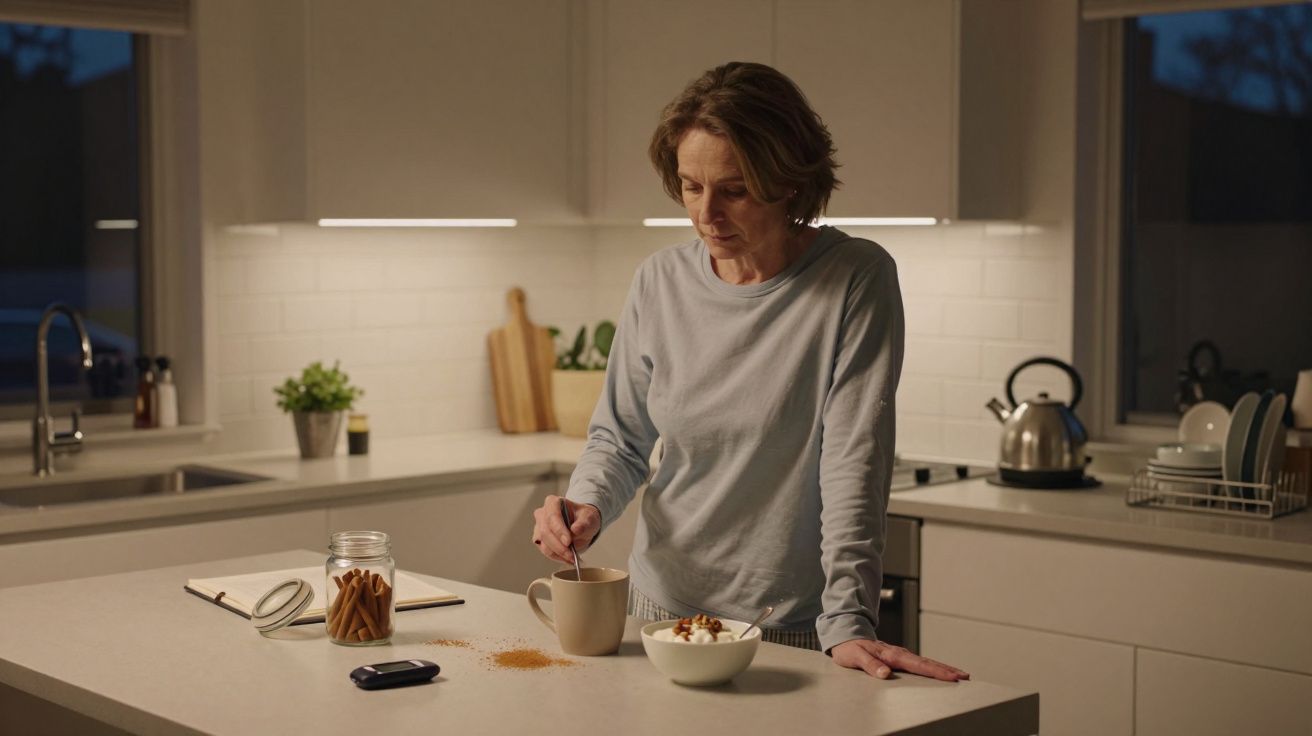
How one teaspoon of this cupboard spice before bed may support blood sugar at night
The clock creeps past ten, the dishes are done, and there’s that familiar tug in the kitchen: a biscuit, a square of chocolate, just “something small”. For anyone watching their blood sugar, the hours between dinner and breakfast can feel like a blind spot. You can’t see what your glucose is doing, but you feel it in restless sleep, 3am wake‑ups, or that heavy, foggy head in the morning. Somewhere between the herbal teas and the strict rules, a very ordinary jar sits on the spice rack: cinnamon.
Not the miracle cure some headlines promise, but a gentle tool worth understanding. A level teaspoon stirred into a warm drink before bed won’t replace medication or a balanced diet. Yet for some people, it may help smooth the night‑time peaks and dips that quietly wear on the body over years. The key is how it’s used, which type you choose, and what you expect it to do.
Why blood sugar at night matters more than we think
Most of us focus on what happens straight after eating: spikes, crashes, “sugar highs”. Overnight is quieter, but no less important. While you sleep, your liver trickles glucose into the bloodstream, hormones shift, and your body repairs tissue and consolidates memory. When blood sugar runs high for hours on end, those repair jobs can be compromised. When it dips too low, the body responds with stress hormones that fragment sleep.
Many people with prediabetes or type 2 diabetes see a “dawn phenomenon”: sugars rise in the early morning even if they have not eaten. Others notice night‑time snacking to “help sleep” slowly nudges their HbA1c upwards. This is the space where small, sustainable routines can make a difference. A teaspoon of the right cinnamon, taken thoughtfully, slots more easily into a bedtime ritual than yet another strict rule.
Cinnamon 101: a spice with a split identity
Cinnamon is not one thing but a family. On supermarket shelves, two types dominate: Cassia (sometimes labelled “cinnamon” with no qualifier) and Ceylon, often called “true cinnamon”. Both are warm, sweet and comforting, but they do not behave identically in the body.
Cassia is richer in a compound called coumarin, which in high, long‑term doses may strain the liver in susceptible people. Ceylon carries far less coumarin and a slightly lighter, more floral flavour. When people talk about cinnamon and blood sugar, they are usually referring to powdered bark from Cassia species, which has been used in many of the early studies. Those studies vary in quality, dose and duration, so think of cinnamon as a nudge, not a switch.
Cinnamon appears to help the body handle glucose more efficiently, but its effect is modest and works best alongside changes in food, movement and sleep.
How one teaspoon might help at night
Researchers have proposed several mechanisms. Compounds in cinnamon may make insulin receptors on cells more responsive, helping glucose move from the blood into muscles more effectively. It may also slow the speed at which food leaves the stomach and temper the rush of glucose into the bloodstream after a meal. Some work points to a slight reduction in fasting blood sugar when cinnamon is used regularly over weeks.
At night, the aim is not to “flatten” your glucose completely. Instead, a teaspoon of cinnamon in a small yoghurt, sugar‑free warm milk, or a herbal tea can be part of a bedtime snack that digests slowly and avoids sharp swings. By pairing it with protein and a little fat, you give your body a steady trickle of energy to ride through the small hours.
The bedtime ritual: how to use it safely
The routine matters as much as the spice. Taken unevenly or in huge spoonfuls, cinnamon is more likely to upset your stomach than help your numbers. Taken in a measured way, it can anchor a calm evening pattern that your body starts to recognise.
- Stick to about 1 teaspoon (2–3 grams) of ground cinnamon per day, unless your clinician advises otherwise.
- If you are on glucose‑lowering medications or insulin, speak to your doctor or diabetes nurse before you start, and monitor readings more closely for a couple of weeks.
- Choose Ceylon cinnamon if you plan to use it daily for months, to limit coumarin exposure.
- Combine it with a balanced, light evening snack rather than adding it to sugary drinks or puddings.
You do not need to be perfect. On some nights you will forget, on others you will be too tired to make more than a quick tea. What counts is consistency over time, not a handful of “good” days followed by weeks of nothing.
Simple ways to add cinnamon before bed
The most useful changes are the ones you can repeat without effort. Cinnamon works best when it disappears into things you already enjoy rather than asking you to build a whole new routine from scratch.
- Stir ½–1 teaspoon of cinnamon into unsweetened Greek yoghurt with a few nuts or seeds.
- Make a caffeine‑free chai with cinnamon, ginger and cardamom in warm milk or a fortified plant drink.
- Sprinkle over sliced apple or pear with a spoon of peanut butter or almond butter.
- Fold into overnight oats prepared with oats, milk, chia seeds and a pinch of salt.
Each of these pairs the spice with fibre, protein and fat. Together, they slow digestion and can help keep blood sugar more stable until morning. They also feel like a small comfort at the end of the day, not a medical chore.
Limits, cautions and realistic expectations
Cinnamon is not a substitute for prescribed treatment. If your HbA1c is rising, or you experience symptoms such as excessive thirst, frequent urination or unexplained weight loss, the answer is not simply “more spice”. Evidence from trials is mixed, and the benefits reported are usually modest reductions in fasting glucose or HbA1c, not dramatic normalisation.
High doses of Cassia cinnamon over long periods are not benign. Coumarin intake can add up, particularly if you also consume other sources such as certain teas or tonics. Some people report heartburn or mouth irritation at higher amounts. As with any supplement‑like habit, it is wise to let your GP know what you are taking, especially if you live with liver disease, take blood‑thinning medication, or are pregnant.
Small supports are valuable, but they work best when they sit on top of solid foundations: regular meals, movement, stress management and adequate sleep.
Your overnight blood sugar toolkit
Think of cinnamon as one player in a very short, practical list:
- Eating your main meal earlier in the evening when possible.
- Including protein, fibre and healthy fats at dinner.
- A 10–15 minute gentle walk after your last meal.
- A consistent bedtime and wake time most days.
- A measured teaspoon of cinnamon in a low‑sugar evening snack, if it suits you.
None of these are glamorous, but together they alter the terrain your blood sugar moves through at night. The aim is not perfection but a pattern that is calm enough to sustain.
FAQ:
- Will cinnamon before bed lower my blood sugar too much? On its own, a teaspoon of cinnamon is unlikely to cause dangerously low blood sugar, but if you use insulin or certain tablets, it may add to their effect. Check your readings and discuss any new pattern with your clinician.
- Does any kind of cinnamon work? Most studies have used Cassia cinnamon, but for long‑term daily use, Ceylon is generally considered safer because it is lower in coumarin. Check the label or ask a specialist shop if you are unsure.
- How long before I see a difference? If cinnamon is going to help you, changes in fasting or overnight blood sugar are usually seen over several weeks rather than days. Keep a simple log rather than judging on one or two nights.
- Can I just take cinnamon capsules instead? Capsules may offer a standardised dose but vary widely in quality. Whole spice in food or drink lets you control quantity more easily and keeps the focus on overall eating patterns, not pills.
- Is it safe if I do not have diabetes? In typical food amounts, cinnamon is generally safe for most people. If you plan to use it daily as a “remedy”, it is still sensible to mention it to your GP, especially if you have liver issues or take regular medication.






Comments (0)
No comments yet. Be the first to comment!
Leave a Comment