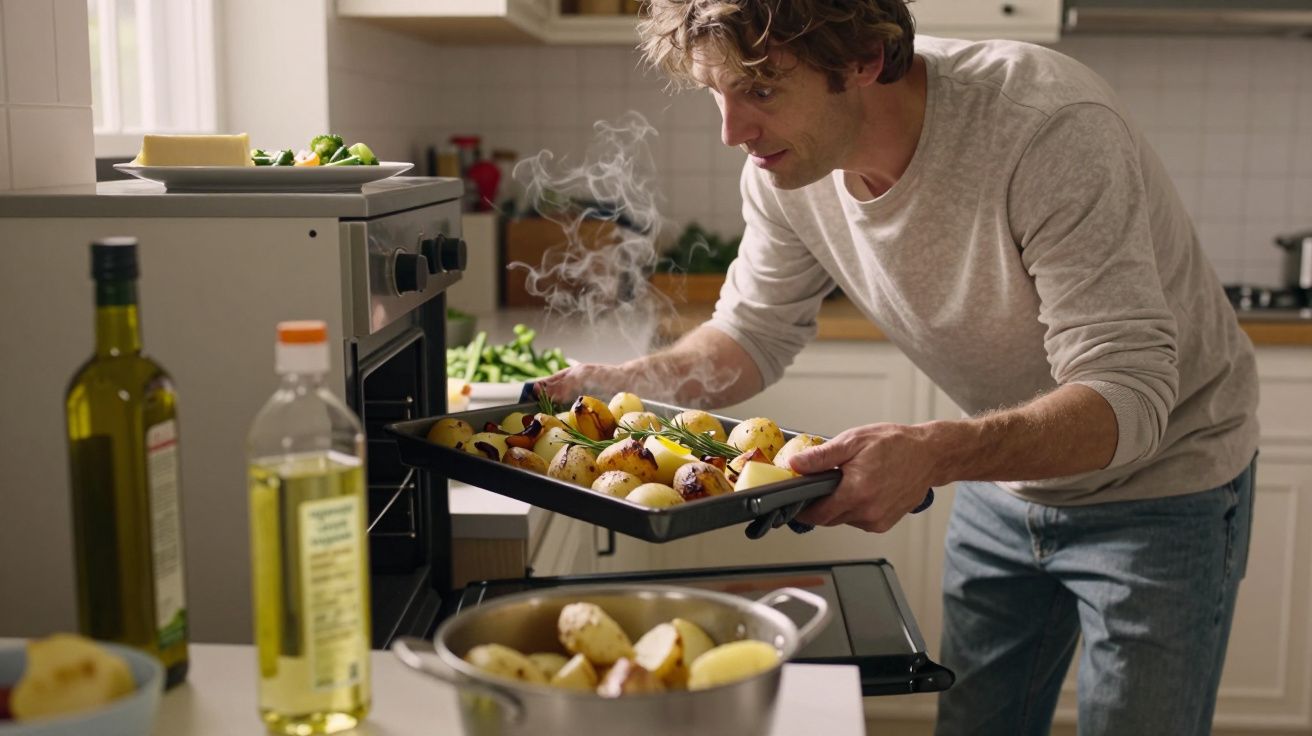
Not olive oil, not butter: the one fat that makes roast potatoes crisp and lighter on the stomach
Every family has a roast potato rule. Some swear by a river of olive oil, others by generous knobs of butter. Both work – up to a point. Yet there is another option that tends to give a crisper shell, a fluffier centre and, for many people, less heaviness afterwards.
Why the fat you choose matters more than you think
Roast potatoes look simple: parboil, shake, roast. Most of the magic, though, happens where starch meets fat. The right fat clings to the rough edges, spreads heat evenly and dries the surface just enough for that glassy crunch.
Olive oil can burn and turn bitter at higher roasting temperatures. Butter browns beautifully, but its milk solids scorch and leave dark, sometimes acrid patches on the tray. Both also contain components that brown long before the centre of the potato catches up, nudging you into a trade‑off between colour and texture.
For even, shattering crispness, you want fat that tolerates high heat, stays stable and lets the potatoes, not the oil, take centre stage.
This is where one often‑overlooked fat stands out in ordinary home ovens.
The case for refined rapeseed oil
Not extra‑virgin olive oil, not butter: for classic Sunday roast potatoes, refined rapeseed oil quietly does much of the job better.
Refined rapeseed oil (often just labelled “vegetable oil” in the UK, but check the back of the bottle) has a high smoke point, a neutral flavour and a thinner texture than many other fats. It slides into all the craggy surfaces you create by roughing up parboiled potatoes, then conducts heat efficiently without burning at typical roasting temperatures.
Compared with duck fat, goose fat or beef dripping, it is also lower in saturated fat. That does not make roast potatoes a health food, but it does mean the fat itself is lighter and less waxy on the palate, and often easier on people who find heavy roasts sit in the stomach all afternoon.
Why it behaves well in the oven
- High smoke point: less risk of bitter, burnt notes at 200–220°C.
- Neutral taste: rosemary, garlic and the potato itself stay in front.
- Flow and coverage: a thin layer coats more surface with less actual fat.
- More unsaturated fat: a different, less clinging richness than animal fats.
Olive oil and butter still have a place at the table. They simply shine more on vegetables, sauces and finishing touches than as the main roasting fat for potatoes.
Crisp outside, soft inside: the method that lets rapeseed oil shine
The fat helps, but it does not replace good technique. The following pattern works in most domestic ovens and is easy to fold into a Sunday routine.
Step‑by‑step blueprint
- Choose the right potato. Go for floury varieties such as Maris Piper, King Edward or Desiree. Waxy potatoes resist fluffing and never quite reach pub‑style crispness.
- Cut for even cooking. Aim for chunks roughly the size of a golf ball. Smaller bits crisp faster but risk drying out.
- Parboil in well‑salted water. Simmer 8–10 minutes until the outside softens but the centre still feels firm when pierced.
- Drain and rough up. Let the steam escape for a minute, then shake in the pan to scuff the edges. This creates the starchy “crumb” that turns into the crust.
- Preheat the tray with rapeseed oil. Pour a thin, even film of oil over the roasting tin – just enough to barely cover the base. Heat in a 200–220°C oven until shimmering.
- Roast undisturbed at first. Tip the potatoes carefully into the hot oil, turning once to coat. Leave them alone for 20–25 minutes so the base can set and crisp.
- Turn once or twice. After the first spell, turn the pieces and roast a further 20–25 minutes, until deep golden and crisp on multiple faces.
- Season at the end. Toss with flaky salt, cracked pepper and herbs only once they come out of the oven. This helps keep the surface dry and crunchy.
The oil should lightly coat the potatoes, not drown them. Excess fat sits in the tray and on your plate, contributing to that “lead weight” feeling later.
What makes them feel “lighter” to eat
“Light” is a vague word, but most people mean a mix of how full they feel, how greasy the food tastes and whether they feel sluggish afterwards. The type of fat, its quantity and the texture of the potato all play a role.
Animal fats and butter set more firmly as they cool, leaving a coating on the palate and, for some, a sense of heaviness. They are also rich in saturated fat, which, while fine as an occasional treat, adds up quickly in a plate of roast potatoes and meat.
Rapeseed oil has a different profile. It is mostly unsaturated fat, with some omega‑3 and omega‑6, and stays liquid at room temperature. Used sparingly, it tends to leave less grease on the plate and lips, especially if you let excess oil drain for a minute on the hot tray before serving.
Three levers for a lighter feel
- Fat type: choose rapeseed oil over butter or dripping for a less waxy richness.
- Fat amount: aim for a sheer coating; if oil pools in the tin, you are using too much.
- Surface dryness: dry, well‑roasted potatoes absorb less extra fat than pale, under‑roasted ones.
If you serve them with plenty of vegetables and moderate portions of meat or gravy, the whole meal feels more balanced, even if the potatoes still taste indulgent.
Comparing common roasting fats
A quick glance at how typical roasting fats behave in the oven and on the plate:
| Fat | How it behaves | How it feels |
|---|---|---|
| Butter | Great flavour; scorches easily; can smoke at high heat | Rich, heavy, coats the mouth |
| Extra‑virgin olive oil | Distinct flavour; may turn bitter when overheated | Fruity, can taste oily if used generously |
| Duck/goose fat | Excellent crispness; very high in saturates | Luxurious, often “too much” for some stomachs |
| Refined rapeseed oil | Neutral, stable at roasting temps; spreads well | Clean, less clinging, easier to eat in quantity |
The goal is not to banish butter or olive oil from the kitchen. It is to use each fat where it works best, instead of out of habit.
Small tweaks that make a big difference
Once you have the basic method and fat sorted, a few adjustments can nudge the texture and “lightness” further without sacrificing satisfaction.
- Pre‑boil with a pinch of bicarbonate of soda. A tiny pinch helps break the potato surface down, creating more roughness and, in turn, more crunch.
- Give them space. Crowded trays steam. Make sure each piece has a gap around it so moisture can escape and the edges crisp properly.
- Keep flavours simple. Garlic, rosemary and thyme pair well with rapeseed oil. Add whole, lightly crushed cloves and woody herb sprigs for the last 20 minutes rather than from the start, to avoid burning.
- Serve straight away. Roast potatoes lose crispness as they sit. Holding them in a low oven often softens the edges and makes them feel greasier.
If you need to batch‑cook for a crowd, you can roast them to just‑golden earlier in the day, cool on a rack, then re‑crisp in a very hot oven for 10–15 minutes before serving.
A new default for Sunday roast
Tradition has a strong pull, especially around the roast tin. You do not have to abandon family favourites to try a new fat. Swap in refined rapeseed oil for one weekend, keep the rest of your routine the same and pay attention to two things: the sound when you cut into the potato, and how you feel an hour after clearing the plates.
If the crunch is sharper and the post‑lunch slump is gentler, you may have found your new standard – not olive oil, not butter, but a quieter bottle at the back of the cupboard that deserves a place up front.


Comments (0)
No comments yet. Be the first to comment!
Leave a Comment