The £3 DIY draught‑excluder trick that renters swear halves their heating use
The first cold week always catches you out.
One evening you’re fine in a T‑shirt, the next you’re wrapped in a blanket, staring at the thermostat and wondering how quickly your bill will climb if you tap it up “just one degree”.
Then you notice it.
That sneaky line of cold air curling under the front door, the chill pooling around your ankles. You haven’t even turned the heating off, yet the room feels like it’s leaking warmth straight into the stairwell.
You don’t own the place, you can’t replace the door, and the letting agent’s idea of “insulation” is a photocopied leaflet about putting on a jumper. This is where a £3 strip of fabric and a couple of carrier bags quietly change the game.
The £3 sausage that seals the gap
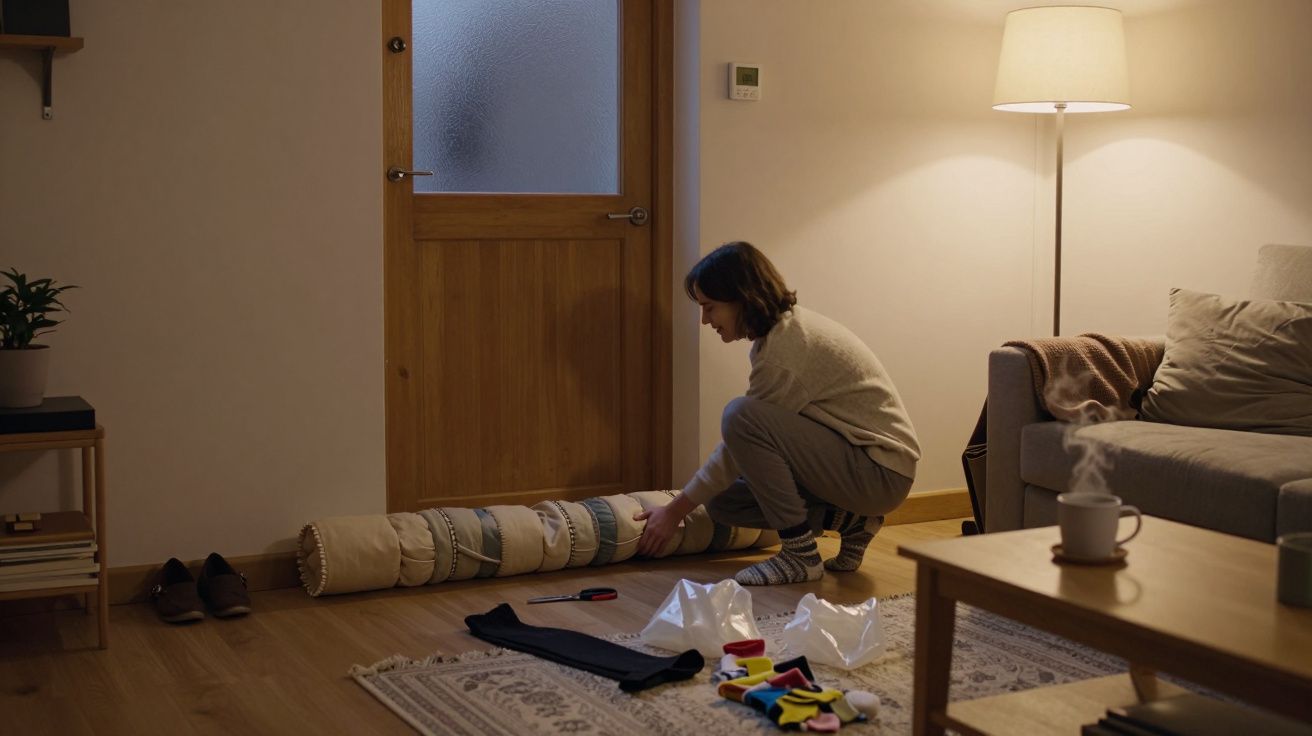
Forget fancy branded draught excluders. The renters’ version is brutally simple: a fabric “sausage” filled with whatever you already have. Old tights, dead pillowcases, that too‑small duvet cover, even a cut‑up fleece blanket. Stuff it with plastic bags, shredded packaging or worn‑through socks until it holds its shape.
Laid along the base of a door or across a leaky windowsill, it blocks the icy airflow that makes rooms feel colder than the thermometer suggests. You haven’t changed the boiler, you’ve changed the way the room loses heat. For a lot of people, that’s the difference between nudging the thermostat higher and being genuinely comfortable at the same setting.
Is it going to literally halve your gas usage on its own? Probably not. But renters who line their worst gaps with these homemade rolls regularly report needing the heating on for fewer hours, or at a lower temperature, to feel the same level of warmth. That’s the saving that matters.
Golden rule: cut the draught first, then question the thermostat. Warm air you’ve already paid for shouldn’t be escaping under the door.
Why blocking that tiny gap feels so big
Cold air loves a shortcut. It will always head for the lowest point and the nearest gap. That’s why your feet feel freezing while your face is fine. A door with a centimetre of space underneath acts like a vent, constantly pulling in new cold air to replace the warm air rising and slipping out through cracks higher up.
By stuffing that low gap, you slow the whole cycle down. The air near the floor stops racing, the room temperature evens out, and you no longer have that “brew going cold in ten minutes” feeling. You might only be stopping a narrow stream of air, but you’re interrupting the engine that keeps the draught going.
Physics aside, there’s a comfort trick at work too. Warm ankles make your whole body read “cosy” more quickly. If your feet aren’t in a breeze, you’re less tempted to overheat the room to compensate. That’s where real‑world savings creep in.
How to make a £3 draught excluder in 10 minutes
You don’t need a sewing machine or Instagram‑worthy fabric. You just need a tube and some stuffing.
Find the “case”
- Old trouser leg, pair of tights, pillowcase, long‑sleeve T‑shirt, or a strip of fabric folded in half.
- For a door, aim for something roughly the width of the frame.
- Old trouser leg, pair of tights, pillowcase, long‑sleeve T‑shirt, or a strip of fabric folded in half.
Gather the filling
- Plastic shopping bags, bubble wrap, old socks, laddered tights, fabric off‑cuts, even shredded cardboard.
- The lighter and springier, the better it will mould to the gap.
- Plastic shopping bags, bubble wrap, old socks, laddered tights, fabric off‑cuts, even shredded cardboard.
Stuff and shape
- Fill the tube gradually, pushing the stuffing into the corners so there are no floppy ends.
- Keep checking the thickness by holding it against the door gap: you want it to press lightly, not jam.
- Fill the tube gradually, pushing the stuffing into the corners so there are no floppy ends.
Seal the ends for renters
- If you don’t want anything permanent, just tie knots in fabric ends or use hair bands, string or elastic.
- If you’re happy to sew, a few quick stitches keep everything secure.
- If you don’t want anything permanent, just tie knots in fabric ends or use hair bands, string or elastic.
Put it in place
- Lay it snugly against the bottom of the door on the draughty side.
- For windows, sit it right on the sill where you feel cold air.
- Lay it snugly against the bottom of the door on the draughty side.
Let it do its work for a couple of days before you decide if you need a second roll for the hallway or balcony door. Most people start with the front door and realise how much of their “cold flat” feeling was just that one leak.
A renter’s mini‑audit: where to use it first
Walk around on a cold, windy day and feel for moving air with the back of your hand. Common problem spots:
- Front doors that open onto communal stairwells or corridors
- Patio or balcony doors with worn seals
- Single‑glazed windows with loose frames
- Loft hatches in top‑floor flats
- Disused fireplaces or vent grilles
You don’t have to fix everything to notice a difference. Start with the two worst offenders and see how your evenings feel.
The non‑negotiable: keep it removable and reversible
Renters live with one eye on the inventory. The beauty of this hack is that it doesn’t alter anything permanently. No screws, no glue, no sticky foam that leaves marks when you move out.
If you want to make life even easier come inspection day:
- Match the fabric roughly to the door or floor so it blends in
- Label each excluder discreetly (“Hall door”, “Bedroom window”) so you can put them back in the same places after checks
- Store them in a suitcase over summer, ready to roll out as soon as the weather turns
Think of them as soft, moveable “insulation accessories” you can carry from rental to rental. Your landlord doesn’t need to know your £3 sausage is quietly doing the job of the double glazing they never fitted.
Small habits that stack with the £3 fix
A fabric roll on its own helps. A few tiny changes around it turn “noticeable” into “wow, the flat holds heat now”.
- Close doors behind you. Trap warm air where you’re actually sitting, not in the hallway.
- Pair with heavy curtains. Even a charity‑shop throw hung over a door reduces heat loss.
- Shift furniture. Pull the sofa away from a leaky window and closer to an interior wall.
- Time your heating. Shorter bursts at sensible times feel better once draughts are blocked.
- Layer the floor. A rug near a leaky door stops the cold from spreading across hard flooring.
None of this requires permission. All of it makes the air you pay to heat work harder for you, not for the great outdoors.
A quick comparison: £3 trick vs “do nothing”
| Option | What it involves | Likely outcome |
|---|---|---|
| Do nothing | Live with door and window draughts | Higher bills, cold feet, thermostat creep |
| Buy branded excluder | £10–£25 ready‑made roll | Effective, but less flexible and more expensive |
| DIY £3 roll | Scraps + cheap fabric or tights | Custom fit, renter‑safe, reusable every winter |
The numbers on your bill depend on your home and boiler, but the comfort jump per pound spent is hard to beat with anything else you can do in a rented place.
A trick that follows you from flat to flat
The first winter you do this, it feels almost silly that something so basic works so well. You roll up a makeshift fabric tube, shove it against the door, and suddenly the living room stops pretending to be a bus stop.
By your second or third move, these draught excluders become part of your unpacking ritual. Kettle on, Wi‑Fi password in, sausages along the doors. It’s a small act of claiming the space, of saying: this might not be my forever home, but I can still make it warm on my terms.
Saving a chunk on your heating while you do it is just the quiet bonus.
FAQ:
- Does this really halve your heating use? On its own, probably not by a strict meter reading, but many renters find they can run the heating for fewer hours or at a lower temperature because rooms stay comfortable for longer. The perceived saving can feel dramatic.
- Is it safe to block gaps under every door? Avoid blocking doors that are your main escape route in a fire if the excluder would slow you down, and never obstruct gas appliance vents. For most internal doors and front doors onto hallways, a removable fabric roll is fine.
- What if my landlord objects? Because the excluder isn’t fixed to anything and doesn’t mark the property, it’s very unlikely to breach your tenancy. If they ask, you can simply pick it up and move it.
- Can I use this in a room with mould problems? Yes, but don’t seal the room completely. You still need some ventilation. Pair draught blocking with regular airing and, if possible, a dehumidifier to tackle damp.
- What’s the cheapest way to get fabric and stuffing? Use clothes and bedding you already own but no longer wear, or look in charity shops and pound shops for curtains, duvet covers or fleece blankets. Stuff with plastic bags, old textiles and packaging you’d otherwise bin.




Comments (0)
No comments yet. Be the first to comment!
Leave a Comment