The £3 item from the pet aisle that keeps wardrobe moths away for an entire season
In the middle of the flea shampoos and catnip toys, there’s a product that was never designed for your clothes, and yet quietly does a better job than half the “wardrobe fresheners” on the next aisle. It doesn’t come in a pretty linen sachet, it doesn’t promise “heritage lavender from Provence”, and it certainly wasn’t marketed at people who have just discovered little holes in their favourite jumper.
I found it while sulking in the supermarket after a moth-related clear‑out. One cardigan gone, two T‑shirts suspiciously “thinned”, and a pile of woollens airing on the washing line in December. I went in to buy sealed storage boxes and stain remover. I came out with a £3 dog product that has kept my wardrobe oddly, satisfyingly moth‑free for a whole season.
The cheap pet product that moths really dislike
Look along the pet aisle and you’ll find cedarwood-based dog deodorising sachets and hanging fresheners. They’re sold to keep beds and baskets smelling less like wet dog and more like something you can bear to share a room with. The key detail is not the dog on the label but the concentrated cedar oil inside.
Clothes moths and their larvae are not fond of strong aromatic oils such as cedar, peppermint and certain citrus blends. They don’t keel over like in an advert for bug spray, but they do a very useful thing: they avoid. Tucked into a wardrobe or chest of drawers, those pet sachets act like a “keep out” sign for anything that fancies a nibble on your woollens.
The surprise is not that cedar repels moths, but that the most cost‑effective version often sits in the pet aisle, not the laundry section.
The numbers are straightforward. A multi‑pack of branded “wardrobe moth repellent” can easily run to £7–£10. A simple dog‑bed freshener, based on the same family of oils, is usually around £3, sometimes less on offer. When you need several for a coat cupboard, chest of drawers and linen shelf, the price gap stops being anecdotal.
How to use it in a wardrobe without making everything smell like dog shampoo
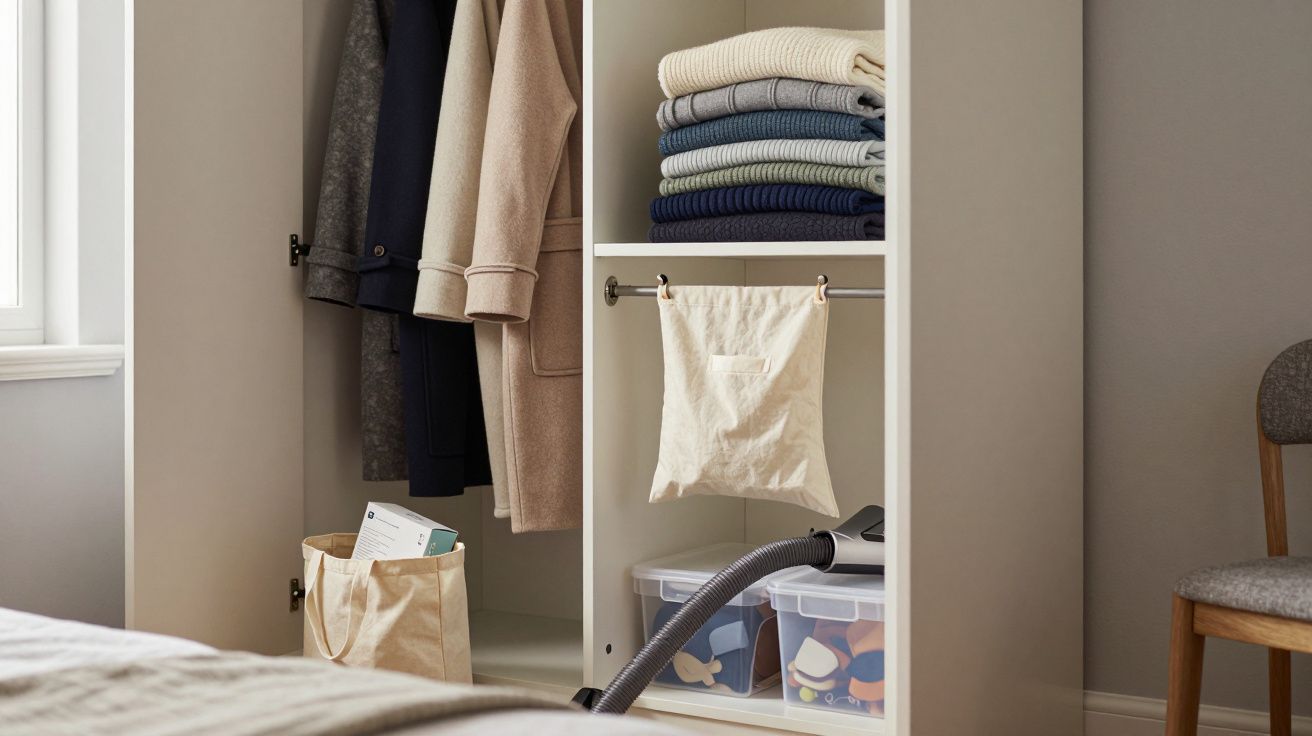
The first experiment was tentative. I didn’t want to open my wardrobe each morning and get hit with “kennel chic”. So I started small: one sachet in a thin cotton bag, hung on the same rail as my winter coats. Within a few days, the faint dog‑product top note had mellowed into a gentle woodsy smell.
The practical steps are simple:
- check the ingredients for essential oils, not harsh solvents
- keep the sachet in a breathable cover (old cotton hankie, scrap of muslin, thin sock)
- avoid direct contact with delicate fabrics in case of oil transfer
- use one per 0.5–1 metre of rail or per drawer, rather than stuffing them everywhere
Most pet sachets are designed to live near soft furnishings and paws, so they tend to be less aggressive than heavy‑duty insecticides. That doesn’t mean you should pile them right on top of cashmere. A little distance and a layer of cotton give you the repellent effect without worrying about stains.
Rotation matters more than we think. The scent that smells strong to you on day one will fade over eight to twelve weeks. Mark a tiny date on the corner of the sachet; when the smell is barely there, it’s time to replace or refresh.
Why this works – and what it doesn’t do
Aromatics like cedar and peppermint do not solve a full‑blown infestation on their own. They don’t magically erase eggs already tucked into a seam or larvae already at work in a jumper shoulder. What they do very well is reduce the chance of fresh attacks once you’ve done the boring housekeeping.
The combination that keeps clothes safe looks more like this:
- one deep clean: washing or freezing vulnerable items, hoovering shelves and skirting boards
- sealing rarely worn woollens in airtight bags or lidded boxes
- using scented, repellent sachets (including pet‑aisle cedar) in the spaces you open and close daily
Think of the pet sachet as a bouncer, not a pest controller. It helps dissuade newcomers, especially in older houses with gaps in floorboards, but it cannot repair damage or deal with a nest under the floor. If you are already seeing adult moths fluttering every evening, the order is: clean first, repel second.
The other limitation is human tolerance. Some noses love cedar; others find it overpowering. If you share a wardrobe, check that the smell doesn’t give anyone a headache before you hang four sachets at once.
Copying the trick at home (without wrecking your clothes)
You don’t need a spreadsheet or a smart meter for this experiment, but a small amount of structure helps. Treat it as a three‑step trial over one season.
Audit the hotspots.
Open every wardrobe and drawer with wool, silk, cashmere or mixed knitwear. Look for tiny holes, silky webbing, or dusty frass in corners. Make a note of the worst‑hit areas.Do a one‑time reset.
- wash what you can at the hottest moth‑safe temperature
- freeze delicate or “dry clean only” items in sealed bags for 48 hours
- vacuum shelves, corners and the floor outside the wardrobe
- wash what you can at the hottest moth‑safe temperature
Install the pet‑aisle defence.
Hang or tuck the £3 cedar sachets as discussed, then check the same spots monthly for new signs of activity.
The value here is not just the sachet, but the feedback loop. If the worst‑hit drawer stays quiet for eight weeks, you’ve found a cheap preventative that works for your home. If you still see new damage, it’s a sign that you need to step up to professional treatments or traps, not simply add more scent and hope.
A few extra habits make the whole thing easier to live with:
- keep off‑season knits in lidded boxes rather than on open shelves
- shake out and inspect woollens when you swap summer/winter wardrobes
- avoid leaving worn, unwashed jumpers bunched up at the back of a dark shelf
Nobody lives in a moth‑proof show home. The goal is a system that survives busy weeks, not a one‑off Sunday you never repeat.
Quick comparison: pet sachet vs classic moth products
| Option | What it offers | Main catch |
|---|---|---|
| Pet‑aisle cedar sachet | Cheap, easy to find, repels moths for 1–3 months | Scent strength varies; needs pairing with cleaning |
| Traditional mothballs | Strong deterrent and killer | Contains chemicals you may not want near clothes or lungs |
| Hanging “wardrobe fresheners” | Designed for clothes, neat form factor | Often same oils at a higher price |
The interesting twist is that all three often rely on the same basic idea: make the space unattractive to moths. The difference is cost, intensity and how happy you are to share a bedroom with the smell.
Pet sachets sit in the mild, budget‑friendly corner. They shine when you want just enough deterrent to protect well‑cleaned clothes, not a chemical fog that drives you out of the room.
And after this season?
If the £3 pet‑aisle trick buys you one calm season with no new holes, it has already paid for itself several times over in rescued jumpers. One eaten cashmere sleeve can equal a year’s worth of sachets. More quietly, it changes how you look at your cupboards.
You start to see zones of risk: the dark corner where an old scarf lives, the handed‑down blanket under the bed, the coat rail by the front door. A few cheap sachets, rotated with the seasons, turn those blind spots into places you actively maintain.
The aim isn’t to turn into someone who alphabetises their knitwear. It’s to stop finding surprise confetti where your favourite jumper used to be.
FAQ:
- Will this work with any pet freshener?
No. Look for products that clearly list cedarwood or similar essential oils and are designed as sachets or hanging fresheners, not sprays heavy with detergents or disinfectants.- Is it safe around children and pets?
Used as directed and kept out of chewing reach, sachets are generally low risk, but essential oils can irritate if ingested or rubbed into eyes. Treat them like any cleaning product: visible, but not snackable.- Can I just use pure essential oils instead?
You can, but concentrated oils are easy to overdo and can stain fabric. Pet sachets give a controlled, slow release without you having to play chemist.- How often do I need to replace the sachets?
Most last one to three months. When you can barely smell them at all, moths probably can’t either; that’s your cue to replace or refresh.- What if I already have a serious moth infestation?
Treat the sachets as a follow‑up, not a fix. Start with thorough cleaning, possibly professional pest control, and use repellents to keep things calm once the main problem has been tackled.






Comments (0)
No comments yet. Be the first to comment!
Leave a Comment