The freezer inventory trick that prevents buying duplicates and saves up to £30 a month
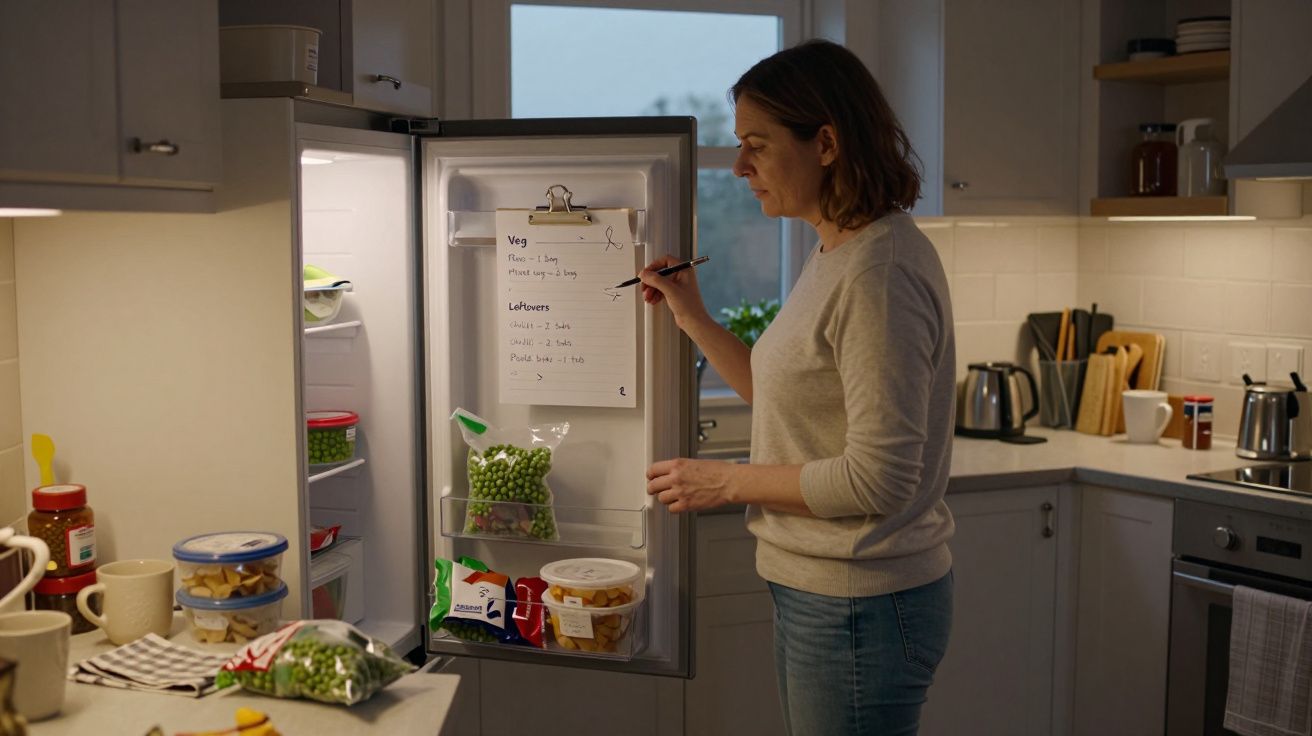
In a small flat in Manchester, a family opened their freezer to “just grab some peas” and ended up pulling out three half‑used bags, two packets of mystery leftovers and a loaf of bread dated from last winter. Nothing was actually off, but half of it was forgotten. By the end of the month they were still buying frozen veg and oven chips on repeat, convinced they were “running low”.
The quiet cost of that confusion adds up. Extra bags of frozen food, last‑minute takeaways because “there’s nothing in”, and the odd pack of freezer‑burnt chicken pushed to the back. Many households underestimate how much money slowly freezes in place behind frosted drawers.
A simple paper list, stuck to the freezer door, can cut that waste and shave up to £30 a month off the food shop - without a single new app or gadget.
This is the freezer inventory trick: a running log of what you have, what you use and what needs eating first. It sounds basic. Used properly, it changes how you shop and cook.
Why freezers quietly drain money
Freezers are meant to save money: bulk buys, reduced‑to‑clear meat, leftovers turned into “next week’s dinner”. The problem isn’t storage. It’s memory.
Once food goes behind opaque drawers or into a chest freezer, it becomes easy to forget:
- You buy another bag of frozen berries because you “can’t remember” if there’s one left.
- You grab a ready meal on the way home because the freezer feels like chaos.
- You throw out food that’s gone grey with freezer burn simply because it sat there too long.
Surveys of UK households suggest a big slice of food waste now happens not in the bin but in the freezer. People mean well, freeze lots, then never circle back. That waste sits quietly in the electricity you pay to keep it frozen and the extra groceries you buy because you don’t trust what’s already there.
The gap isn’t usually willpower. It’s visibility: you can’t use what you can’t see or remember.
The basic trick: a door‑side inventory
Instead of opening every drawer each time you plan dinner, you keep the truth on the outside. A cheap clipboard, a sheet of paper in a plastic sleeve, or a magnetic notepad becomes your freezer’s “front page”.
The method is straightforward:
- List what’s in the freezer by broad category.
- Mark how many portions or packs you have.
- Update the list every time you add or remove something.
No spreadsheets, no barcode scanners, no perfect handwriting needed. The key is that the list stays where you actually make decisions: on the freezer door or right next to it.
How to set it up in 15 minutes
Pick a quiet evening, empty one drawer at a time and build your first inventory.
- Grab: a pen, a sheet of paper (or two), some tape or a magnet and a timer.
- Set 15 minutes. You are logging, not reorganising the whole kitchen.
- As you lift each item out, group it on the worktop and jot it down.
A simple layout is usually enough:
- Meat & fish
- Veg & fruit
- Bread & carbs
- Ready meals & leftovers
- Treats & snacks
Next to each item, add a quick shorthand and a count.
“Checking the list before walking to the till becomes as automatic as checking your keys before leaving the house.”
What to write (and what to ignore)
Many systems fail because they’re too detailed. You don’t need gram weights and full recipes. You need decision‑ready information.
Aim to record:
- The item and type: “Chicken breasts”, “Mixed veg”, “Tomato soup”
- Rough quantity: “3 packs”, “6 portions”, “1 tub”
- A simple code for urgency:
- ★ = eat soon
- ○ = normal
- + = just frozen
- ★ = eat soon
An example for one drawer:
| Category | Item | Quantity |
|---|---|---|
| Meat & fish | Chicken breasts (★) | 3 packs |
| Meat & fish | Salmon fillets (○) | 4 pieces |
| Veg & fruit | Mixed veg (★) | 2 half‑bags |
| Ready meals | Chilli con carne (home‑cooked, +) | 4 tubs |
You can skip:
- Exact dates if they’re already on the packet (just mark ★ if it’s been there a while).
- Detailed ingredients of leftovers (a short label on the tub plus “pasta bake – 3” on the list is enough).
- Anything tiny and interchangeable (loose ice cubes don’t need logging).
The goal is to glance once and know whether you actually need more frozen veg, bread or chicken before you shop.
How this saves up to £30 a month
The savings rarely come from one dramatic change. They build quietly, decision by decision.
Consider a typical month for a family or house‑share:
- Skipping just 2–3 duplicate buys (extra bags of chips, peas, berries): £6–£10 saved.
- Using 2–3 “forgotten” home‑cooked portions instead of buying a ready meal or takeaway: £10–£15 saved.
- Planning one weeknight dinner fully from the freezer instead of a top‑up shop that always includes extras: £5–£10 saved.
By the end of four weeks, that easily lands between £20 and £30, sometimes more for larger households. On top of that, there’s less food quietly ageing to the point where no one wants to eat it.
The trick isn’t eating less; it’s eating what you already paid for.
Turning the list into a meal‑planning tool
Once the inventory sits on the door, it becomes more than a stock check. It’s a menu generator.
At the weekend or before a big shop:
- Scan the ★ items first.
- Can you build two dinners around that chicken, that leftover chilli or those open veg bags?
- Ring or highlight three “anchor” ingredients you’ll use this week.
- Example: salmon fillets, frozen spinach, naan bread.
- Plan 2–3 meals using as many freezer ingredients as possible, topping up only with fresh bits.
Instead of starting with recipes and then buying everything they require, you invert the process: start with the frozen food you already own, then slot recipes around it. This small shift tends to cut impulse buys and reduce the number of “I’ll just grab something” evenings.
A quick weekly rhythm
- Sunday: glance at the list, circle 2–3 ★ items and sketch meals around them.
- Midweek: after one freezer‑based dinner, cross off what you used; adjust counts.
- Friday: before any top‑up shop, check what’s actually low.
The list doesn’t have to be pristine. Crossings‑out, arrows and scribbles still beat guessing through frosted plastic.
Keeping the system alive with minimal effort
Like any household habit, the freezer inventory stands or falls on how easy it feels. Two tiny rules keep it going:
- When you add something to the freezer, add one line or update the count.
- When you take something out to defrost or cook, cross it off or reduce the number.
To make that more realistic:
- Keep the pen physically attached (tape, string, or a magnetic pen holder).
- Accept imperfection. If you forget to log a couple of items, fix it next time you open the drawer.
- Do a 5‑minute “reset” once a month: tidy one drawer, adjust the list, mark ★ on anything that’s been there a while.
Households that treat it as a living, slightly messy list tend to stick with it. Those that aim for perfect columns and never‑missed entries often give up when real life intervenes.
Variations: paper, apps and photos
For some, paper on the door is perfect. Others prefer digital tools. The principle stays the same: a single, up‑to‑date view.
- Paper + plastic sleeve: List in a punched pocket, write with a dry‑wipe marker, and wipe/adjust as stock changes.
- Notes app on your phone: One note titled “Freezer”, grouped by category. Update it while the freezer is open.
- Shelf photos: After a tidy, take one clear photo per drawer. Use it as a visual checklist before you shop.
Couples and house‑shares often like digital lists so everyone can see them. Families with kids sometimes stick to big, clear paper categories and let older children cross things off after they help themselves to chips or ice cream.
The “best” version is the one you actually use, not the cleverest one you forget about.
Common pitfalls and gentle fixes
Pitfall: “I’ll do it properly later.”
Fix: start scrappy. Log just the main items (meat, bread, big bags) and ignore the rest for now.Pitfall: Chest freezer overwhelm.
Fix: divide it mentally into zones - top basket for “eat soon”, middle for everyday items, bottom for bulk buys. Your list mirrors those zones.Pitfall: Nobody else in the house updates it.
Fix: have one tiny rule (e.g. “If you take the last of something, you cross it off”). Accept that you may be the main updater; the savings still land for everyone.Pitfall: Leftovers with no labels.
Fix: keep a roll of masking tape and a pen next to the freezer. A two‑word label (“bolognese, 2”) is enough to match tubs to lines on the list.
FAQ:
- Do I really need to empty the whole freezer to start? No. You can start with just one drawer or shelf, create a mini‑list for that, and expand as you go. The savings begin as soon as any part of your freezer becomes visible on paper.
- How often should I do a full reset? For most households, once every 2–3 months is enough. A quick drawer‑by‑drawer tidy and list refresh prevents very old items from lingering indefinitely.
- Is it worth doing if I live alone? Yes. Solo shoppers often over‑rely on frozen convenience food and reduced items. A simple list helps you use them before buying more and can still free up £10–£20 a month.
- What about use‑by and best‑before dates? Keep the dates on the packaging, and use ★ marks on your list for anything approaching its ideal use period. Most home‑frozen food is best eaten within 3–6 months for quality.
- Can this help with energy use too? Indirectly, yes. A well‑organised freezer opens for shorter periods because you find things faster, and you’re less tempted to keep an oversized second freezer half empty “just in case”.



Comments (0)
No comments yet. Be the first to comment!
Leave a Comment