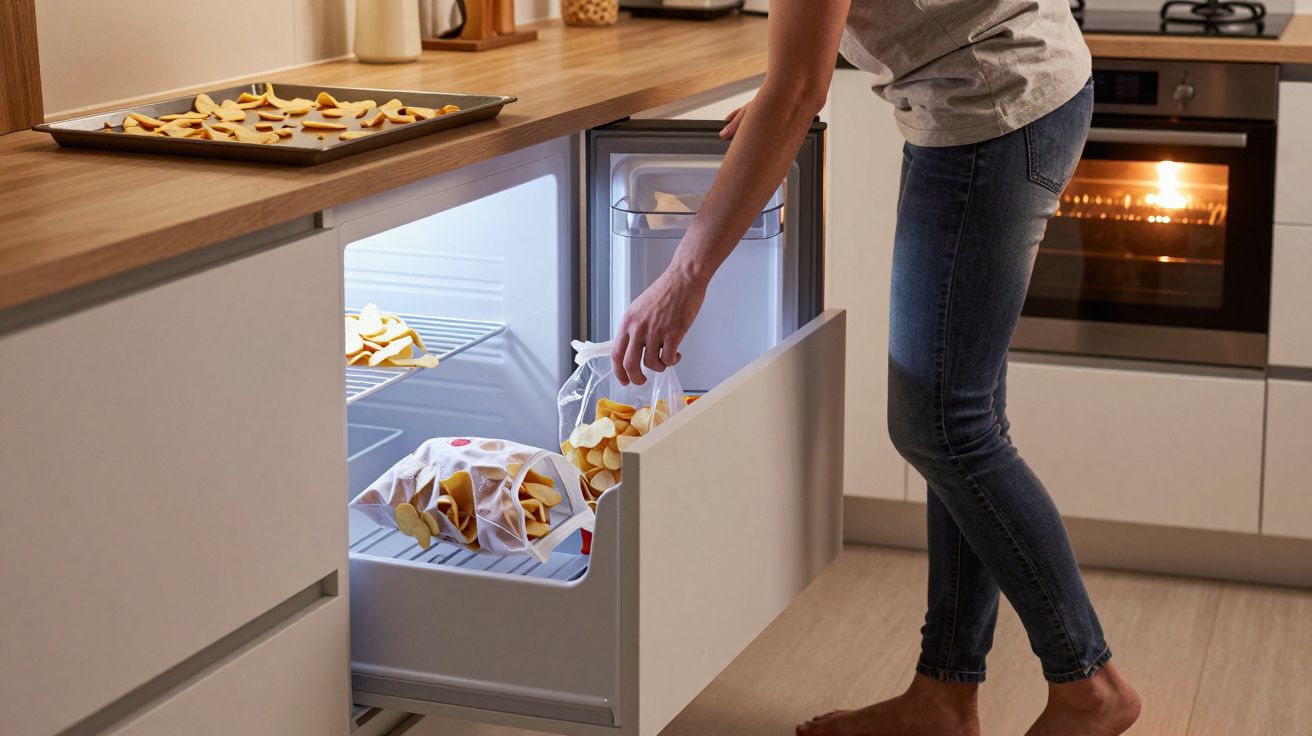
The freezer mistake that turns chips into a soggy mess before they hit the oven
You slide a tray of frozen chips into the oven, already tasting the crunch. Twenty minutes later, they emerge looking promising-golden in patches, hot, fragrant. Then you bite in and the illusion collapses. The outside is soft rather than crisp, the insides feel slightly waterlogged, and instead of a chip-shop snap you get a kind of steamy slump.
We tend to blame the oven, the brand, the oil, even the baking tray. A food scientist would point you somewhere less glamorous: the freezer door and what you did - or didn’t do - before those chips ever saw any heat.
The tiny ice crystals that ruin your crunch
Pull a bag of chips out of the freezer and look closely. If you can see a soft blizzard of ice on the inside of the bag or frosty clumps of chips frozen together, the damage is already under way. Those crystals didn’t come from nowhere; they’re water that has slowly migrated out of the potato, into the air in the bag, then refrozen on the surface. In the oven, that frost becomes steam. Steam, in turn, is the natural enemy of crisp.
Commercial frozen chips are par-cooked and then blast-frozen so that the water inside turns to very small crystals. The structure of the potato cells stays mostly intact, which is why, in theory, they can crisp beautifully. When you repeatedly warm and cool that bag at home - every time you stand there with the freezer open, deciding what to make - you undo that careful work. Ice melts, refreezes into larger crystals, and starts shredding the potato’s structure from the inside.
The mistake sounds harmless: letting chips slowly warm a bit in a poorly packed, overworked freezer, then refreezing them without a thought. Yet that cycle turns fluffy interiors into mealy ones and tight exteriors into sponges for moisture. By the time you cook them, the oven is trying to evaporate extra water from damaged cells rather than simply browning the surface. The result is pale, steamy, and oddly chewy.
The one habit that quietly wrecks oven chips
The core problem is not “bad chips” or “weak oven heat”; it’s partial thawing. Opening the freezer often, keeping the door ajar while you rummage, or storing chips right by the front where warm kitchen air hits them leads to micro-thaws you barely notice. To you, the bag still feels frozen. To the chips, it feels like a storm.
Imagine your Sunday night: you grab the chips for a handful, leave the bag on the counter “just for a second” while you find a tray, get distracted by a message, then put them back. They’ve gone from -18°C to somewhere closer to fridge temperature on the outer layer, then back down again. Do that three or four times in a week and you’ve essentially slow-cooked their structure in reverse.
Let’s be honest: nobody is logging their freezer-door open time on a spreadsheet. We all stand there, barefoot, staring into the cold trying to magic dinner into being. Yet that habit slowly transforms firm, dry-ish frozen chips into soggy candidates long before the oven has any chance to help them.
The good news is that you don’t need new gadgets or chef training. You need a few quiet tweaks in how you store, handle and cook what you already buy.
How to store chips so they actually crisp
Start by treating the freezer not as a cupboard but as a piece of equipment with rules. Temperature stability matters more than you think. The less those chips are asked to ride a thermal rollercoaster, the better they’ll behave when heat finally hits.
Three simple anchors:
- Keep chips deep, not front-and-centre.
- Close bags tightly and keep air out.
- Avoid “back in the freezer” unless you really have to.
A practical sequence that helps:
Pick the coldest, least disturbed spot.
Tuck chips towards the back or in a drawer, away from the door edge where warm air rushes in.Seal the bag properly.
Once opened, squeeze out excess air, fold the top down, and clip it firmly. Less trapped air means fewer places for frost to form.Portion smartly.
If you always cook for one or two, decant chips into smaller freezer bags the day you buy them. You open and thaw less mass each time, so the rest stays undisturbed.Minimise “think-time” on the counter.
Fetch chips after your tray is out, oven is heating and everything else is ready. In an ideal world, the time between freezer and oven is measured in seconds, not songs.
“If it looks frosty, it will cook steamy,” as one food technologist put it. “You don’t want to melt that frost in your kitchen; you want the oven to drive it off fast enough to brown.”
The right way to cook from frozen (and why preheating matters)
Once you’ve protected the chips in the freezer, how you hit them with heat decides whether they end up crisp or limp. A half-hearted preheat or a crowded tray can undo all your careful storage in one go.
Think of it as a race between two processes:
- Water at the surface wants to turn to steam.
- The outer layer wants to brown and firm up.
You want that surface to dry and crisp just as the centre becomes hot and fluffy. If the oven is lukewarm or the tray is overcrowded, steam wins. It lingers around the chips, softening their edges instead of escaping.
A straightforward approach:
Preheat fully.
Don’t put chips in a “warming up” oven. Let it reach the stated temperature - often 200–220°C for chips - and give it a few extra minutes to let the tray come up to heat too.Use a hot, roomy surface.
A preheated metal tray or an oven-safe wire rack over a tray helps. Chips in a single layer with visible gaps allow steam to escape instead of condensing on their sides.Avoid unnecessary oil baths.
If chips are already coated, an extra glug of oil can tip them towards greasy rather than crisp. A very light spray or nothing at all is usually enough.Resist early turning.
Let one side set and brown before flipping. Agitating them too soon tears soft surfaces and releases more moisture.
You’ll know it’s working when you can hear the faint crackle as you shake the tray near the end of cooking. That sound is water leaving fast enough for starch to harden into a shell rather than a sponge.
Common chip mistakes (and the quick fixes)
Here are the slip-ups most home cooks make, and the low-effort changes that shift the result from limp to lively:
| Mistake | What it does | Quick fix |
|---|---|---|
| Storing chips in the freezer door | Repeated mini-thaws, bigger ice crystals | Move to the back or a drawer; keep door space for sauces and bread |
| Leaving an open bag with lots of air | Encourages frost and clumping | Squeeze air out, fold tightly, use a clip or transfer to a zip bag |
| Putting chips in before the oven is hot | Lets them steam before they can brown | Always fully preheat; use a hot tray or rack |
| Loading the tray so chips touch | Traps steam between pieces | Single layer with small gaps; use two trays if needed |
None of these adjustments is dramatic. They’re more like quiet courtesies to the physics of water and heat. Yet they stack, and the tray that comes out on a Thursday night after work tells you immediately which side of the line you’re on.
Where this leaves your freezer (and your chips)
Once you see chips as something living between two systems - the freezer and the oven - it becomes harder to blame just one. Freezers are brilliant at hiding slow damage. Oven timers then expose it in 20 unforgiving minutes.
Reframing the problem as “how do I keep these chips truly frozen until the last possible second, then hit them hard with even heat?” usually does more than any fancy seasoning or secret shake. It shifts your attention from packet promises to the quiet choreography of storage, timing and space.
You won’t turn supermarket chips into triple-cooked gastropub marvels overnight. You can, however, stop sabotaging them before they ever see the oven. Try one shop’s bag in two ways - careless freezer habits versus the tweaks above - and taste the difference side by side. Consistency, not cleverness, is what gets you closer to that proper, shattering crunch.
FAQ:
- Do I need to thaw frozen chips before cooking?
No. Thawing them first is one of the fastest routes to soggy results. Cook straight from frozen in a fully preheated oven.- Is freezer burn the same as the frosty layer on my chips?
They’re related but not identical. Light frost means moisture has moved; heavy, dry white patches are freezer burn, where texture and flavour are significantly damaged.- Will a fan oven make chips crisper?
A fan oven helps move hot air and steam, which can improve crispness, but only if you still avoid overcrowding and preheat properly.- Can I rescue a bag that’s already frosty?
You can improve things by shaking off loose ice and giving them extra room and heat, but they’re unlikely to be as crisp as a well-stored bag.- Does adding more oil fix soggy chips?
Usually not. If the problem is excess moisture from poor freezing or overcrowding, extra oil tends to make them greasy rather than crisp. Address storage and tray space first.




Comments (0)
No comments yet. Be the first to comment!
Leave a Comment