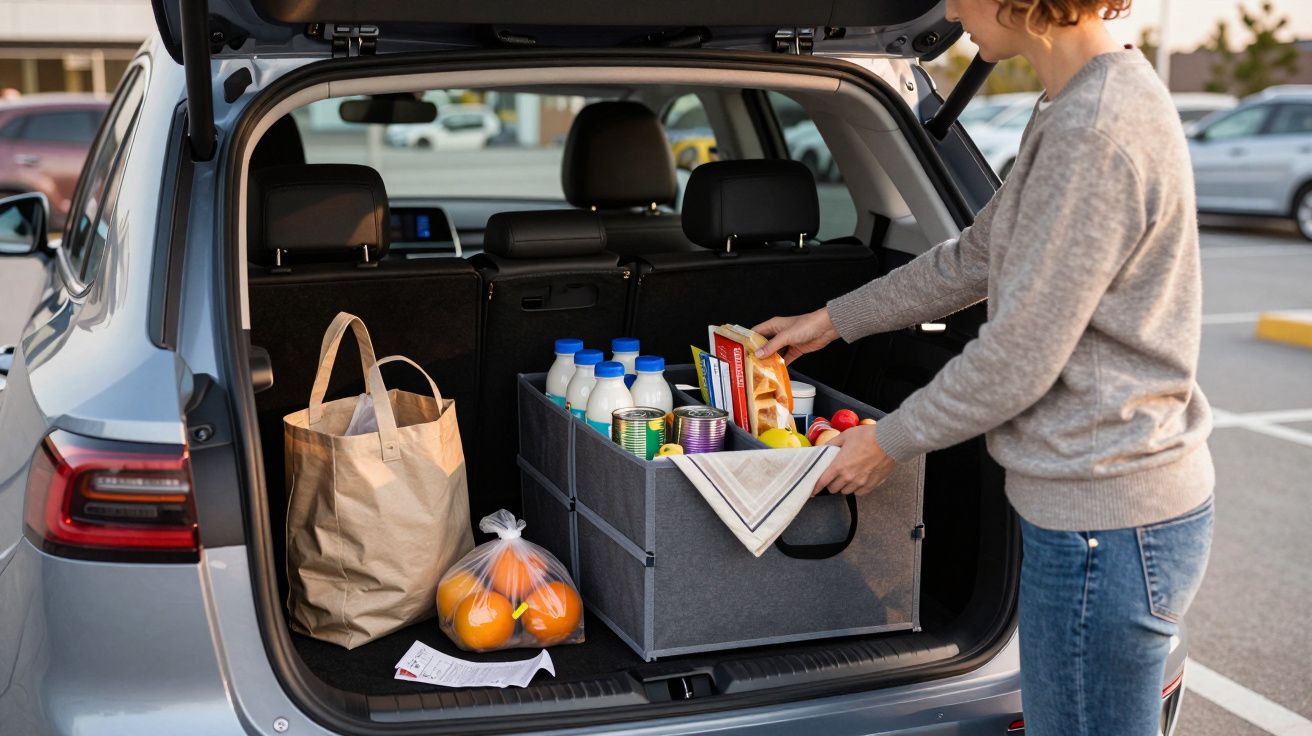
The simple car boot organiser hack that stops groceries rolling and milk lids popping
The drive home from a big shop should be the easy part. Yet most of us know that sinking feeling when you hear a thud from the boot, followed by the quiet glug of a milk lid working itself loose somewhere behind the seats. Eggs slide, berries burst, and a bag of oranges somehow manages to escape and roll under everything else.
There is, however, a very simple way to stop the chaos without spending a fortune on specialist gear or resorting to elaborate packing systems. It involves something you may already own, takes seconds to set up, and turns even the slipperiest boot into a calm, contained space.
The £5–£10 item that changes everything
The quiet hero of the story is a folding fabric car boot organiser – the kind sold as basic storage rather than a fancy accessory. Typically made from stiff fabric with handles and a couple of internal dividers, it looks unremarkable. Used well, though, it acts like a portable set of supermarket crates that fits your exact boot shape.
Think of it as a pop-up cupboard for the car: walls that stop milk tipping, a base that grips the boot floor, and sections that keep heavy tins away from soft fruit.
Most basic organisers cost less than a takeaway and fold flat when you are not shopping. The trick is not just owning one, but using it in a very specific way every time you load the trolley.
How to stop rolling and popping in three moves
The method is simple enough to teach to the whole household, including children who help unpack. It relies on weight, height and lid direction working together rather than fighting each other.
Anchor the organiser against the back seats
Open it fully and push it right up to the rear seats, not near the boot opening. This gives you a solid wall behind your bags so nothing can slide forward when you brake.Pack by height: low and heavy at the bottom, tall and fragile in the middle
- Start with bottled drinks, jars, tins and bags of potatoes or flour in the bottom of each section.
- Add cartons and taller items on top – juices, sauces, cereals.
- Keep a narrow “fragile line” in one compartment for eggs, berries and soft loaves, protected on both sides by sturdier goods.
- Start with bottled drinks, jars, tins and bags of potatoes or flour in the bottom of each section.
Always point lids and caps upwards, not sideways
This matters more than people think. Milk, juice and cream cartons are far less likely to leak if the cap is pointing to the sky, nestled snugly between other items so it cannot twist.
Used this way, the organiser acts as a snug tray. Even if you corner sharply, the contents shift together as a block instead of one lonely bottle taking flight.
Smarter grouping: cold, crushable and “straight to fridge”
The organiser hack works best if you combine it with a simple rule: each section has a job. That saves time when you get home and cuts the risk of something important being left in a warm car.
- Cold zone: one compartment for chilled items only – milk, yoghurt, meat and ready meals. As soon as you arrive, that section is lifted out first and carried straight to the fridge.
- Pantry zone: another compartment for tins, packets, oil and condiments. These are sturdy enough to stay put while you deal with the cold items.
- Soft zone: bread, pastries, salad leaves, tomatoes and fruit that bruises easily. Give this area extra support with a tea towel or a spare tote bag tucked down the side.
Families often add a fourth “grab zone” near the boot door with snacks, drinks and baby bits that might be needed en route. Because it sits at the edge, you can reach it without climbing into the car park.
A quick comparison of ways to tame the boot
| Method | Pros | Cons |
|---|---|---|
| Loose carrier bags | Fast, no extra kit | High risk of rolling, squashed bread, leaking lids |
| Reusable crates | Very stable, easy to clean | Rigid, can waste space in small boots |
| Folding organiser | Flexible, light, cheap | Fabric needs wiping if spills happen |
The folding organiser wins for most people because it adapts to different shops. One week it can be all groceries, the next it can hold sports kit or recycling without rattling.
Tiny tweaks that make a big difference
Once the organiser is in place, a few small habits can eliminate most spills entirely. They do not slow you down at the till; they simply change the order in which things land.
- Ask for two bags instead of one stuffed one when packing milk and large bottles. Spread the weight and they sit flatter in the organiser.
- Use your reusables properly: sturdy, square-bottomed bags snug into each section far better than thin, floppy ones.
- “Cap check” before you shut the boot: run a quick hand across milk, juice and cream lids to make sure they are fully tightened. A half-turn can be the difference between a clean mat and a sour-smelling spill.
- Lay bottles on their side only if they are fully hard plastic with screw caps, and wedge them between heavier items so they cannot roll.
Treat the drive home as part of the shop, not an afterthought. Two extra minutes of placement saves twenty minutes of mopping up.
When your boot is tiny, sloped or already full
City cars and family cars with buggies, sports equipment or dogs in the back can make the idea of a neat organiser sound optimistic. The same principle still works; it just shrinks.
- Go half-size: a single narrow organiser placed sideways behind one rear seat still creates a no-roll zone for milk and eggs.
- Use the footwell overflow: in very full boots, move the softest items (bread, cakes, herbs) to a rear footwell where they can sit upright without pressure.
- Work with the slope: if your boot floor tilts, position the organiser so the high side is behind the seats. Pack the heaviest items on that side, and the whole block resists sliding forward.
Dog owners often put a waterproof mat under the organiser or choose a wipe-clean version. That way wet paws and occasional spills do not ruin the car.
Cleaning up and keeping odours away
Even with the best packing, the odd spill happens. The fabric sides of many organisers can trap smells if you leave them.
- Deal with leaks as soon as you notice: absorb liquid with kitchen roll, then wipe the organiser down with warm, soapy water or a mild vinegar solution.
- Dry it fully before folding; a quick blast of air near a radiator or in a sunny spot works well.
- Shake out crumbs and sand regularly so they don’t grind into carpets or encourage insects.
If your boot suffered a bad milk incident before you found this hack, sprinkling bicarbonate of soda on the carpet overnight, then vacuuming, can help pull out lingering odour.
Why this small change feels so much calmer
Beyond fewer broken eggs, the organiser hack quietly smooths the whole end of a shop. You don’t have to brace at every roundabout, or open the boot with one eye shut, wondering what you will find. Everything lifts out in just a few moves, with cold items arriving at the fridge together and pantry goods lining up neatly on the counter.
The real win is mental: less mess, less waste and a homecoming that feels orderly instead of like another chore.
For the cost of a couple of coffees, most households can reclaim their car boot from chaos. One simple organiser, placed with intent and packed with a few small rules, keeps groceries upright, lids sealed and nerves intact all the way from the till to the table.
FAQ:
- Do I need a special “car” organiser, or will any fabric crate do? Any sturdy, divided fabric crate or folding box that fits your boot will work, as long as it has a firm base and reasonably stiff sides.
- Will this help if my milk has the new-style push-on cap? Yes. As long as the carton is upright and wedged so it cannot rock, those caps are far less likely to pop or weep.
- How many organisers should I get for a family shop? Most medium-sized cars manage well with one large or two smaller organisers. Start with one; if you routinely overfill it, add a second for bulk items.
- Isn’t it quicker just to throw bags in and go? It may feel faster at the car park, but organised packing usually saves time overall because you don’t have to rescue squashed food or clean the boot later.
- What if I use delivery instead of driving to the shop? The same logic applies indoors. A folding organiser by the front door lets you sort cold, pantry and fragile items as they arrive, then carry them to the right room in one or two trips.

Comments (0)
No comments yet. Be the first to comment!
Leave a Comment