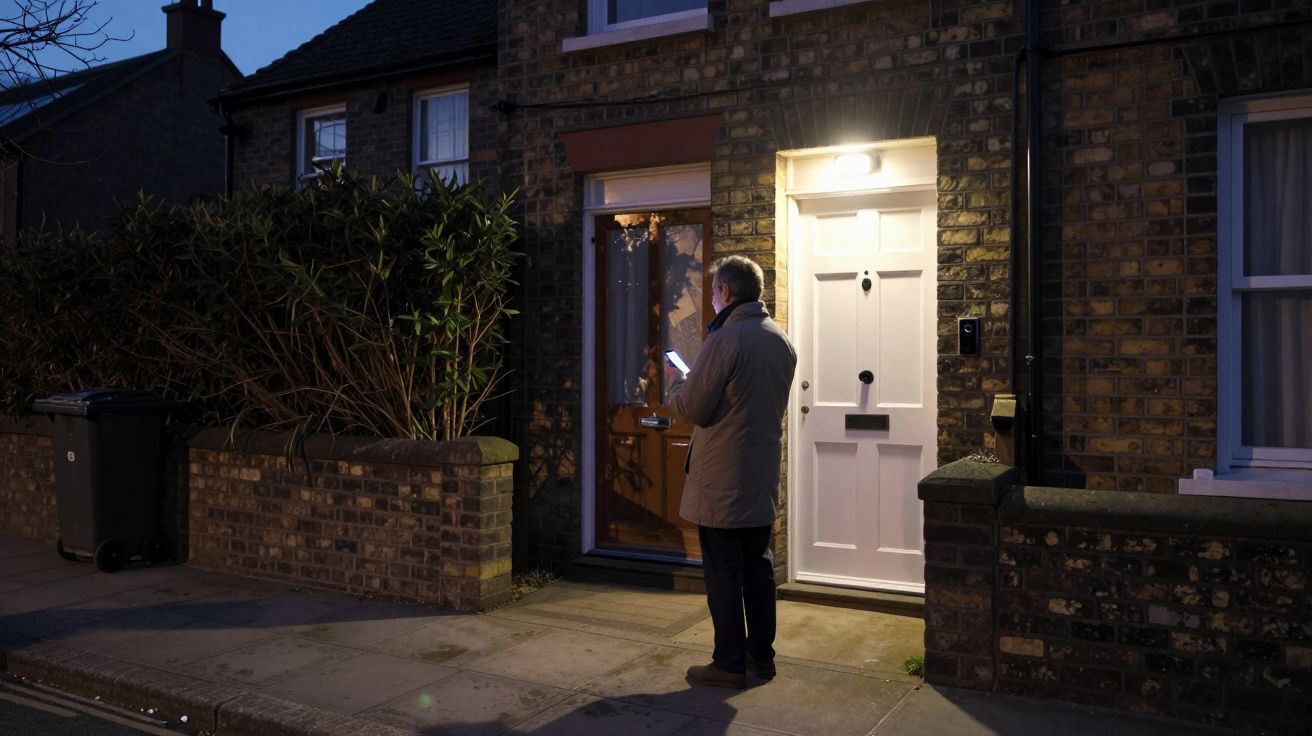
The simple “front door audit” that neighbourhood watch groups say deters opportunistic burglars
There’s a quiet sentence that’s passed around at neighbourhood watch meetings, usually after the crime stats and before the biscuits: “Most burglars just try the obvious”. They push a handle, test a flap, glance at a lock. If it feels like effort, they move on. If it feels like an invitation, they don’t.
A “front door audit” sounds like a form, a checklist, something for a housing association report. In reality, it’s a five‑minute walk from the pavement to your hallway as if you were the one looking for a quick, low‑risk break‑in. No gadgets, no drama, just an honest look at what your doorway quietly says about you when you’re not there.
Picture a terraced street in Leeds, winter late afternoon. Delivery vans, kids on scooters, someone dragging a bin. A man in a hoodie walks slowly, checking nothing and seeing everything. One door has parcels stacked behind frosted glass, keys still in the lock, a flimsy latch. Next door: a solid door, two locks, sensor light that clicks on, no mail build‑up, a video doorbell’s small, blank eye. Neighbourhood watch volunteers will tell you the same story every time: the hoodie rarely fancies door number two.
Meet the five‑minute “front door audit”
A front door audit is simply looking at your entrance the way an opportunistic burglar would, from the street inwards. You’re not trying to outwit a Hollywood safecracker. You’re trying to remove the easy wins that make your place the lowest‑effort target on the row.
Start from the opposite pavement and work your way in:
- Street view: From across the road, what can you see? Are valuables, parcels or an obvious empty hallway visible through glass panels or sidelights? Does the door look solid or tired and warped?
- Approach: Walk towards your own home with your “stranger” hat on. Is there a sensor light? Are there high hedges or bins that hide someone at your door? Are there ladders or garden tools lying around that could help force entry?
- At the door: Once you’re up close, how many seconds does it take you to spot the main lock, a second lock or chain, and whether they look used? Is there a key left in the inside of the lock, making some doors easier to manipulate? Does the letterbox look like a hand or tool could easily fit through?
Neighbourhood watch teams use this as a conversation starter. Instead of abstract advice about “improving home security”, they walk residents through their own front step. You feel, in your stomach, how simple the weak points are. That feeling does more than a leaflet.
“If your door looks like it would take time, noise or faff, a lot of chancers simply won’t bother,” says a community policing lead in the Midlands. “Opportunistic burglary is about the path of least resistance.”
The three signals burglars look for first
Burglars talk, and officers listen. When you strip away the jargon, the same three signals come up in interviews and police briefings: ease, cover and absence. Your audit is essentially asking, “Am I broadcasting any of these without meaning to?”
1. Ease: does the door look and feel “soft”?
A soft target is one that looks like it will open with minimal force, tools or time. Think:
- Single, old‑style Yale night latch with visible wear.
- Rotten or cracked door frames.
- Loose letterbox plates and flimsy chains that look purely decorative.
- Patio or side doors with glass right next to the lock.
Try your own handle and frame. Does it rattle? Does the lock turn a bit too generously? If you can feel the wobble, someone trying their luck will too. Upgrading a cylinder, adding a second deadlock or simply fixing a loose strike plate turns “soft” into “stubborn”.
2. Cover: can someone linger at your door unseen?
Many opportunists aren’t keen on being on show. They’ll favour doors where they can crouch, fiddle with a lock or test windows without the street, neighbours or passing drivers noticing.
During your audit, stand by your door and:
- Look left and right: how many windows overlook you?
- Crouch down: would you disappear behind bins, planters or a high hedge?
- Check your lighting: do you have a working light that comes on when someone approaches, or is it permanently off?
The aim isn’t to turn your home into a spotlight, just to remove places where someone can comfortably loiter. Sometimes moving a bin, trimming a hedge or replacing a dead bulb is enough to shift your doorway from “hidden” to “watched”.
3. Absence: does your door look unoccupied?
Burglary patterns often rise where homes look “between lives” - empty, rented, in transition. You can’t change your entire situation overnight, but you can mute the signals that shout “nobody’s here, nobody’s looking”.
As you stand back, notice:
- Built‑up post or free papers poking out of the letterbox.
- Parcels half‑visible behind the glass, left all day.
- No curtains, blinds or signs of life in the hallway.
- Timers on lights that never seem to come on.
Let’s be honest: no one is going to remember to clear every leaflet the moment it lands. But a simple letterbox cage, asking a neighbour to lift parcels in, or using a parcel shop can drastically reduce the “empty stage set” look behind your front door.
How to run your own front door audit step by step
You don’t need a committee or a clipboard. You need ten calm minutes and a willingness to be blunt with yourself.
- Cross the road. Start on the opposite pavement and look at your home the way a stranger would. Say out loud what jumps at you first: “I can see the TV”, “The door looks old”, “There’s post everywhere”.
- Take photos. Snap one full‑front photo from across the street and one close‑up of the door and frame. Looking at these later often reveals details your brain edits out in real time.
- Approach slowly. Walk towards your door and stop twice: once halfway up the path, once right in front. At each stop, ask: “What could I try here if I was thinking of breaking in?” It can feel uncomfortable to phrase it that way, which is partly the point.
- Test subtle points. Without damaging anything, lightly try the handle, check if windows next to the door feel firmly shut, and look at the letterbox, hinges and frame you normally ignore.
- Note three fixes. Don’t try to redesign the whole entrance. Pick three changes that are realistic this month - a new bulb, a lock upgrade, moving valuables out of sight, a small “Delivered to…” note for regular drivers.
Neighbourhood watch groups often run this as a walking evening, going house to house with permission, sharing ideas rather than shaming. You can do the same with a neighbour you trust: swap audits so it’s easier to be objective.
Small changes that shout “too much hassle”
You don’t need bars on the windows. You need small, visible hints that entry would be noisy, slow or unpredictable. Opportunists rarely like any of those.
Here are modest tweaks residents report making after their first audit:
- Upgrade the visible lock. A modern, British Standard kite‑marked lock or deadbolt is a stronger signal than any sticker.
- Sort the lighting. A working sensor light above the door or at the side path is cheaper than a camera and often just as off‑putting.
- Tame the hiding spots. Move wheelie bins away from the door, trim hedges to waist height, store ladders out of sight.
- Manage what’s on show. Shift keys, wallets and laptops away from windows and glass panels where they double as a shopping list.
- Use lived‑in cues. A simple hallway lamp on a timer, curtains that are sometimes open and sometimes closed, and post not mushrooming behind the door all help.
Police data repeatedly show that when whole streets nudge their security standards up just a notch, burglary drops for everyone, not just the most diligent. A burglar who gives up halfway down your road is one who doesn’t reach your neighbour either.
Front door audit essentials at a glance
| Area | What to look at | Simple win |
|---|---|---|
| Street view | Visibility of valuables, general door condition | Move valuables; consider a curtain or film for glass panels |
| Approach & cover | Lighting, hiding places, tools left out | Fix or add a sensor light; shift bins; lock away ladders |
| Door hardware | Locks, frame strength, letterbox | Upgrade cylinder/deadlock; letterbox restrictor or cage |
| Signs of life | Post build‑up, parcels, lighting patterns | Arrange parcel alternatives; use timers; clear post regularly |
Why this works better than more fear
Fear makes people tune out. A calm, practical audit does the opposite: it gives you a short list of actions that fit into real life. You’re not being asked to sleep behind a reinforced door; you’re nudged to make the door you already have less tempting to test.
Neighbourhood watch organisers quietly favour this method because it spreads. Once someone has done their own audit, they’re more likely to walk past a friend’s house and say, “Mind if we do yours? I spotted one thing.” The street shifts from worrying in WhatsApp chats to quietly changing handles, bulbs and bin placements.
The point isn’t to turn you into security staff. It’s to teach your front door to say, in its own plain way: “Not this one. Try somewhere else.” In most cases, that single sentence is exactly enough.
FAQ:
- How often should I do a front door audit? Once a year is a good baseline, and again after any big change like new tenants, building work or a burglary in the area. It takes minutes and catches the small drifts back into bad habits.
- Does this help if I live in a flat, not a house? Yes. Audit the main building entrance and then your own flat door. Focus on communal lighting, intercom use, propped‑open doors and whether your own door looks sturdy and used.
- Is a camera or video doorbell essential? They help with evidence and can deter some people, but locks, lighting and visibility often give more immediate protection for less money. Start with the basics, then add tech if you wish.
- What if I rent and can’t change the locks? You can still improve lighting, move bins, manage what’s visible from the corridor, and ask your landlord in writing for lock upgrades, especially if advised by police or the managing agent.
- Isn’t a determined burglar going to get in anyway? Highly targeted break‑ins are rare compared with opportunistic ones. The audit is about deterring the quick, low‑effort attempts that make up much of everyday burglary statistics.

Comments (0)
No comments yet. Be the first to comment!
Leave a Comment