The staircase lighting trick electricians say cuts accidents on night trips to the loo
You know that half-awake shuffle at 3am, one hand on the banister, the other patting the wall for a switch you can’t quite find. The hallway’s a blur, the landing rug is a trip hazard, and the stair edge might as well be invisible. You don’t want to blast your eyes with full overhead light, but you also don’t want to test your hip against the bottom step. There is, according to a surprising number of electricians, a very simple fix hiding in plain sight: low‑level, always‑ready lighting that makes every tread obvious without turning the house into Blackpool Illuminations.
Why staircases are sneaky in the dark
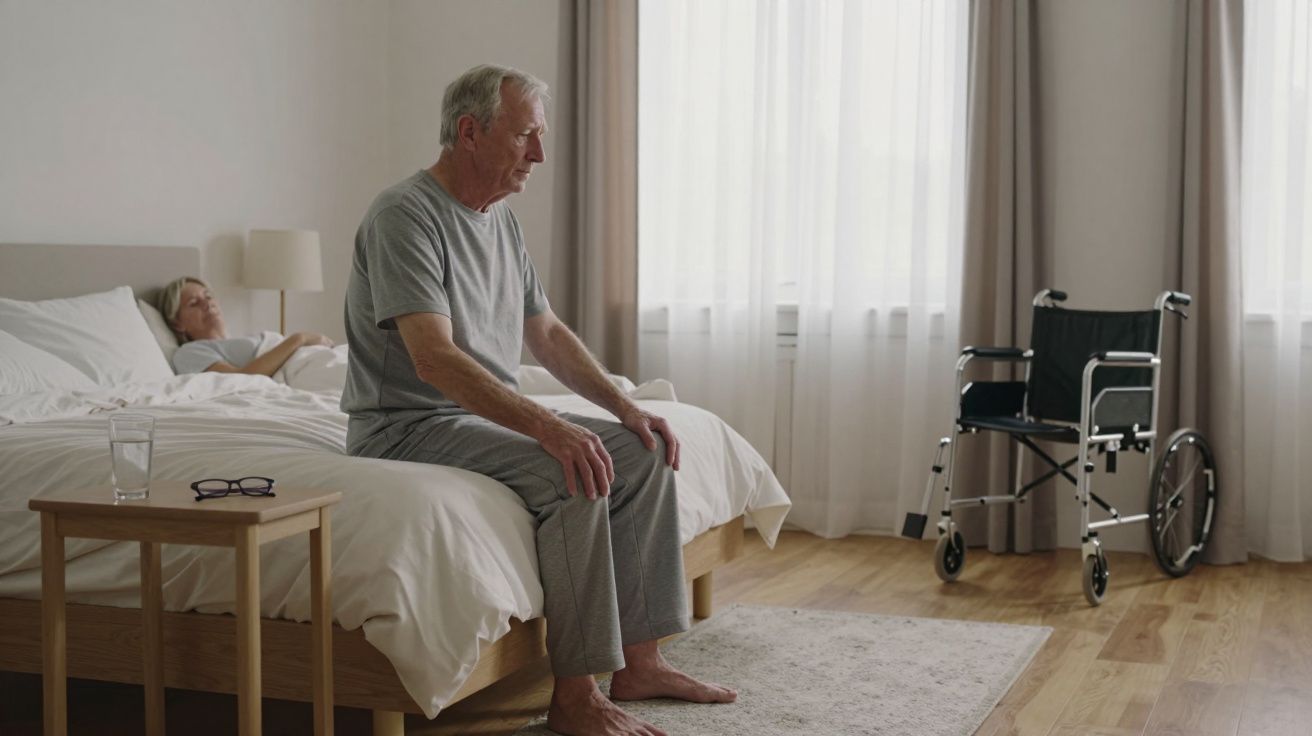
Stairs don’t look dangerous until you miss one. In daylight, contrast does all the work: you can see where each tread starts and ends, where the turn is, where the handrail breaks. At night, a single bright bulb at the top or bottom often throws more shadow than clarity, especially on carpeted or darker steps. Your depth perception gets worse when you’re sleepy, and if you’re over 60, on sedating medication, or dealing with reduced vision, that wobble is magnified.
Electricians say many homes rely on switches placed in all the wrong places. You creep out of the bedroom, feel along an unfamiliar wall in the guest room or rental, or simply give up and walk the stairs in near darkness because you don’t want to wake anyone. That’s when toes catch on noseings, slippers skid, and pets end up exactly where you don’t expect them. Lighting that quietly marks the path can shift the odds in your favour without turning night into day.
The aim is not brightness, it’s guidance: enough light to see each step, not enough to jolt you fully awake.
The “glow strip” trick electricians actually use at home
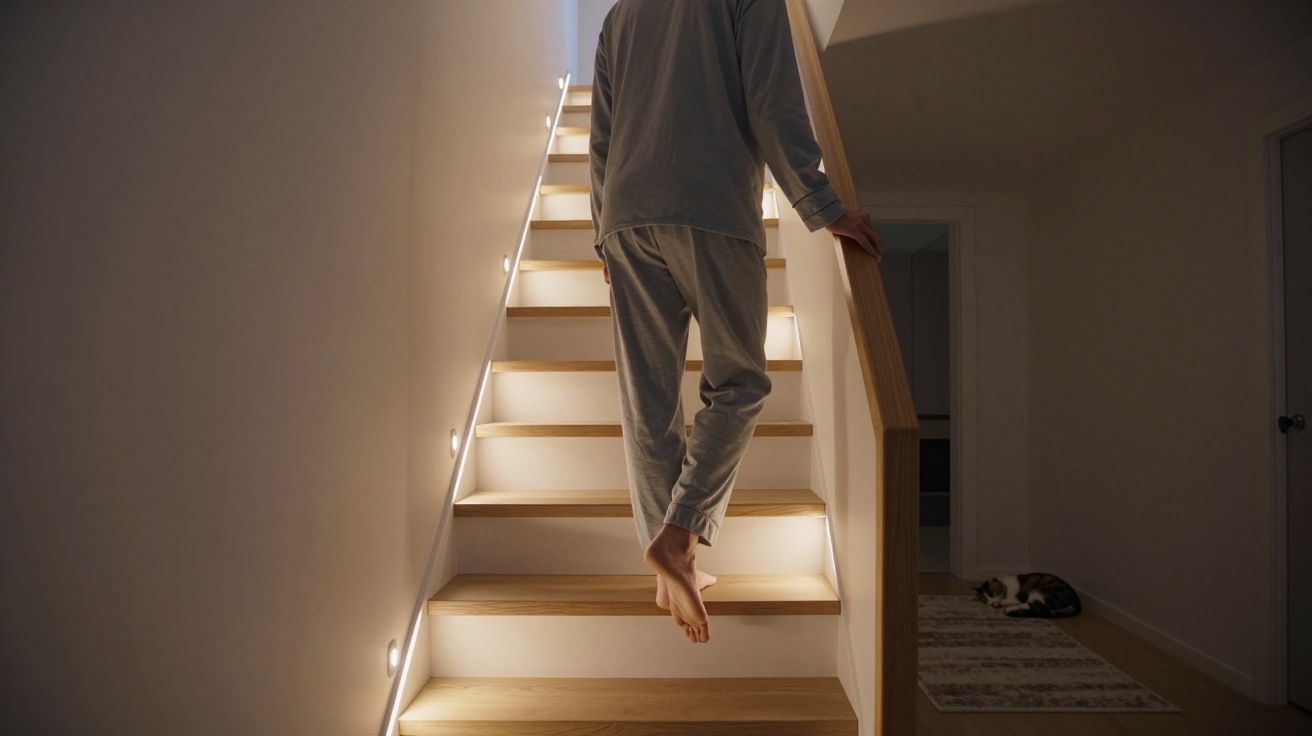
Ask electricians what they install in their own stairwells and a pattern emerges. Many mention some version of the same thing: low‑wattage, low‑level lights set into the wall or under the handrail, controlled by a sensor or timer. Think of it as runway lighting for humans who need the loo. The clever bit is where and how the light hits. Instead of a downlight shining straight into your pupils, these fittings graze the front edge of each step so your brain can read the pattern without effort.
The simplest version needs no rewiring: plug‑in, motion‑sensing night lights at knee or skirting level, spaced along the staircase and landing. They sip power, flick on when they sense movement, and switch off again without you touching a thing. A more permanent version uses tiny recessed LED step lights or a continuous LED strip tucked under the nosing or along the underside of the handrail. Done properly, you see a soft line of light and clear stair edges, not the individual fittings.
Electricians lean on this partly because it’s robust. LEDs run cool, last for years, and can often stay on at a low glow for pennies a month. More importantly, no one has to remember which switch to hit at 3am. The system simply notices you, wakes up gently, and then goes back to sleep when you do.
How the right kind of light helps sleepy brains
There’s some quiet science behind that cosy glow. Your night vision is surprisingly good once your eyes adjust, but it hates glary contrast. A single bright bulb in a dark stairwell forces your pupils to clamp down, leaving shadowed areas harder to read. When light comes from lower down and is diffused, it spreads more evenly across the steps. Your brain gets a clean outline of each tread, even if you’re barely awake.
Colour matters too. Very cool, blue‑heavy light can nudge your body clock and make it harder to slip back into sleep. That might be fine over a desk; it’s not what you want after a quick trip to the loo. Warm white LEDs (around 2700–3000K) offer enough clarity without the wake‑up call. Many electricians now specify warm, dimmable strips or integrated step lights on a very low setting overnight, reserving bright, cooler lighting for daytime cleaning or decorating.
Pick a warm, low‑glare light at ankle or knee height and you help your feet and your sleep at the same time.
A simple, step‑by‑step approach you can actually live with
You don’t need to rebuild the staircase or learn to wire a dimmer to make a difference. Most homes can move from “hazard” to “helpful” in a couple of small, practical steps.
Start with a walk‑through at night, not in daylight. Move along your usual route from bed to bathroom and back, and notice where you hesitate, squint, or grab the wall. Those are the spots worth a tweak. Then layer in changes that match your budget and confidence:
- Begin with plug‑in or USB night lights. Choose models with motion sensors and a warm tone, and place them at skirting level at the top and bottom of the stairs, plus the landing outside the bathroom.
- Tidy what the light reveals. Once you can actually see more, remove loose rugs at the stair foot, tuck away trailing cables, and relocate shoes that like to linger on the bottom step.
- Add LED strip or step lights if you own the place. An electrician can run a low‑voltage strip along the underside of the handrail or fit discrete step markers tied to your existing lighting circuit and a sensor or timer.
- Think in routes, not rooms. It’s no use having a perfectly lit staircase if the bit between bed and landing is pitch black. A single, low‑level light outside the bedroom door can smooth that link.
The test is simple: can you walk from bed to loo and back, at your usual half‑asleep pace, without hunting for a switch or losing track of the steps. If the answer is yes, you’ve done enough.
Quick comparison of common options
| Option | What it involves | Best for |
|---|---|---|
| Plug‑in motion night lights | No wiring; place at sockets along stairs and landing | Renters, tight budgets, quick fixes |
| LED strip under handrail or nosing | Low‑voltage strip, usually fitted by an electrician | Owners wanting a neat, built‑in look |
| Recessed step lights | Small, wall‑mounted LEDs on selected treads | Narrow stairs, stylish but subtle upgrade |
Safety, wiring and when to call a professional
Electricians are admirably blunt on this: don’t start chiselling channels into your stair wall for cables unless you know what you’re doing. Battery and plug‑in solutions are fine as DIY, but anything that taps into your fixed wiring, sits in a wall, or runs near children’s reach is worth a qualified eye. In the UK, Part P regulations cover electrical work in the home, and a registered electrician can certify that what you’ve had installed is safe.
They will also think through things you might not. Where will small hands poke? Will the dog chew that cable if it’s left loose under the bottom tread? Is the fitting low‑profile enough that it won’t catch stockings or trouser legs as you walk past. A good installer will bias towards tamper‑resistant, low‑voltage gear on the stair itself and keep power supplies tucked away.
Even with plug‑in gear, a few rules are worth following. Avoid overloading socket adaptors, keep cables away from walkways, and lean towards products with a proper CE or UKCA mark and a recognisable brand. A night light is no bargain if it flickers, overheats, or pops off the wall just when someone grabs for balance.
Small changes that matter more than you think
In fall clinics and fracture wards, staff quietly collect the same stories: missed last step, tripped over the cat, misjudged the turn on the landing. Lighting won’t remove every risk, but it shifts the balance away from guesswork towards gentle guidance. The right glow can make visitors feel less disorientated, reassure children on new stairs, and give older relatives more confidence to stay upstairs a bit longer.
Think of it less as a gadget and more as a habit‑helper. Light that just comes on when you move nudges you towards using the handrail, placing your feet squarely, and noticing that glass left on a step before it becomes a slip. Once installed, you stop thinking about it. The stairs simply feel calmer, clearer, and less like an obstacle course on the way to the loo.
The best safety gear is the kind you forget you’re using until the one night you really need it.
FAQ:
- Will a few night lights really make a difference? For many people, yes. Marking the stair edges and landing path reduces guesswork, especially when you’re drowsy, unfamiliar with the house, or dealing with reduced vision. It’s not a cure‑all, but it’s a low‑cost way to cut common trip scenarios.
- What colour light should I choose for night‑time use? Go for warm white (around 2700–3000K). It provides enough contrast to see steps clearly without the harsh, blue‑rich glare that can interfere with getting back to sleep.
- Is LED strip lighting on stairs expensive to run? Proper LED strips and step lights draw very little power. Left on at low brightness overnight, they usually cost pennies per week, often less than an older single bulb being switched on and off.
- Can I install stair lights myself? Battery and plug‑in night lights are generally safe as DIY if you follow the instructions and keep cables tidy. Anything that involves your fixed wiring, new switches, or cutting into walls should be done or at least checked by a qualified electrician.



Comments (0)
No comments yet. Be the first to comment!
Leave a Comment