The surprising reason paramedics want you to change your phone’s ICE contact today
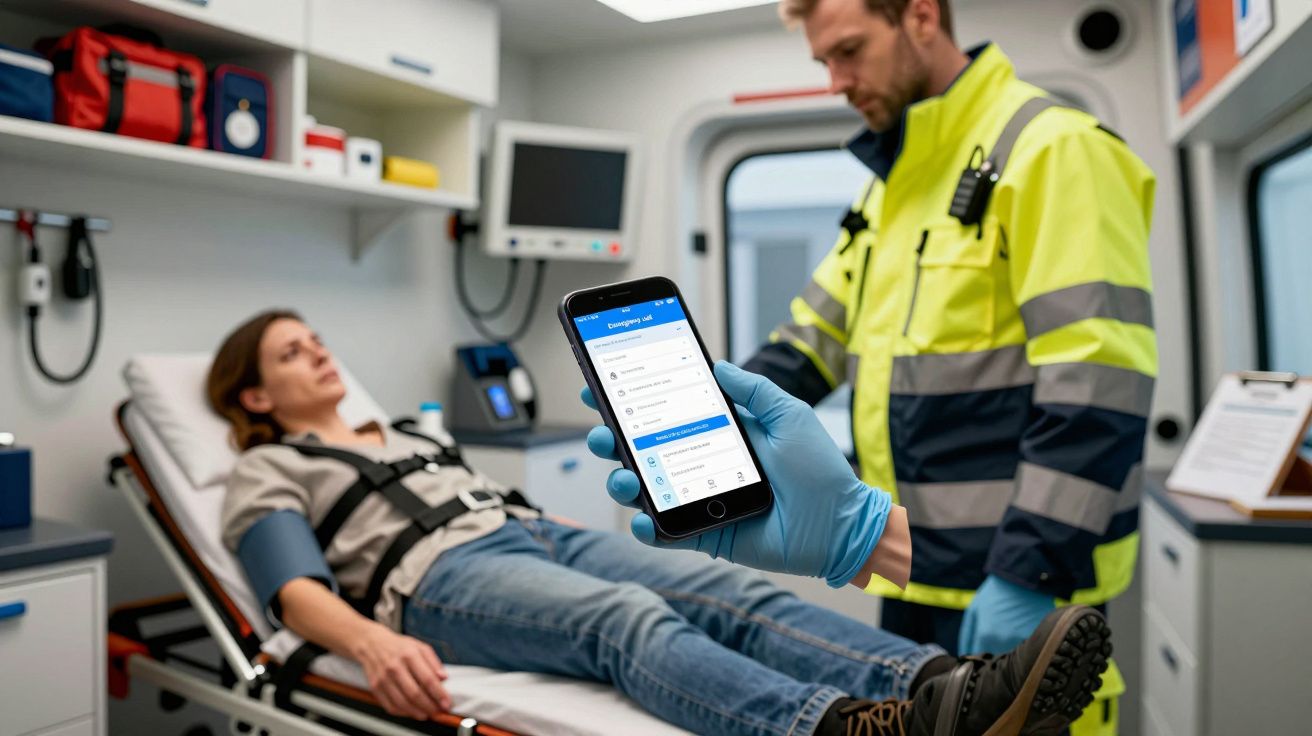
The siren cuts out as the ambulance doors slam. A paramedic leans over you, gloves snapping, questions coming fast: “Any allergies? What medication do you take? Who can we call?” Your phone is in their hand, screen cracked, fingerprint sensor useless. They tap “Emergency call”, then “Emergency information”. Nothing. The ICE contact you carefully saved five years ago is tied to a number you no longer use. In a crisis, your “In Case of Emergency” plan is silently failing.
Most of us assume that adding “Mum (ICE)” to a contact is enough. It used to be. The way modern phones lock, sync and hide data means that old‑school ICE entries often sit out of reach when they matter most. What paramedics really need is different from what many of us have set up.
This is not about being more organised or “good with tech”. It is about whether a stranger can see the three facts that can change your treatment in the first ten minutes.
Why your old ICE contact might be useless now
Smartphones have grown more private by design. Face ID, fingerprint unlock, and stronger default encryption make your data safer day to day. In an emergency, that same protection can turn your phone into a sealed box.
Paramedics in the UK can usually get to two places on a locked smartphone:
- The emergency dial screen.
- Any medical or emergency information you have chosen to show there.
What they cannot do is scroll through your full contact list or messaging apps. An ICE contact saved like any other person sits behind the lock screen. If your phone is face‑down on the pavement and you are unconscious, nobody is unlocking it with your thumb.
The harsh reality: if your emergency details are not visible from the lock screen, they effectively do not exist when seconds count.
Numbers also go stale. People change providers, partners, jobs. Families fall out. A surprising number of “Mum – ICE” entries now lead straight to voicemail or a dead line. Paramedics in several UK trusts report wasting precious minutes trying three or four numbers that never pick up.
What crews actually look for first
When paramedics pick up a stranger’s phone, they are not trying passwords. They are checking the few unlocked corners that modern operating systems allow.
On most recent iOS and Android phones, they look for:
- “Emergency call” at the bottom of the lock screen.
- “Emergency information” or a small “Medical ID” icon near the keypad.
- Any obvious note or widget that shows key details.
They are hunting for four specific kinds of information:
- Life‑threatening risks – severe allergies, blood‑thinning medication, serious conditions like epilepsy, diabetes or heart disease.
- Baseline needs – regular drugs, implanted devices, whether you are pregnant.
- A live, reachable person – someone who can give history, consent and context.
- Practical clues – your first language, GP practice, whether you live alone.
A neat, labelled ICE card in a wallet is still useful. So is a medic‑alert bracelet. But paramedics increasingly start with the device you always carry: your phone.
How to set up an ICE that paramedics can actually use
Every phone does this slightly differently, but the logic is the same. You are choosing what a stranger is allowed to see without a passcode. Think of it as a small, deliberate leak in a very secure system.
Here is the simple pattern they wish everyone followed:
Create a medical profile that is visible from the lock screen.
Add:- Full name and year of birth
- Main medical conditions
- Allergies (especially to medicines, latex, foods, contrast dyes)
- Critical medication (for example, blood thinners, insulin, anti‑epileptics)
Add 1–2 ICE contacts and label them clearly.
Use:- Full name (“Emma Carter – partner”, not just “Emma”)
- Relationship
- Mobile number, plus an alternative if they have one
Turn on the “show on lock screen” or “share during emergency call” option.
This is the step most people miss. Without it, the details stay invisible.Test it like a stranger.
Lock your phone. From the lock screen, tap:- “Emergency” → “Medical ID” or
- The little emergency info icon
Check: can you see those conditions, allergies and contacts without unlocking?
If you cannot see it from a locked screen, neither can the paramedic trying to save your life.
A tiny checklist you can screenshot
- Add medical conditions, allergies and key medicines.
- List one main ICE contact and one backup.
- Switch on “show when locked” or equivalent.
- Test it from the emergency dial screen while the phone is locked.
- Add a simple ICE note in your wallet as a belt‑and‑braces backup.
The details that change treatment in minutes
From a crew’s point of view, three short lines of text can alter your care more than ten minutes of guesswork.
Consider these examples:
“Warfarin for mechanical heart valve”
A fall with a head injury becomes far more time‑critical if they know your blood is thinned. It can trigger a faster CT scan, earlier reversal drugs, and transfer to specialist centres.“Severe penicillin allergy – carries adrenaline auto‑injector”
This stops a routine antibiotic choice from becoming a life‑threatening reaction. It also prompts crews to search for your auto‑injector.“Type 1 diabetes – insulin pump – lives alone”
Confusion or collapse might be treated as a stroke or intoxication if nobody knows your background. Listing diabetes speeds up glucose checks and insulin decisions.
Paramedics would rather have too much relevant detail than too little. Long essays are not necessary. Short, sharp statements work best when read at speed, in bad light, on a shaking road.
Why they want you to update it today, not “sometime”
Emergency care hinges on what is true now, not in 2019. An outdated entry can be worse than nothing.
Common problems crews report include:
- Ex‑partners still listed as primary ICE contacts.
- Deceased relatives at the top of the list.
- Allergies you no longer have, or missing ones you developed later.
- Old landlines that no one checks.
- A “GP” number that leads to a surgery you left years ago.
Updating takes less than five minutes. Leaving it undone can add real risk if you have:
- Started or stopped important medication.
- Developed a serious new diagnosis.
- Moved in with someone new or become a carer yourself.
- Changed your main mobile number.
The ask from paramedics is simple: treat your ICE information like you treat your MOT. Put a quiet reminder in your calendar once a year. A quick check, a tiny edit, and you are covered.
Extra steps that help in real‑world emergencies
Phones fail. Batteries die. Screens shatter. Crews work with redundancy in mind, and you can too.
Tiny habits that make a big difference:
Carry a simple ICE card in your wallet with:
- Name, date of birth
- One key condition or allergy
- One main contact and number
Use plain language.
“Nut allergy – has EpiPen” is clearer than a list of Latin names.Make it obvious for first responders.
Some people add a short lock‑screen note such as:
“See Medical ID / wallet card for allergies and ICE contact.”Tell your ICE person they are your ICE person.
Make sure they:- Know your basic medical history.
- Know where you keep medicines.
- Are happy to pick up an unknown number, even late at night.
This is especially important for people who live alone, have long‑term conditions, or spend a lot of time driving or cycling.
The tech bit, minus the jargon
Behind the scenes, your phone’s emergency info is a controlled exception to normal privacy rules. It lives in a part of the system that can be displayed without unlocking, but cannot be edited without your passcode.
Think of it like the old medical alert bracelets, updated for the smartphone era. The bracelet shouted the one thing doctors needed to know. Your Medical ID or emergency information can shout three or four.
Paramedics are not trying to invade your privacy. They are trying to see enough to avoid giving you the wrong drug, missing a hidden condition, or calling nobody when they most need somebody.
FAQ:
- Is it safe to show my medical details on the lock screen?
You choose what to share, and it is only basic clinical facts and phone numbers. For most people, the safety gained in an emergency outweighs the small privacy trade‑off.- What if I have no major health problems?
It is still worth adding your name, year of birth and an ICE contact. That alone can speed up identification and family contact if something happens.- Should I delete my old “Mum (ICE)” contact?
You can keep it, but make sure your real ICE entries live in the dedicated emergency/Medical ID section that shows on the lock screen, and that the numbers are current.- Do paramedics actually check phones?
Increasingly, yes-when it is safe and practical. They still rely on bracelets, cards and what bystanders say, but phones are now a routine part of the information hunt.- I have a chronic condition; is a phone ICE enough?
It is a strong start, but also consider a medic‑alert bracelet or card for power cuts, flat batteries and smashed screens. Layers of information keep you safer.

Comments (0)
No comments yet. Be the first to comment!
Leave a Comment