The surprising reason vets ask what time your dog eats, not just what it eats
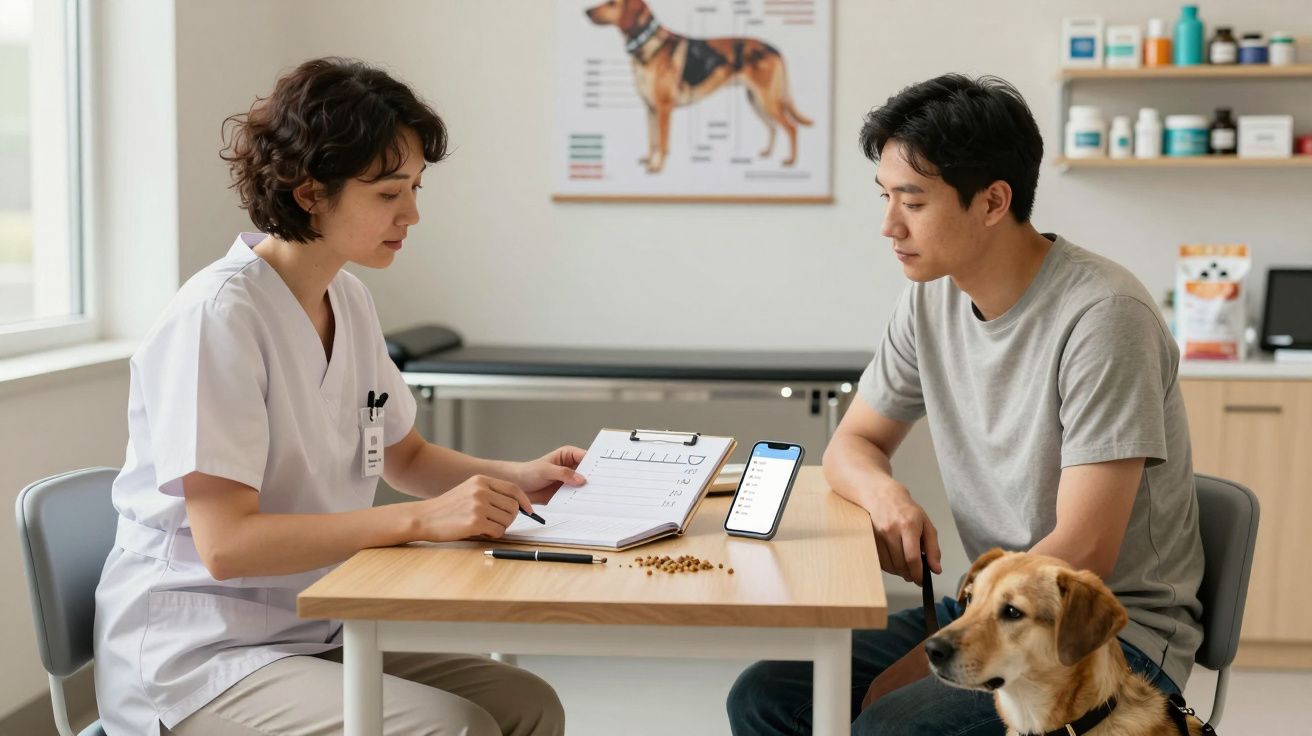
You sit down in the consultation room, lead in one hand, bag of kibble in the other. The vet glances at the brand, nods, and then asks a question that sounds almost nosy: “What time does she eat?” Not how much, not which flavour, but when. It can feel like small talk. It isn’t.
That timestamp on breakfast and dinner quietly shapes everything from your dog’s weight and behaviour to blood tests and tummy upsets. For a lot of cases vets see every day, timing is the clue that unlocks what’s really going on.
Why timing quietly rewrites the health picture
Food is not just fuel; it is a signal. Every meal tells your dog’s gut, pancreas, liver and brain what time of day it is and what kind of work to prepare for. Change the timing and you change those signals, even if the bowl still looks the same.
Two dogs can eat the same food and the same number of calories – but if one grazes all day and the other eats at 7:30 and 18:00 like clockwork, their bodies behave very differently.
Vets ask about timing because problems often show up around meals:
- Vomiting that happens early morning before breakfast.
- Itching or restlessness that appears an hour after dinner.
- Lethargy in the afternoon in a diabetic dog fed only once at night.
- Night-time pacing in a puppy who had a massive late feed.
If you only talk about what’s in the bowl, you miss the pattern wrapped around it.
The gut clock you didn’t know your dog had
Your dog’s body runs on rhythms – internal clocks that repeat roughly every 24 hours. One sits in the brain, but many others live in the gut, liver and fat tissue. Meals are one of the loudest “alarms” those clocks hear.
When you feed at fairly fixed times:
- The stomach starts producing acid in advance.
- The pancreas readies insulin for the blood sugar rise.
- The gut speeds up so food moves along properly.
When meal times jump around or become constant snacking, those rhythms blur. That is when vets start seeing symptoms that look vague from the outside but obvious on a timetable.
Why “free-feeding” can blur the medical picture
Leaving food down all day suits some cats; dogs are often less subtle. Many will overeat, but even those who don’t end up with a flattened-out pattern: no real “fasted” time and no clear post-meal peak.
From the vet’s side, that causes trouble:
- Blood tests are harder to interpret if the dog has just picked at food.
- Weight gain creeps up because there is no easy way to count what was eaten.
- Some medications (for arthritis, epilepsy, diabetes) rely on being given with or away from meals; guessing no longer works.
Regular mealtimes carve useful lines into the day. When something goes wrong, those lines help you and your vet see when wrong began.
Why your vet cares what happens before and after the bowl
Most owners can describe what their dog eats in a sentence or two. Timing questions dig for what happens in the shadows: the hours before and after a meal, where many common conditions reveal their hand.
Stomach upsets: not all sick tummies are the same
A classic example is the dog who vomits “just some yellow foam” early in the morning, seems fine afterwards and eats breakfast enthusiastically. Owners often worry about the food brand. Vets ask about the clock.
Vomiting that consistently appears in the very early morning, after a long gap without food, can point to bile-related irritation rather than a true food allergy.
If you say, “He has dinner at 17:00 and nothing again until 8:00”, your vet can see a 15‑hour fast. For some dogs, that fast is simply too long. Moving dinner later, adding a tiny late-evening snack or splitting the ration can stop the vomiting without switching diets at all.
Other timing clues matter too:
- Loose stools within an hour of eating may suggest gut sensitivity to that food.
- Delayed vomiting several hours after a high‑fat meal can point towards pancreatitis.
- Repeated gurgly tummy and grass-eating mid‑afternoon might relate to an empty stomach gap.
The vet is not just asking when you feed. They are quietly plotting a symptom timeline.
Behaviour and energy swings: food as a mood marker
Lively at 6 am, flat at 11, grumpy and grabby before dinner: across the day, dogs change. Some of that is personality. Some of it is blood sugar and gut comfort.
In the consult room, timing questions often map onto behaviour questions:
- A young dog going wild in the evenings may simply have had their main meal at 16:00, followed by a sugar and energy surge right before you want to relax.
- A dog who guards the food bowl fiercely may be on one big daily meal, turning each feed into a high‑stakes event.
- Whining and pacing in the night can follow late, very large meals that leave the gut working overtime while the household tries to sleep.
Shifting meal times or splitting one big meal into two or three smaller ones can smooth those spikes more effectively than changing the recipe in the bowl.
Weight gain, weight loss and the story the clock tells
When a dog gains or loses weight, calorie count matters. So does timing. Vets know that the same daily calories, distributed differently, can affect how much fat is stored and how much the dog begs.
The late-night bowl that quietly adds kilos
A common pattern looks like this: tiny breakfast because “he’s not interested”, a handful of treats throughout the day, then a big, comforting dinner late in the evening, sometimes topped up if the dog acts hungry.
From the vet’s perspective, several red flags appear:
- Most calories arrive when the dog is about to do the least movement.
- The owner underestimates treats because they don’t see them as “meals”.
- The dog never experiences a longish, comfortable gap between food and sleep.
If you log that the main meal happens at 21:00 and bedtime is 22:30, the recommendation might be to slide dinner earlier, trim the portion, or move more of the ration to breakfast when the dog is fresh and more active.
When weight loss needs precise feeding windows
For underweight, elderly or chronically ill dogs, gaps between meals matter as much as amounts. Long periods without food can worsen nausea, muscle loss and weakness. Vets ask:
- “What time does he have breakfast? And the next feed?”
- “Does she ever leave food, and when?”
- “When do you give medication in relation to meals?”
This helps them design a workable routine: perhaps three small meals instead of two, or a slightly earlier dinner so an evening medication can be taken with something in the stomach. The clock becomes a tool to protect fragile dogs from swings that their bodies no longer handle gracefully.
Blood tests, medication and why “fasting” actually means something
When your vet books a “fasting blood test”, they are not trying to be awkward. They are trying to see your dog’s baseline without the blur caused by a recent meal. To do that properly, they have to know not just what, but when the last food went in.
A “fasted for 12 hours” dog who stole half a sandwich at 1 am is not truly fasted – and a vet who does not ask about timing may misread the results.
Timing matters for:
- Glucose and insulin tests: Food within the last few hours can hide diabetes or mimic it.
- Pancreas checks: High-fat food too close to the test can wobble lipase and amylase readings.
- Prescription drugs: Some tablets must be given with food to avoid stomach irritation; others work best on an empty stomach.
That is why you often hear very specific instructions: “Last meal at 18:00, no breakfast, water allowed” or “Give this painkiller with her dinner at 19:30, not before.” Your vet will then ask if that really happened, not because they distrust you but because it changes how they read the numbers in front of them.
Routine, anxiety and the dog who lives by the clock
If you watch your dog for a week, you may notice they already know the time better than your smartwatch. They wait at the door five minutes before the school run, hover by the cupboard exactly at biscuit o’clock, and move towards the kitchen before you stand up.
Regular feeding times become anchor points in their day. When those anchors drift or vanish, some dogs become unsettled:
- Rescue dogs with food insecurity may panic if dinner is sometimes at 17:00, sometimes at 21:00.
- Dogs with separation anxiety cope better when departures and meals follow a predictable rhythm.
- Senior dogs with fading vision or hearing rely more on routine; mealtimes are part of that structure.
In the surgery, that means a behaviour consult rarely starts with “What brand do you feed?” and ends there. It usually includes, “Talk me through a normal day – what time does he wake, walk, eat, nap?” The timing shows where pressure points and uncertainties sit.
Simple ways to make timing work for your dog (and your vet)
You do not need a laboratory schedule on the fridge. Small, consistent habits give your dog’s body and your vet almost everything they need.
Build a loose but reliable timetable
Aim for:
- 2 meals a day for most adult dogs, roughly 8–12 hours apart.
- 3–4 smaller meals for puppies, toy breeds and some medical conditions (as your vet advises).
- Treats measured and mentally logged between meals, not as invisible extras.
“Between 7:00–8:00” and “between 18:00–19:00” is fine; perfection is not required. What helps is avoiding a 7:00 breakfast one day and a 12:00 brunch the next.
Track patterns when something seems off
For a few days before a vet visit, note:
- Meal times, including table scraps and chews.
- Symptom times (itching, licking, vomiting, restlessness, toilet trips).
- Medication times and doses.
You do not need an app; a notebook or phone notes will do. When the vet asks, “When does this usually happen?” you can answer with more than “Sometimes.” That often speeds up diagnosis and may avoid unnecessary tests.
FAQ:
- Does my dog really need meals at exact times? No. A 30–60‑minute variation is usually fine. The goal is a consistent pattern, not a military timetable.
- Is it bad to feed just once a day? Some working and large‑breed dogs cope well with one feed, but many pets do better with two smaller meals to avoid hunger spikes, begging and some stomach issues. Ask your vet what suits your individual dog.
- Can I leave food down all day if my dog doesn’t overeat? Some dogs manage this without gaining weight, but it makes medical monitoring and medication timing harder. Measured meals twice a day are easier to track and adjust.
- Why must my dog fast before some blood tests? Fasting clears the short‑term effects of food on blood sugar and fats, giving a clearer view of underlying health. Eating too close to the test can blur the picture and lead to repeat visits.
- What should I tell my vet at check‑ups? Mention what your dog eats, roughly how much, and when meals, treats and medications usually happen. Any pattern you notice around symptoms – “always an hour after dinner”, “only first thing in the morning” – is gold for your vet.

Comments (0)
No comments yet. Be the first to comment!
Leave a Comment