The “two-minute rule” productivity coaches say stops dishes and clutter piling up
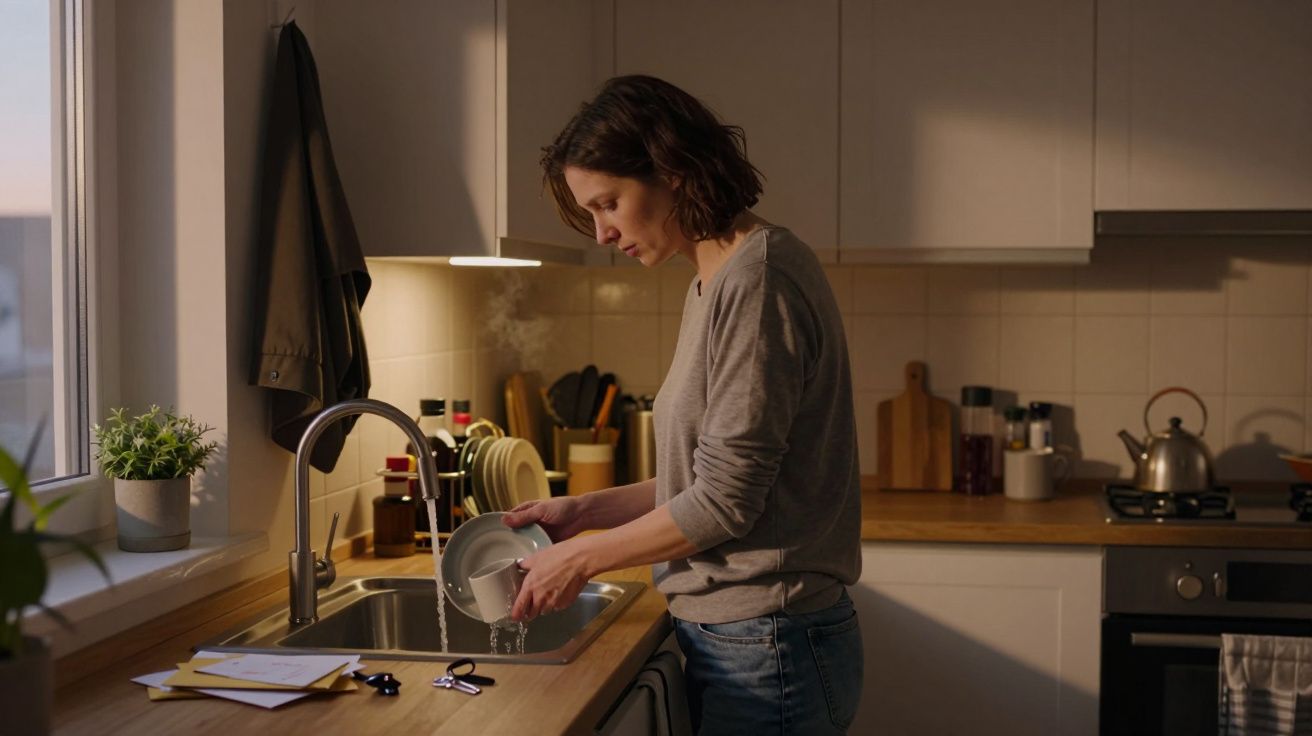
The mug goes in the sink “just for now”. Post comes through the letterbox and lands on the table because you’re in the middle of something. A coat misses the hook by a few inches and slumps over the back of a chair. None of it looks dramatic in the moment, yet by Friday the kitchen feels hostile and every surface is speaking in capital letters.
You didn’t plan chaos. You just postponed a dozen tiny actions that never quite found their way back into the day.
The two-minute rule is the small, almost suspiciously simple habit that many productivity coaches swear by to stop that slow slide. It won’t reorganise your entire house overnight, but it does change what happens in the five seconds between “I’ll do it later” and actually walking away.
What the two-minute rule really is
In its classic form, the two-minute rule says: if a task will take less than two minutes, do it now. No list, no scheduling app, no negotiation. Just now.
That time limit matters. Two minutes is short enough that your brain can’t reasonably argue it will “ruin the evening”, but long enough to cover most of the micro-tasks that snowball into visible mess. Rinse the mug. Hang the coat. Put the phone charger back in the drawer instead of on the floor.
Coaches often describe it as a filter for decisions. Every time you touch an object, open an email, or notice something out of place, you quietly ask: “Under two minutes?” If the answer is yes, the decision is made. You finish it before your mind starts telling stories.
The rule isn’t about doing everything immediately. It’s about removing the easy clutter that never needed to become a “job” in the first place.
Think of it as anti-procrastination in pocket size. You’re not trying to become a new person with a colour-coded cleaning schedule. You’re making it slightly harder for tiny tasks to escape into the future, where they gang up on you.
Why your brain resists tiny tasks (and why they pile up)
On paper, “rinse plate, 20 seconds” sounds laughably manageable. In reality, tired brains are brilliant at turning that 20 seconds into a saga. You tell yourself you’ll “do all the washing up together later” or that you “need to sit down first”, and your body listens.
Psychologists point to a quirk called decision fatigue: the more choices you make in a day, the more your brain hunts for shortcuts. “Leave it for later” is one of the easiest shortcuts going. It feels like saving energy, even though future-you pays more.
There’s also a motivational gap between starting and continuing. Beginning a task, even a tiny one, asks for a mental gear shift. Once you’ve started, however, carrying on often feels oddly natural. This is why a “quick tidy of the worktop” sometimes turns into wiping the hob and giving the sink a scrub without much extra effort.
The two-minute rule sidesteps motivation by shrinking the start. You’re not committing to “clean the kitchen”. You’re committing to 90 seconds with the dishes already in front of you.
Over days, those small starts change the background level of clutter. Fewer half-done things sit in your eyeline, so you spend less time feeling behind before you’ve even started.
How the rule works in real homes, not show homes
The two-minute rule has a reputation for office emails and to‑do lists, but it behaves quietly well with domestic mess.
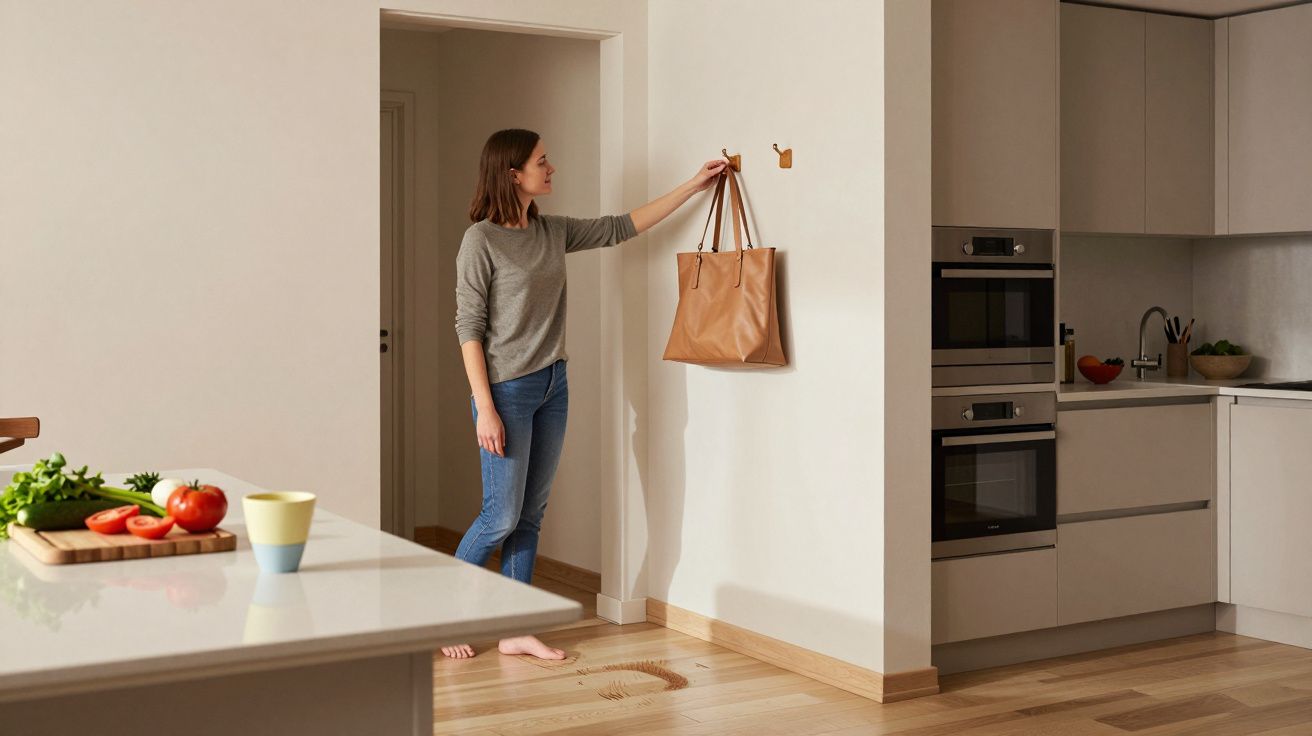
Picture a weekday evening. You walk in with a bag, some post, and a half-empty water bottle. Under the two-minute rule, you:
- Hang the bag on its hook instead of the floor.
- Recycle the obvious junk mail immediately.
- Tip the last of the water into a plant and put the bottle by the sink.
Each action takes seconds. The hallway stays navigable, plants get a drink, and you’ve handled three items that otherwise would have become part of tomorrow’s visual noise. No heroics, no deep clean.
In the kitchen, it might look like:
- Rinsing the chopping board as soon as you’ve finished using it.
- Wiping a single ring of sauce off the hob while the pan cools.
- Putting spices straight back in the cupboard, not “for now” on the counter.
None of these moments feels like “cleaning the kitchen”. Yet the room you meet at bedtime feels noticeably less accusatory.
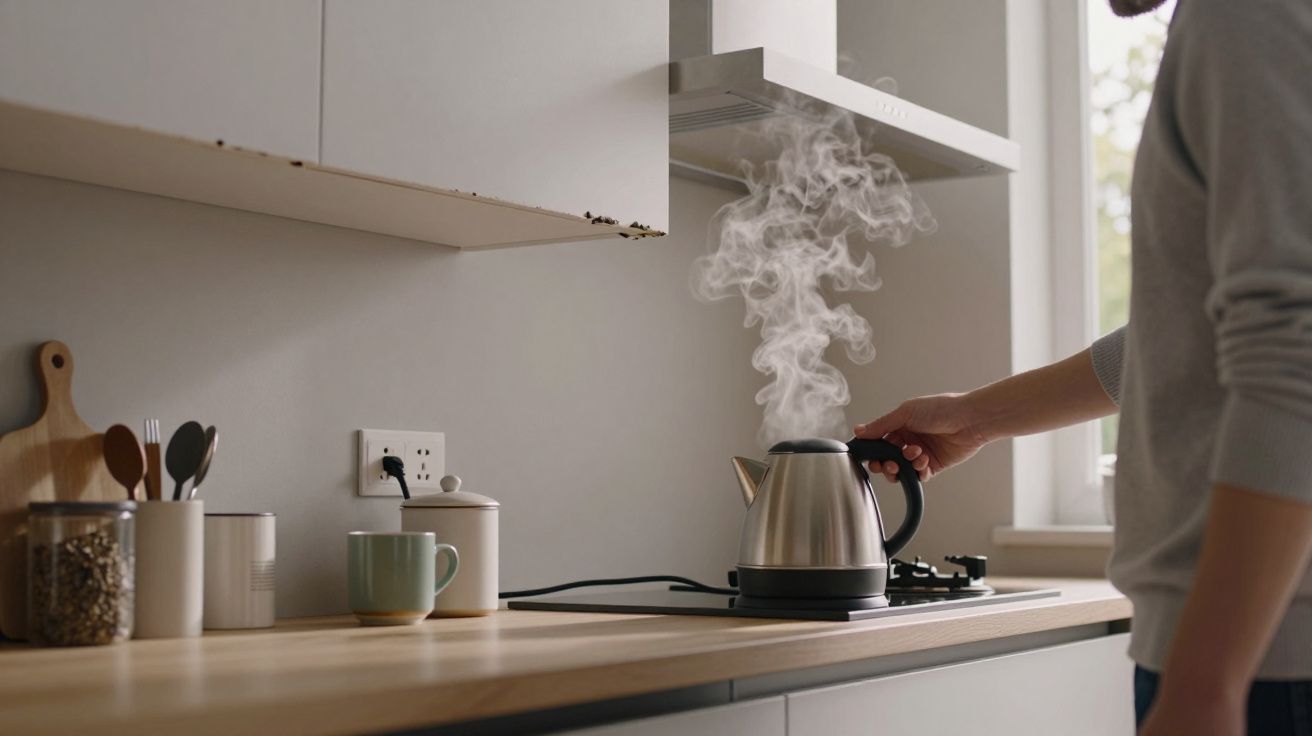
Coaches working with parents often recommend using natural pauses - kettle boiling, microwave humming, bath running - as two-minute pockets. You’re already grounded in that room; you may as well fold one towel, clear one step of the stairs, or stack dishes while the timer counts down.
Turning the rule into a habit instead of a phase
Good intentions last about as long as the first bad night’s sleep. For the two-minute rule to stick, it needs less willpower and more frictionless design.
Start with one or two “trigger zones” rather than your entire life. Common candidates are:
- The kitchen sink and surrounding counter.
- The chair that always collects clothes.
- The patch of hallway where bags and post land.
For a week, apply the rule aggressively only in those zones. If something under two minutes appears there, you act. Everywhere else, you’re allowed to be your usual self. This keeps the experiment small enough that you don’t mutiny against it.
Aim for consistency, not perfection. Missing an opportunity isn’t failure; it’s just one more chance to notice the next one.
Physical layout also matters. Hooks at the right height, a small basket by the door for keys and post, a laundry hamper actually in the bedroom - all of these cut the time a task takes, which keeps it within the magic two‑minute window. If the bin is downstairs and the packaging is in the attic room, “later” will always win.
Finally, make the rule visible. A sticky note by the sink, a reminder on your phone for a week, or a tiny question on the fridge: “Under 2 minutes?” The goal is to catch the thought before “I’ll do it after this show” escapes your lips.
Everyday examples of two‑minute wins
- Hang up the towel instead of draping it on the door.
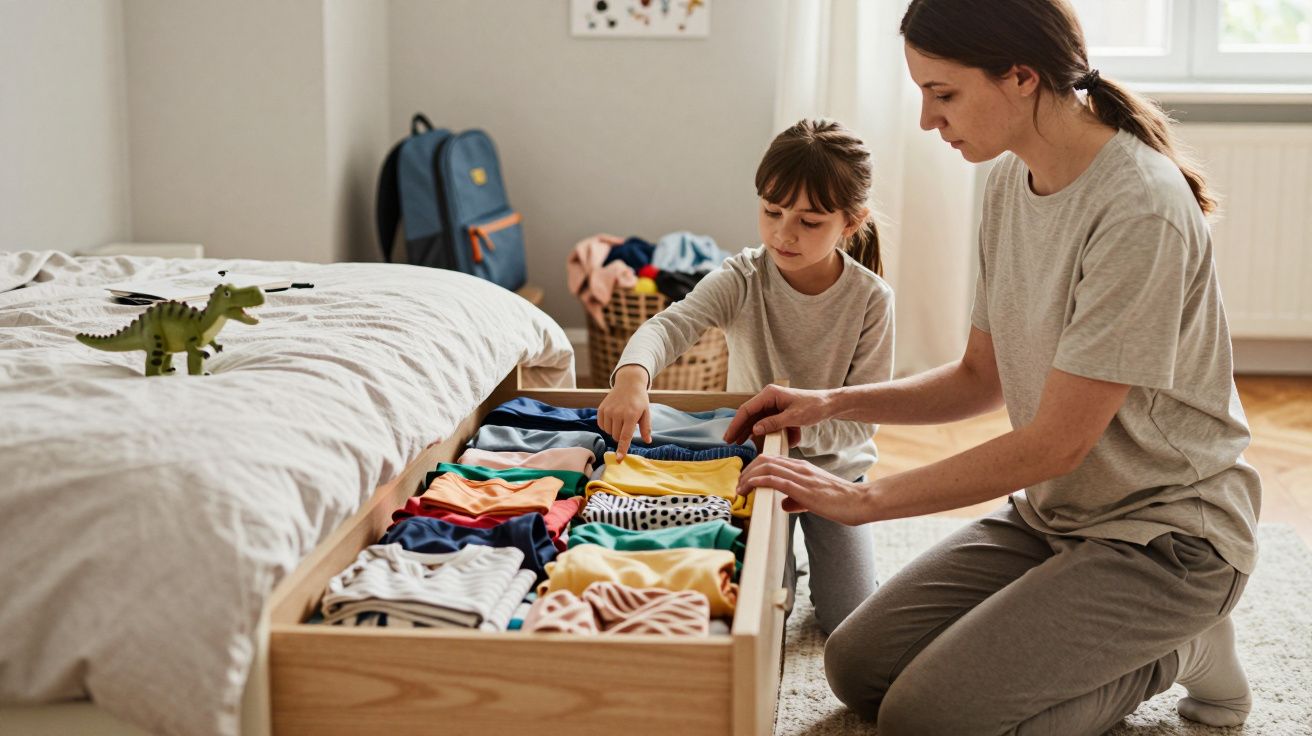
- Put dirty clothes straight into the hamper, not on “the chair”.
- Return scissors, tape, and pens to their pot right after use.
- Delete three pointless photos while you’re waiting for a text.
- Clear car rubbish at the petrol station instead of driving home with it.
Each one looks trivial. Together, they build a house that doesn’t nag you from every corner.
When not to use the two-minute rule
Used badly, the rule can turn into a different problem: constant interruption. If you leap up to put every single thing away the instant you notice it, you’ll never finish reading an article or writing that email.
Coaches suggest a simple boundary. The rule applies when you’re already in motion - walking through a room, standing in the kitchen, getting up from the sofa - not when you’re deep in focused work. If you spot a two-minute task while concentrating, jot it down and return to it in your next natural break.
It’s also not a substitute for bigger, structural decisions. No amount of micro‑tidying will fix a wardrobe with twice as many clothes as it can hold, or a toy cupboard with no actual storage. The two-minute rule maintains; it doesn’t perform miracles.
Think of it as brushing your teeth, not seeing the dentist. It’s maintenance, not major surgery.
If you share a home, avoid turning the rule into a quiet resentment campaign. Tidy what you can without martyrdom, agree on some shared standards, and remember that other people’s thresholds are different. Inviting housemates or partners to try a two-minute experiment with you usually works better than silently policing every mug.
A gentler relationship with “later”
The deepest change the two-minute rule offers isn’t just a clearer worktop. It’s a slightly kinder relationship with your own future self.
When you wipe that splash now or hang the coat properly, you’re sending a small, practical message: “I don’t want to dump this on you at 10pm.” Over time, that message adds up. You walk into rooms that feel more neutral, less like a to‑do list you’re already failing.
Clutter doesn’t vanish. Life still happens, dinner still explodes across the hob, laundry still breeds in baskets. But the background level of “ugh” eases. You stop needing a full Sunday “reset” because you’ve been quietly resetting, in two-minute slices, all week.
Next time you catch yourself thinking, “I’ll just leave this here for now,” pause. Ask the question. If it’s under two minutes, do it. If it isn’t, that’s fine - you’ve already done enough to make “later” feel a little lighter.
Quick reference: using the two-minute rule at home
| Area | Two-minute actions | Why it helps |
|---|---|---|
| Kitchen | Rinse dishes, wipe small spills, clear post | Stops sink and surfaces becoming stressful |
| Bedroom | Hang clothes, close drawers, clear bedside | Keeps mornings smoother and quicker |
| Hallway | Hang coats, sort post, put shoes away | Cuts visual chaos right as you arrive |
FAQ:
- What if most of my chores take longer than two minutes? Use the rule only for true micro‑tasks: anything under two minutes gets done now, everything else goes on a list or into a time block. Clearing the small stuff makes it easier to face bigger jobs without feeling overwhelmed.
- Won’t I get distracted from important work? Limit the rule to moments when you’re already moving - between tasks, on your way to make tea, or heading to another room. When you’re in focused work, simply note quick tasks and handle a batch of them in your next break.
- Does it still count if I only do one tiny thing? Yes. The value lies in the pattern, not perfection. One plate rinsed, one surface cleared, one item filed away is already less clutter than you had before.
- How long before I see a difference at home? Many people notice a change in one or two zones within a week, especially around sinks, desks and hallways. The house won’t look staged, but it will feel less “behind” most of the time.
- What if I live with people who don’t follow the rule? Apply it to your own actions and personal spaces first. Share the idea, agree on one or two shared hotspots (like the sink or hall), and celebrate small wins rather than criticising every lapse.


Comments (0)
No comments yet. Be the first to comment!
Leave a Comment