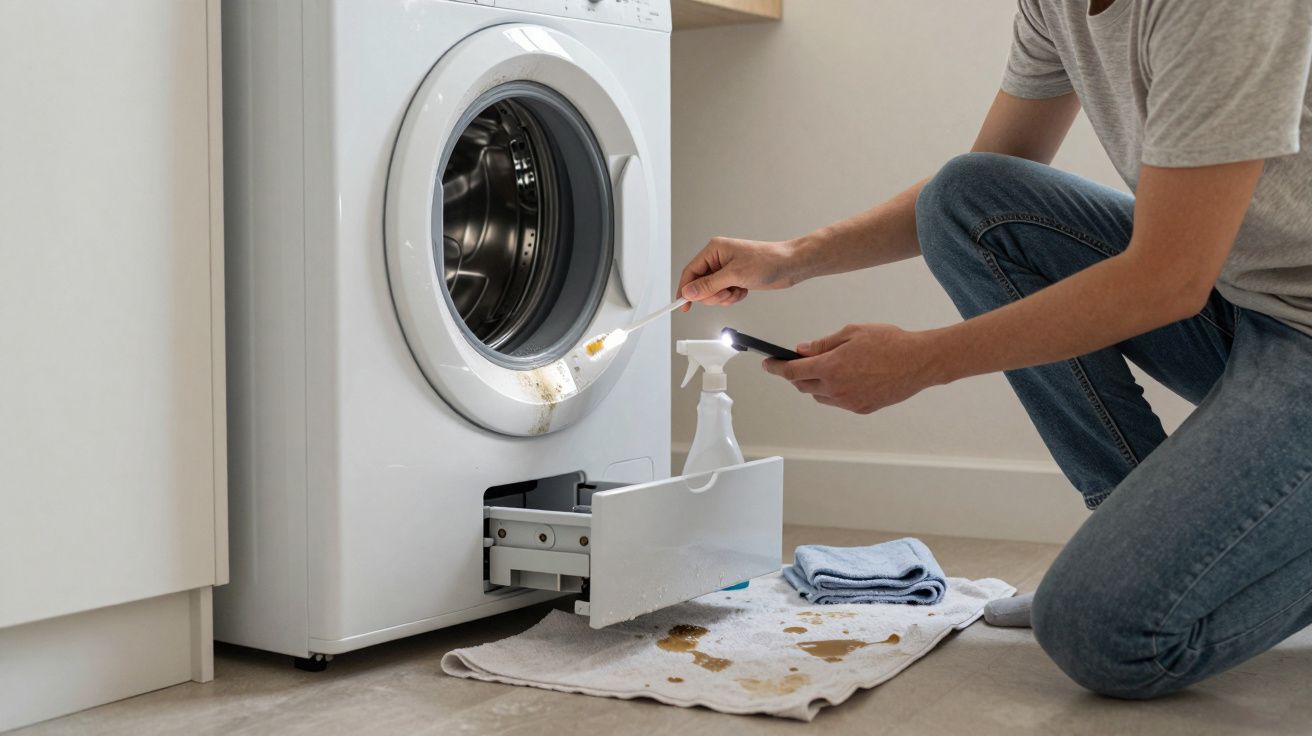
The washing machine drawer section you’re probably never cleaning – and why mould loves it
You slam the drawer shut, jab the start button and walk away, assuming the machine is busily making things cleaner. Somewhere between the laundry pods, softener and 40°C quick wash, there’s a quiet corner turning into a petri dish. You can’t see it when you wipe the front, and most manuals barely mention it. But mould knows exactly where it is.
Open the drawer fully and peer up. Right at the top, above the compartments, sit the detergent jets: a shallow plastic “ceiling” with tiny holes where water sprays in. That’s the bit almost nobody cleans. Detergent splashes, fabric softener coats it, steam rises, then the drawer is pushed shut, warm and damp. It’s like a little spa break for black slime.
The hidden shelf where mould moves in
The drawer itself usually gets a half-hearted rinse when it looks bad. The bit that stays untouched is the housing: the fixed cavity the drawer slides into, especially the underside of the plastic roof and around the water inlets. You can’t yank it out and swish it in the sink, so it quietly builds up a film.
Detergent residue clings to that roof. Fabric softener, which is often oil-based and gloopy, dries into a sticky layer. Every wash sends warm, humid air swirling round that cavity, but there’s almost no airflow once the cycle finishes. The result is textbook mould habitat: food, moisture, low light and still air.
Look closely with a torch and you’ll often spot it: grey fuzz around the jet holes, black spots in the back corners, a faint orange-pink slime along the edges. That musty “old towel” smell on clothes straight from a fresh cycle? It often starts right there.
Why mould loves the softener side the most
If you use fabric softener, the softener compartment and its immediate neighbours are usually the worst. Softeners are designed to cling to fibres. In the drawer, they cling to plastic instead. Puddles sit in corners after every wash, especially if the machine isn’t quite level. They never fully dry.
Mould and bacteria thrive on that film. They feed on surfactants and fragrance agents, building colonies that look like harmless discolouration at first. Over time, those colonies release spores that get flushed into the drum with the next rinse. The drum looks shiny, the window looks clean, but the water arriving there has already passed over a mouldy plate.
Even if you’ve switched to pods, that roof still catches stray splashes and steam. The less you clean it, the more the residue hardens. That’s why a “monthly drum clean” programme can leave the drawer cavity looking like a forgotten casserole dish.
The five‑minute reset: how to actually clean that section
You don’t need specialist kit, just a small brush and a bit of method. Think of it as descaling your kettle, but horizontal.
Pop the drawer out completely.
Most have a small blue or grey catch in the softener compartment; press it down and pull the drawer free. Take it to the sink and soak it in hot, soapy water.Shine a light into the housing.
Use your phone torch. You’ll see the plastic roof, jet holes and side walls. This is the forgotten zone.Spray and soak.
Fill a spray bottle with hot water and a splash of white vinegar or mild detergent. Generously mist the inside of the cavity, especially the “ceiling” and corners. Let it sit for a few minutes to soften residue.Scrub the roof.
Use:- an old toothbrush,
- a small bottle brush, or
- a cotton bud for tight corners.
Work gently around the jet holes so you don’t damage them. Wipe with a damp microfibre cloth as you go.
Rinse and dry.
Wipe with a clean, damp cloth until no slime or residue comes off. Then go over everything with a dry cloth. Leave the drawer out or the housing open for at least an hour so it can fully air‑dry.Clean the drawer properly.
Scrub each compartment, paying special attention to any removable softener siphon piece (often a blue insert). Rinse, dry and reassemble before sliding it back.
Done right, the musty smell often fades within a wash or two. The next 40°C cycle smells like laundry again, not like a wet cupboard.
How often, how little, and what actually matters
You do not need to add “deep‑clean drawer ceiling” to your weekly chores list.
Most homes can get away with:
- Every 1–3 months: A proper drawer removal and housing scrub.
- Every week or two: Leaving the drawer slightly open after the last wash to dry out.
- When you see residue: A quick wipe of the softener compartment and surrounding area.
Mould is opportunistic, not magical. Break one of its comforts-constant damp, thick residue, or no airflow-and you cut it off at the knees.
Common overkill: running endless hot “maintenance cycles” while never touching the drawer area. The machine burns energy, the drawer stays slimy. Flip that: one sensible cleaning session and a bit of air does more for hygiene than three empty 90°C washes.
Simple tweaks that keep it clean for longer
Small changes make that hidden section much less attractive to mould.
Dial back the softener.
Use the lowest amount that still gives you the feel you like, or skip it entirely and use white vinegar in the softener slot occasionally (check your manual first). Less residue, less slime.Level the machine.
If water pools in one corner of the drawer, adjust the feet so the machine sits more evenly. A spirit level on top helps. When the drawer drains fully, it dries faster.Leave things ajar.
After your last wash of the day, leave both the drawer and door slightly open. It looks less “finished”, but mould hates airflow.Switch to powder for a while.
Powders tend to leave less sticky film in the softener channel than thick liquids. If your drawer is a mess, a few weeks on powder while you clean can help.Do a seasonal reset.
At the shift into spring and autumn, combine a drawer‑cavity clean with a hot drum cycle and a wipe of the door seal. An hour’s effort, a season’s worth of fresher loads.
“Treat the drawer like part of the drum, not just packaging for the detergent,” as one appliance engineer put it. “If water passes it, dirt will find it.”
Quick reference: what to clean, why it matters
| Area | What to do | Why it helps |
|---|---|---|
| Drawer housing “roof” | Spray, scrub with small brush, dry fully | Removes mould and biofilm at source |
| Softener compartment & insert | Soak, scrub, clear siphon holes | Stops gloop pooling and going rancid |
| Drawer front & runners | Wipe with damp cloth, dry | Keeps slides smooth, reduces odours |
FAQ:
- Do I really have to use vinegar?
No. A mild detergent solution works too. Vinegar helps dissolve limescale and soap scum, but don’t use it on natural stone worktops and always follow your machine’s guidance.- Is black mould in the drawer dangerous?
It’s unlikely to harm healthy adults in tiny amounts, but it’s not something you want circulating through clothes, especially for babies or people with asthma. Removing it is the safest option.- What if my drawer won’t come out?
Some integrated or older models have awkward catches. Check the manual or manufacturer’s site; there’s often a hidden tab or a specific tilt angle. In the worst case, you can still spray and wipe the housing with the drawer pulled out as far as it will go.- My clothes still smell after cleaning the drawer – why?
The door seal, drain filter and low‑temperature washes can also harbour bacteria. Clean those areas and run an occasional hot maintenance wash with no laundry.- Can I just use bleach?
Dilute bleach can shift stubborn mould stains, but it can also damage rubber and some plastics if overused. Use sparingly, rinse very well, ventilate, and never mix it with vinegar or other cleaners.






Comments (0)
No comments yet. Be the first to comment!
Leave a Comment