This cheap DIY window film can feel like double glazing, say energy‑efficiency testers
You notice it the first time you walk past the window after sticking it on.
The usual sheet of cold air that lives by the glass is… dulled. The draught on your ankles eases, the room feels less like “outside with furniture” and more like an actual living space. The glass looks the same from across the room, but the room doesn’t feel the same. For a roll of plastic that cost less than a takeaway, it’s disconcertingly effective.
It’s not magic, and it’s not a substitute for brand-new A‑rated windows. Yet energy‑efficiency testers who spend their days with thermal cameras and temperature probes keep saying the same thing: fitted properly, this thin, transparent film can make old single‑glazed or leaky double‑glazed windows behave surprisingly like something much more modern. Not perfect. But close enough that you feel it in your bones and on your bills.
A plastic sheet that behaves like an extra pane
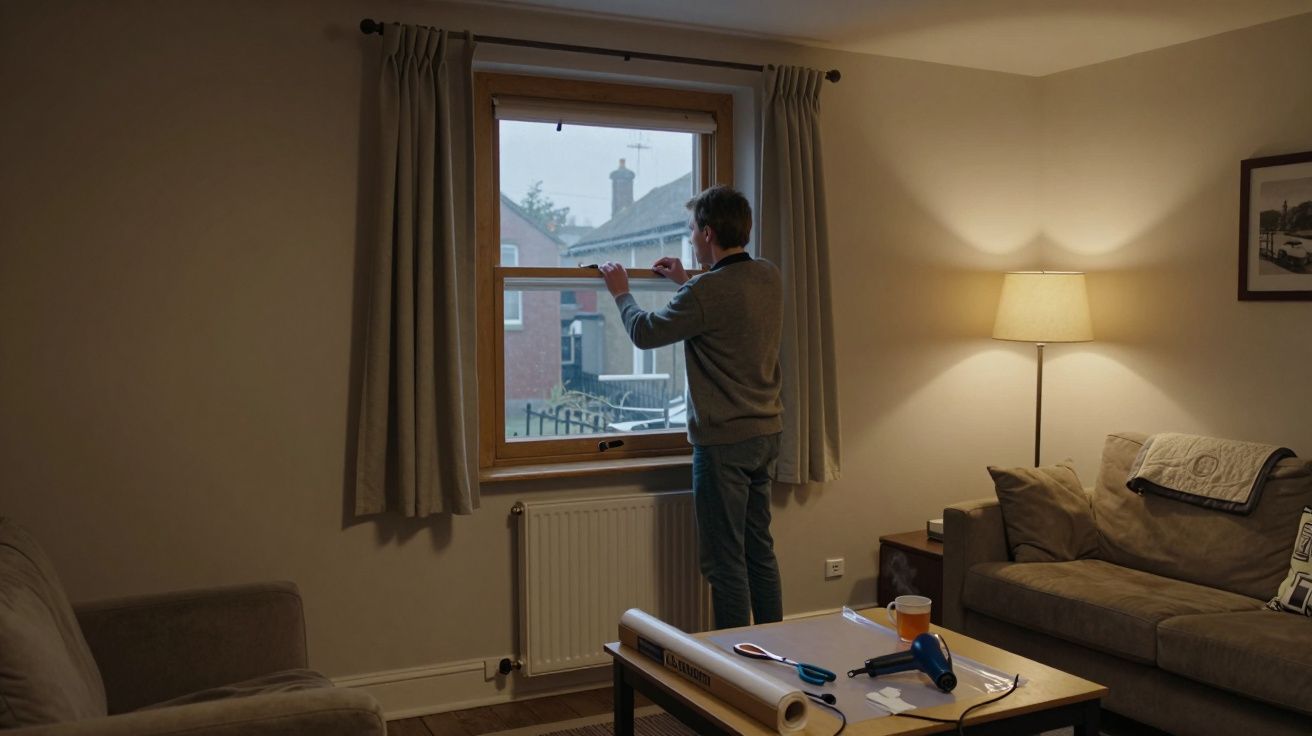
On paper, window insulation film is gloriously boring. It’s a clear, shrinkable plastic sheet, sold in kits with double‑sided tape. You stick the tape round the frame, press the film onto it, then tighten everything with a hairdryer until the wrinkles disappear and the sheet goes drum‑tight.
What you end up with is a still layer of air sealed between the cold glass and the warm room. That trapped air works like the cavity in a double‑glazed unit, slowing down the flow of heat from inside to out, and blunting draughts that sneak through tired seals or warped timber. It’s a fake second pane, about a fiver a window.
When testers compare before‑and‑after with thermal cameras, the picture is blunt. Bare single glass glows orange in the camera’s view, bleeding heat. With the film in place, that glow dulls to a calmer yellow; surface temperatures on the room side rise by a couple of degrees. It’s not a lab-built miracle, just physics obeying itself.
How much warmer does it actually feel?
On the technical side, independent tests on typical British single‑glazed sash or casement windows report a drop in heat loss of around 30–50% through the glazed area when film is used correctly. In plain English, that means far less of your heating pouring straight through the glass on a cold night.
In lived experience, the difference tends to show up in three places: the chill near the window eases, condensation on the inner glass reduces because that inner surface is less icy, and radiators under windows finally stop wasting quite so much effort. People often describe needing one fewer twist of the thermostat for the room to feel “decent”.
Energy modellers who’ve run full‑house calculations say the overall saving on bills is modest on paper – a single‑glazed front room might shave 5–10% off its heating use – but add that up over a winter and over several windows, and it can pay for itself in a few weeks. The point isn’t perfection. It’s cheap resistance against the worst of the leak.
Where it shines (and where it doesn’t)
The film is at its best on:
- Old single‑glazed windows you can’t yet afford to replace.
- Decorative or listed windows where new units are complicated or forbidden.
- Rooms you don’t want to rip apart just to fit new frames.
- Slightly failed double glazing that’s draughty round the edges but structurally sound.
It’s less of a hero in a few cases. If your frames are rotten, warped or soaking wet, a clear sheet of plastic won’t fix the underlying problem and may even hide damage you really ought to see. If you open and close a window every day, the film will drive you mad, because it effectively turns that sash or casement into a fixed pane until spring.
Testers also flag a more subtle point: in homes already fitted with modern, well‑sealed double (or triple) glazing, the extra improvement from film is there but far smaller. You can still use it on the odd stubbornly cold window, but this is really a stopgap tool for draughty, older stock – the millions of Victorian and inter‑war houses that define much of Britain’s heat‑leak problem.
Fitting it so it actually works
The difference between “feels like double glazing” and “flappy clingfilm disaster” is in the install. The kits are simple, but they are not idiot‑proof, and testers see the same errors on repeat.
Give yourself a clear half‑hour per window, not a rushed ten minutes before bed. Clean and dry the frame properly so the tape sticks. Run the tape in a continuous loop without gaps, especially along the bottom where cold air loves to creep. When you first fix the film, aim for gently taut rather than perfect; the hairdryer is what does the final tightening.
Hold the hairdryer 10–20 cm away and work methodically from the centre outwards. You want the film to shrink evenly and become transparent and smooth, not scorch or melt. Done well, you end up with a nearly invisible barrier that you forget about until you notice you’re not reaching for a blanket every evening.
For renters, this is one of the rare efficiency upgrades you can do without drilling, painting or risking your deposit. The tape usually peels off with a bit of patience and a dab of soapy water at the end of the season. The trade‑off is that you will almost certainly have to redo it each winter, because the film isn’t designed as a decade‑long solution.
Doing a quick “is it worth it?” test at home
You don’t need a thermal camera to decide whether to bother. Energy advisers often suggest a simple, domestic version of a stress test.
Pick one of your coldest rooms – the one where you can see your breath on a January morning if the heating’s off. Note roughly what temperature the room reaches in the evening at your usual thermostat setting, and how it feels near the windows compared with the middle of the room. Do this for a couple of nights as a baseline.
Then fit film on the worst offending window or pair of windows only. Keep your heating times and settings the same for a week and pay attention. Does the chill band near the glass shrink? Are you less tempted to nudge the thermostat up? Does condensation pattern change in the mornings? If nothing feels different, you’ve spent a tenner to find out, and you can stop. If it does, you’ve just tested a low‑cost upgrade before rolling it out round the house.
The trap to avoid is letting a few sheets of plastic delay decisions about proper repairs for years. A rotten sill still needs a joiner. Blown sealed units still need replacing. Think of the film as a warm jumper while you save for a new coat, not a reason never to buy one.
The bigger picture: small fixes in a leaky housing stock
Step back, and this is part of a broader story about British homes and heat. Our housing stock is famously draughty, and deep retrofits – full window replacement, wall insulation, new heating systems – are expensive and disruptive. In the meantime, millions of households are juggling high bills, patchy comfort and limited budgets.
Energy‑efficiency testers and advisers talk more and more about “stacking” modest, realistic measures that people can actually do now: draught‑proofing doors, chimney balloons, heavy curtains, reflective radiator panels, and, yes, window film. None of them transforms a house on its own. Together, they change the daily lived experience from “always shivering at the edges” to “mostly fine with the heating on a sensible setting”.
There’s also a fairness angle. Full double glazing for a typical semi can easily run into the thousands. A few kits of film cost under £100. For households choosing between heat and other essentials, that difference is not theoretical. It decides whether any upgrade happens at all this winter.
| Where it helps most | What it does |
|---|---|
| Single‑glazed or leaky windows | Adds a still air gap, cutting heat loss and draughts |
| Rented or listed homes | Allows reversible, non‑invasive insulation |
| Tight budgets | Offers a quick, low‑cost comfort boost while you plan bigger works |
FAQ:
- Will this really feel like double glazing? In strict engineering terms, no: a film kit won’t match a modern sealed unit. But in many older rooms, testers and occupants report a similar feeling of reduced draught and less radiant cold, which is what most people notice day to day.
- Does it cause damp or mould? Used sensibly, it can actually reduce condensation on the inner glass by keeping that surface warmer. It doesn’t replace ventilation, though; you still need to air the room to manage moisture.
- Can I still open the window? Not the part you’ve covered. The film turns that sash or casement into a fixed pane until you remove it, so it’s best used on windows you rarely open in winter.
- Will my landlord allow it? Most tenants get away with it because it’s temporary and doesn’t damage the frame if removed carefully. It’s still wise to check your tenancy or ask, especially in furnished or very tightly managed properties.
- How long does it last? Treat it as a one‑season measure. Some people manage two winters on the same film, but clarity and tightness usually degrade, and the kits are cheap enough that annual replacement is realistic.



Comments (0)
No comments yet. Be the first to comment!
Leave a Comment