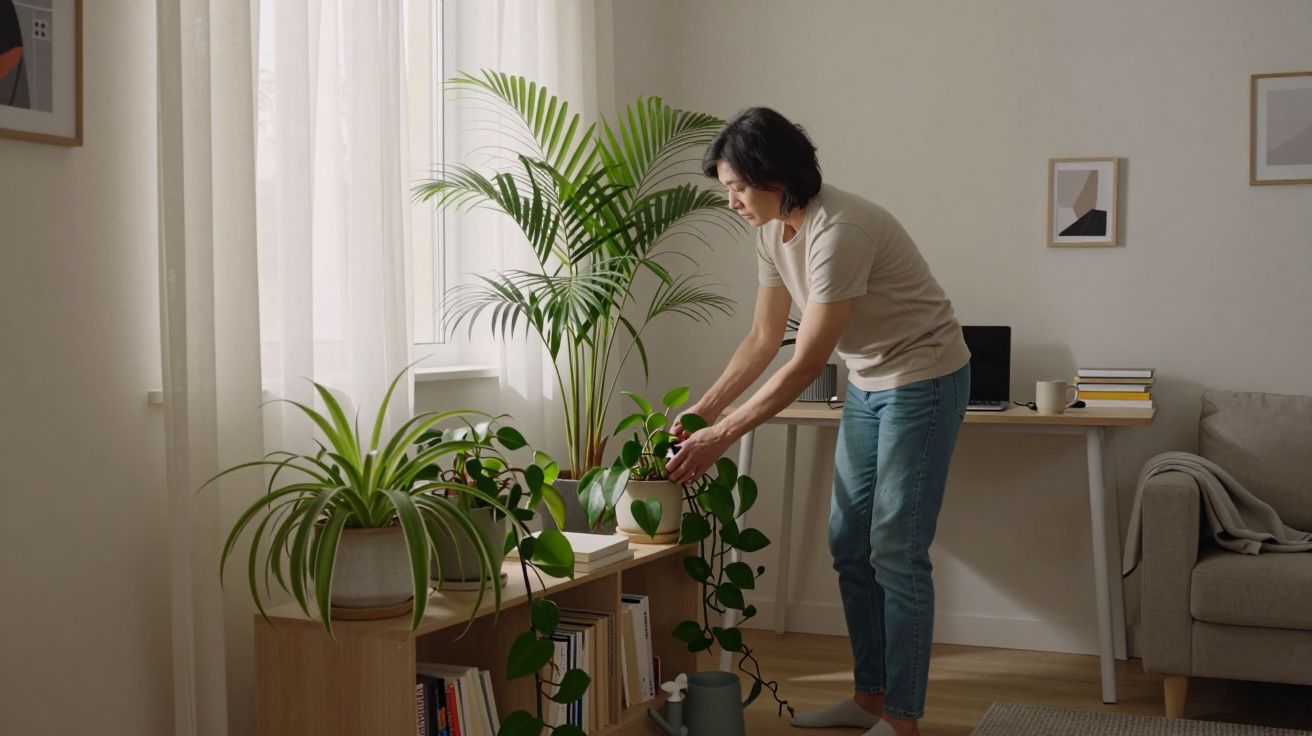
This indoor plant combination cleans air more effectively than any single “miracle” species
The plant that finally made me suspicious was a glossy peace lily.
It sat by the window, leaves polished, its label loudly promising “NASA-CERTIFIED AIR PURIFIER”. Weeks passed. The room still smelt faintly of paint and printer ink, and my afternoon headaches were right on schedule. The plant looked saintly; the air felt the same. The disconnect nagged, so I did what people with too many tabs open do: I started reading.
Behind the bold claims was a tidier, less magical truth. Yes, plants can help clean indoor air. No, one heroic specimen on a bookcase will not detoxify your entire flat. The real gains arrive quietly when you stop looking for a single miracle and start thinking like a tiny forest.
The day the “NASA plant” mystique cracked
Those famous NASA charts from the late 1980s were designed for sealed space habitats, not draughty rentals with open doors and dusty Ikea shelves. The studies were done in small chambers where a few plants shared the spotlight with controlled doses of specific pollutants. The results were impressive in context. Out in the wild of a normal living room, they shrink fast.
We have all had that moment: breathing in hopefully near a pot of spider plant as if it were a biological HEPA filter. It is a comforting idea. It is also wishful thinking. A single plant’s leaf surface and root zone are simply too small to compete with real-world air exchange.
What turns the dial is not a superstar specimen but a deliberate mix. Different plants host different microbes around their roots, exhale different blends of compounds and “breathe” at slightly different rhythms. When you place them together, side by side and shelf by shelf, the effect stops being decorative and starts being systemic.
Why one plant can’t do what a small jungle can
Air cleaning is not a magic trait tucked into one species; it is a sum of processes. The leaves intercept particles. Tiny pores trade gases with the room. The soil and the microbes living in it quietly break down some of the nastier molecules drifting past. Each species does this in its own modest way, and each has blind spots.
A peace lily may be decent with certain solvents, a snake plant more tolerant of dry, dim corners, a pothos happy to sprawl and catch dust where nothing else survives. Alone, each is a specialist. Together, they behave more like a network, covering one another’s gaps.
Indoors, air doesn’t flow neatly from “polluted” to “purified”. It eddies. It sits in corners. It sneaks under doors. Clustering a mix of plants in those calmer pockets can turn dead air into working air. You are not just owning plants; you are designing slow, leafy filters that actually sit where the stale air lingers.
The trio that quietly outperforms a “miracle” plant
After months of shuffling pots around a small London flat, one simple combination kept outperforming the showy solo specimens. Not in lab graphs, but in how the rooms felt: less stuffy at night, fewer synthetic smells hanging around after cleaning, less dust where the cluster sat.
The trio looked like this:
- A spider plant (Chlorophytum comosum) spilling over a shelf edge.
- A devil’s ivy / pothos (Epipremnum aureum) trailing along a bookcase.
- A parlour palm (Chamaedorea elegans) or areca palm filling vertical space.
The spider plant throws out long, narrow leaves that slice through air currents and trap airborne bits along the way. It tolerates casual neglect and busy weeks. Pothos sprawls across awkward spaces, its broad leaves turning dust magnets where you’d never fit a bulky plant. The palm quietly stacks fine leaflets from floor to eye level, creating a curtain where air brushes past again and again.
Individually, none of these feels glamorous. Together, they provide layered foliage at different heights, generous leaf surface and a spread of root zones in the same patch of air. They don’t shout like a labelled “NASA plant”; they just get on with the job.
How many plants you actually need in a real home
It is tempting to ask for a precise ratio: three plants per room, five per sofa, a pothos per square metre. Reality is grittier. Your windows, habits, carpets and cleaning products all matter. What does hold up is the principle of density.
A single cluster of three to five mixed plants in a small living room can make the air feel perceptibly less flat, especially if you open windows daily. Scale this up with a second cluster in the bedroom and one in the workspace and you begin to mimic, in miniature, the effect of walking under trees instead of standing in a car park.
Think in islands rather than dots. A lonely plant marooned on a windowsill mostly pleases the eye. A grouping in a corner - tall palm at the back, spider plant spilling forward, pothos weaving between them - creates a zone where air is repeatedly brushed, traded and tempered. That is where the small gains stack up.
How this leafy “system” actually works
The science behind the feeling is not romantic, but it is quietly elegant. Combined:
- More leaf area means more surfaces where tiny particles and droplets are intercepted rather than recirculated.
- More root volume means more habitat for microbes that can eat or transform certain volatile organic compounds drifting through the potting mix.
- More height levels mean air moving across the room bumps into living surfaces again and again instead of slipping over a single pot.
Each plant also releases its own mix of water vapour and faint scents. In a good balance, this nudges humidity away from the bone-dry range where dust hangs stubbornly. Your throat stops feeling like old paper; static on clothes becomes less dramatic. You do not see the chemistry, but you feel the comfort.
None of this replaces ventilation. Cracking a window, using an extractor fan when you cook and avoiding heavy sprays will always do more in minutes than plants can in hours. What the right mix of plants offers is a steady background nudge towards cleaner, calmer air in between those bursts.
Putting the combination to work without making it a faff
No-one waters fifteen fussy specimens lovingly every Sunday. Life will win. The good news is that this combination is built for imperfection. Spider plants forgive missed watering cans. Pothos sulks politely in low light but rarely gives up. Parlour palms prefer consistency but tolerate a busy week.
You can make the system easier to live with:
- Group plants on a single tray so one jug of water does most of the work.
- Use the same type of potting mix so you learn one watering rhythm, not three.
- Place a cluster near where you actually sit, sleep or work, not in a perfect-but-ignored hallway.
Treat them as working plants, not fragile sculptures. Dust their leaves with a damp cloth now and then; a dusty leaf is a clogged filter. Turn the pots once in a while so light and growth stay even. These are five-minute rituals that keep your leafy system quietly efficient.
The comfort you notice when the air calms down
The first sign that the cluster is doing its job is not a lab-certified drop in formaldehyde. It is that you stop thinking about the air at all. Rooms feel less stale by late evening. That faint synthetic tang from new furniture fades more quickly. Mornings in the bedroom stop smelling like a closed wardrobe.
Over time, you notice smaller things. The pile of dust on the television stand grows more slowly. You wake up with a less scratchy nose. Working at the desk beside the plant island feels gentler on the eyes and throat than the bare corner you used to use. The change is not dramatic enough for a headline; it is consistent enough to matter.
In a world where everything from paint to packaging off-gasses something, this is not about purity. It is about load. A modest forest in your living room won’t sterilise your life. It will quietly blunt some edges so your body is arguing with a little less, all day, every day.
Building your own “better than a miracle plant” mix
You do not need exactly the same trio for the effect to hold. The principle is portable. Aim for:
- One trailing plant to drape and catch dust (pothos, ivy, tradescantia).
- One arching plant to spill and stir air (spider plant, chlorophytum, Boston fern if you’re diligent).
- One upright plant to create height and layer the canopy (parlour palm, areca palm, rubber plant).
Choose what fits your light, your budget and your tolerance for watering. The air-cleaning benefit comes from the combination of forms and roots, not from a specific Latin name stamped on a label.
The real shift is mental. Stop hunting for the one miracle species that will fix everything from mould to migraines. Start arranging three or four undramatic plants into a small, working ecosystem in each room you actually live in. You are not decorating; you are engineering comfort.
FAQ:
- Will plants replace an air purifier or ventilation system? No. Plants work slowly and modestly. They complement, not replace, opening windows, extractor fans and, where needed, mechanical purifiers.
- Is the NASA clean air study a myth? The studies were real but done in sealed chambers, not normal homes. Their results were overextended into marketing claims that a single “NASA plant” can clean whole rooms, which is misleading.
- How many plants should I have in a typical living room? As a practical rule, one mixed cluster of three to five plants in the areas where you sit or sleep is a good start. Add another cluster if the room is large or particularly stuffy.
- Do I need special “air-purifying” species? No. Many common, hardy houseplants contribute. Focus on mixing forms (trailing, arching, upright) and keeping them healthy rather than chasing exotic labels.
- What if I’m prone to mould or allergies? Use high-quality, free-draining potting mix, avoid overwatering and leave space for air around the pots. If you have severe allergies or asthma, check with a healthcare professional before filling a room with plants.






Comments (0)
No comments yet. Be the first to comment!
Leave a Comment