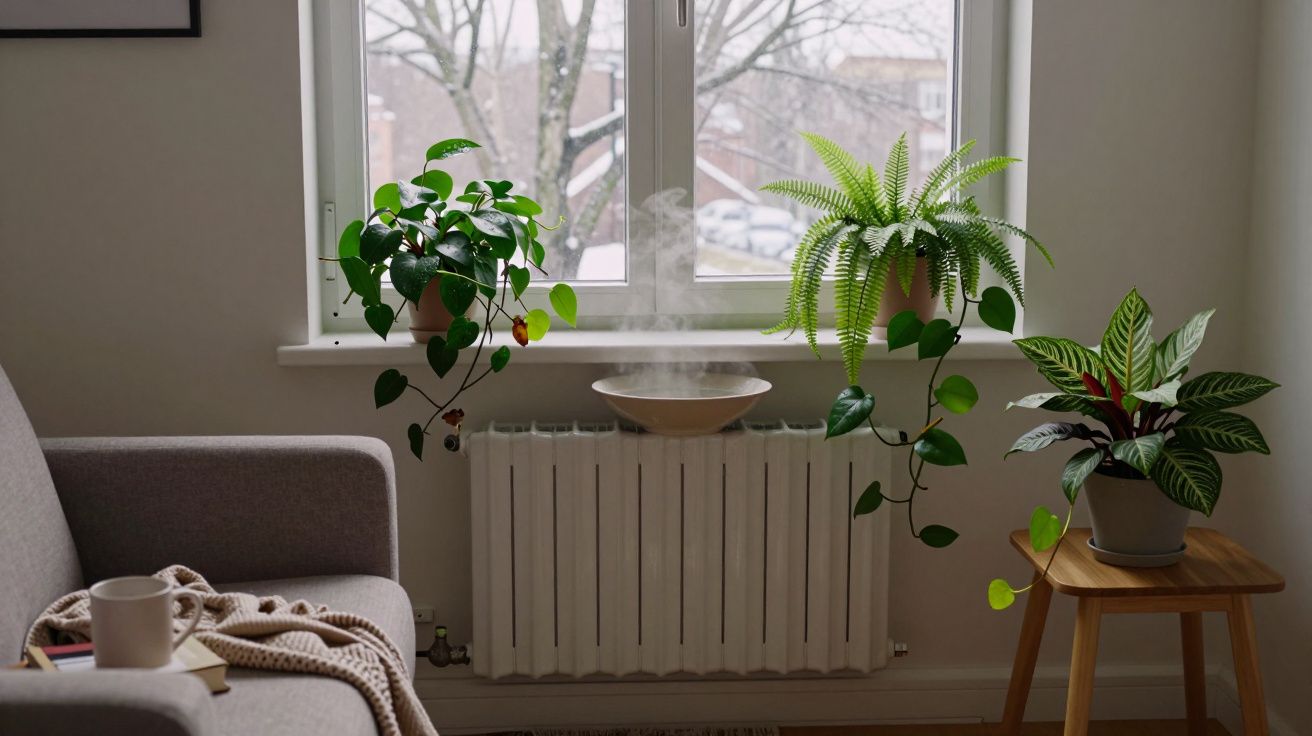
Why adding a saucer of water on radiators helps plants survive central heating
The heating’s finally on, your flat is warm, and your plants look as if they’ve just sat through a long-haul flight. Crispy leaf tips, drooping fronds, soil that feels dry a day after watering. Central heating makes rooms comfortable for us, but it quietly turns them hostile for houseplants that evolved in much softer air.
One of the simplest fixes doesn’t involve a humidifier, a plant mister, or another gadget. It’s a saucer of water, parked on top of a warm radiator, doing a slow, quiet job while you get on with your day.
The gentle physics of a saucer on a radiator
Central heating dries the air because warm air can hold more moisture. As radiators heat a room, they reduce relative humidity. For plants used to forest floors, bathroom corners and shady riverbanks, that drop in moisture feels like being moved to the edge of a desert.
A shallow saucer of water on a radiator gives that thirsty air something else to drink from. The warm metal speeds up evaporation, sending an invisible trickle of water vapour into the room. The air becomes slightly more humid, and your plants lose moisture from their leaves more slowly.
Think of it as adding a small, steady cloud to your living room. You will not turn your home into a rainforest, but you will soften the sharp edge of dry central heating. For many common houseplants, that modest change is the difference between surviving winter and actually looking alive through it.
Why plants struggle with heating (and how water helps)
Houseplants lose water all day through tiny pores in their leaves. In nature, the surrounding air often holds enough moisture to slow that loss. In a heated room, the air is so dry that water races out faster than roots can replace it. Leaves brown at the tips, buds drop, soil seems constantly parched.
By nudging humidity up, even by 5–10%, a saucer of water reduces this “water rush” from leaf to air. Plants keep more of their moisture, and their internal water transport has a chance to keep pace. The result is less stress on the plant and fewer dramatic slumps between waterings.
There is also a temperature benefit. Slightly more humid air cools leaves less aggressively, so delicate foliage does not have to cope with harsh temperature swings every time the heating clicks on. It’s not magic, just kinder conditions.
Radiators dry the air; the saucer gives that dryness something else to feed on before it pulls moisture straight out of your plants.
How to set it up (without making a soggy mess)
You do not need a special tray or branded gadget. A basic, heat-safe dish works.
- Choose a wide, shallow saucer or bowl rather than a tall glass. More surface area means more evaporation.
- Make sure it is stable on the radiator and cannot slide between fins. Heavy ceramic or metal dishes are ideal.
- Fill it with tap water to about 2–3 cm deep. Top up when you notice it half empty.
- Place saucers on radiators in the same room as your plants, ideally near their level so rising vapour reaches them.
If you have long radiators, two smaller dishes spaced apart tend to work better than one large one. In small rooms, one saucer may be enough; in open-plan spaces, think in zones around plant clusters rather than trying to humidify the entire floor.
Avoid balancing open containers on very narrow, hot radiators in hallways where people brush past. The goal is gentle humidity, not a surprise shower over the carpet.
Make the most of radiator-assisted humidity
A saucer of water is a base layer. You can stack other small habits on top to help plants cope with the indoor “dry season”.
- Group plants together so they form a mini microclimate; their combined transpiration plus the saucer’s vapour boosts local humidity.
- Move humidity-loving plants (ferns, calatheas, many tropicals) away from direct radiator blasts and cold draughts.
- Place the radiator saucer slightly behind or below the plant cluster so vapour can rise past the leaves, not scorch them.
- Dust leaves gently every few weeks with a damp cloth. Clean leaves lose water more efficiently but also photosynthesise better, making stress easier to handle.
Let’s be honest: nobody measures household humidity daily. Instead, keep an eye on leaf tips, buds, and the soil’s drying speed. Tweak saucer numbers and plant positions when those small signs tell you the air is getting too harsh.
Simple positioning guide
| Situation | Where to put the saucer | Extra note |
|---|---|---|
| Small sitting room | One saucer on main radiator | Place near main plant corner |
| Big open-plan space | 2–3 saucers on different radiators | Treat each plant group as its own zone |
| Bedroom plants | One saucer on radiator beneath window | Good for both plants and dry sinuses |
What this trick can and can’t fix
A saucer on a radiator is brilliant for everyday dryness but it’s not a cure-all. It will not revive plants already rotting from overwatering, nor will it fix a plant that is simply in the wrong light.
If your home is extremely dry (think nosebleeds, static shocks, and constantly cracking skin), you may still want a proper humidifier in addition to radiator water. The saucer is a low-cost helper, not industrial kit. It also cannot compensate for a plant sitting on top of a scorching radiator shelf; heat stress will win.
The magic of this trick is in the middle ground. Typical central-heated homes, ordinary moisture dips, houseplants that just need kinder air around them. It is a quiet correction to an invisible problem.
Small, consistent changes – like a saucer of water and a moved plant pot – often matter more than buying another “difficult” plant to replace the one that failed.
Safety and little extras
There are a few simple safeguards worth keeping in mind.
- Use sturdy, heat-safe containers. Avoid thin glass that may crack with temperature changes.
- If you have children or pets, choose dishes that sit securely between radiator fins or use covers with small holes.
- Change the water regularly and give the saucer a quick wipe to prevent slime or dust build-up.
- Skip decorative pebbles and porous stones unless you’re happy to clean them; they collect limescale in hard water areas.
If you enjoy a bit of ritual, you can fold this into your weekly tidy: water plants, top up saucers, wipe leaves. It’s a two-minute loop that keeps your indoor jungle and your winter air in better balance.
FAQ:
- Will a saucer of water damage my radiator or paintwork? Not if you use a stable, heat-safe container and avoid overfilling. Wipe any splashes promptly, and keep metal saucers dry underneath to prevent rust marks on very old radiators.
- Is this enough for very tropical plants like calatheas and orchids? It helps, but many tropicals still prefer extra humidity from grouping, pebble trays or a humidifier. Think of the saucer as support, not the whole solution.
- Can I add essential oils to the water? It’s better not. Oils can leave residue on radiators and may irritate pets or sensitive people. If you want scent, use a dedicated diffuser away from delicate plants.
- How many saucers do I need in one room? For an average sitting room, one or two on active radiators near your main plant group is usually enough. Adjust if leaf tips still brown or soil dries very fast.
- Is misting leaves better than using a saucer? Occasional misting feels nice but humidity spikes fade in minutes. A saucer gives a steadier background level. You can combine both, but avoid misting plants prone to fungus on cool evenings.



Comments (0)
No comments yet. Be the first to comment!
Leave a Comment