Why airing your mattress once a month can improve sleep quality more than new bedding
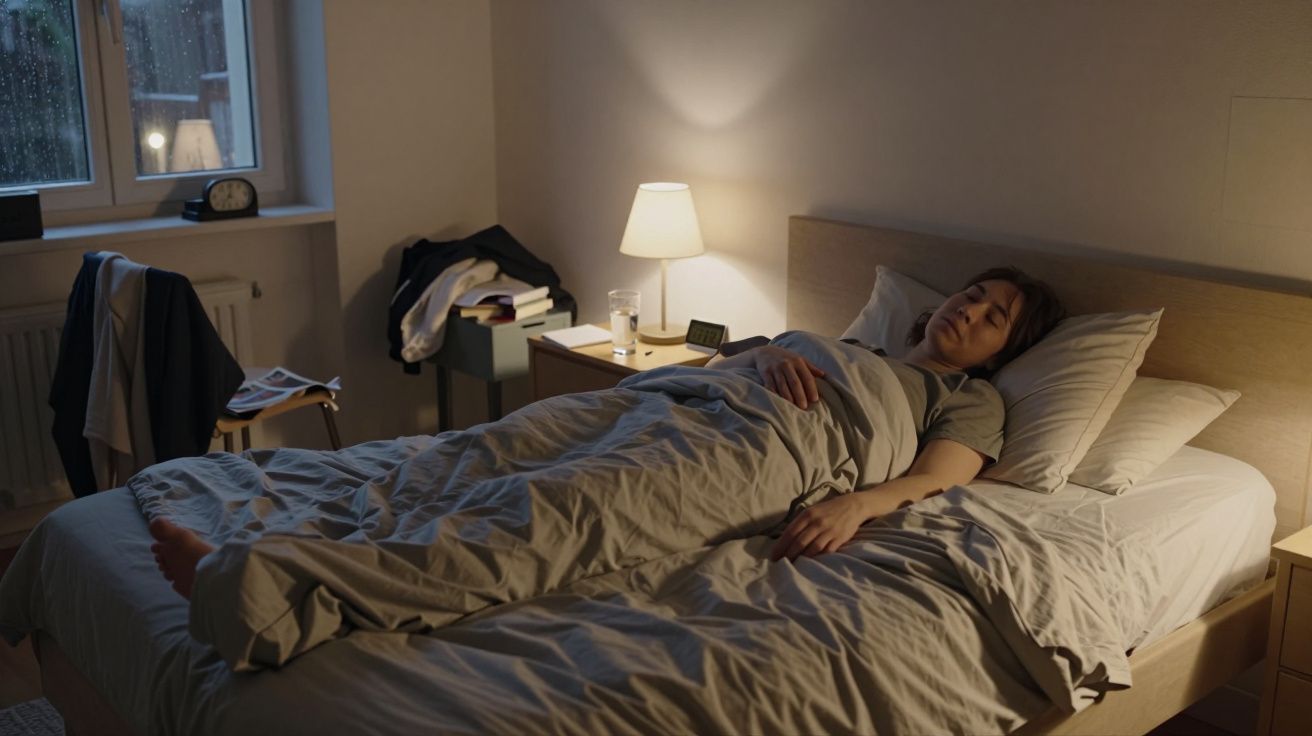
The duvet was hotel-fresh, the pillows plump, the sheets just out of the packet with that faint “new cotton” rustle. And yet, at 3 a.m., she was awake again, staring at the ceiling and pushing a hot leg out from under the covers. The next day she ordered cooling pillowcases, a new topper, lavender spray. The story is familiar: when sleep feels broken, we shop for what we can see. The quiet culprit sits underneath, holding our weight every night and rarely getting a breath.
Mattresses don’t complain. They don’t fray visibly like pillowcases or demand a wash cycle. They simply absorb: body heat, moisture, skin cells, the ghost of last winter’s flu. Over months, then years, that build-up changes the microclimate right next to your skin. You can’t see it, but you can feel it as restlessness, clamminess, and the sense that your bed never quite feels “fresh”, even on sheet-change day.
Once a month, opening a window and letting your mattress breathe does more than any new thread count or colour palette. It alters the environment your body actually sleeps in.
Under the covers of a “clean” bed
Strip a mattress on a bright morning and the room smells different. Not bad, exactly, just fuller: a mix of detergent, skin, and the slightly sweet, stale note of trapped humidity. Press your palm flat into the surface and lift it away. That faint coolness that lingers is moisture that never truly left.
Each night, adults lose roughly half a litre of water through sweat and breathing. Some of it escapes into the room; a lot of it sinks down. Foam and padding behave like sponges, pulling it in and then slowly giving it back. Dust mites, which are microscopic but plentiful, thrive in that warm, slightly damp sandwich of fibres and flakes of skin.
Fresh bedding can’t fix the climate beneath it. It can feel crisp for a night or two, but if the mattress underneath is holding on to moisture and allergens, your body will react. You toss, you overheat, your nose stuffs. New covers are like repainting a damp wall. Airing the mattress is opening the window and letting the wall actually dry.
The quiet science of letting a mattress breathe
Airflow sounds basic, but in sleep terms it does three important jobs: it dries, it cools, and it dilutes.
When you prop a mattress up and let air move across both faces, you speed up evaporation from deep in the layers. Less embedded moisture means fewer dust mites and lower levels of the allergens they produce. Your sinuses, and often your skin, notice the difference long before your eyes do.
Temperature matters too. A mattress that has time to lose stored heat during the day starts the night cooler. Your body falls asleep best when its core temperature drops a little. Sleeping on a warm, slightly humid surface is like trying to nap in a stuffy train carriage. Give that heat somewhere to go and your natural cooling systems don’t have to work as hard.
Then there’s the invisible cocktail in bedroom air: volatile compounds from cleaning products, mattress foams, candles, and everyday life. A short, regular airing purges that mix, especially if you combine it with stripping the bed. It’s not about drama; it’s about giving your lungs and skin a calmer environment to rest in.
A simple, monthly reset that actually changes your sleep
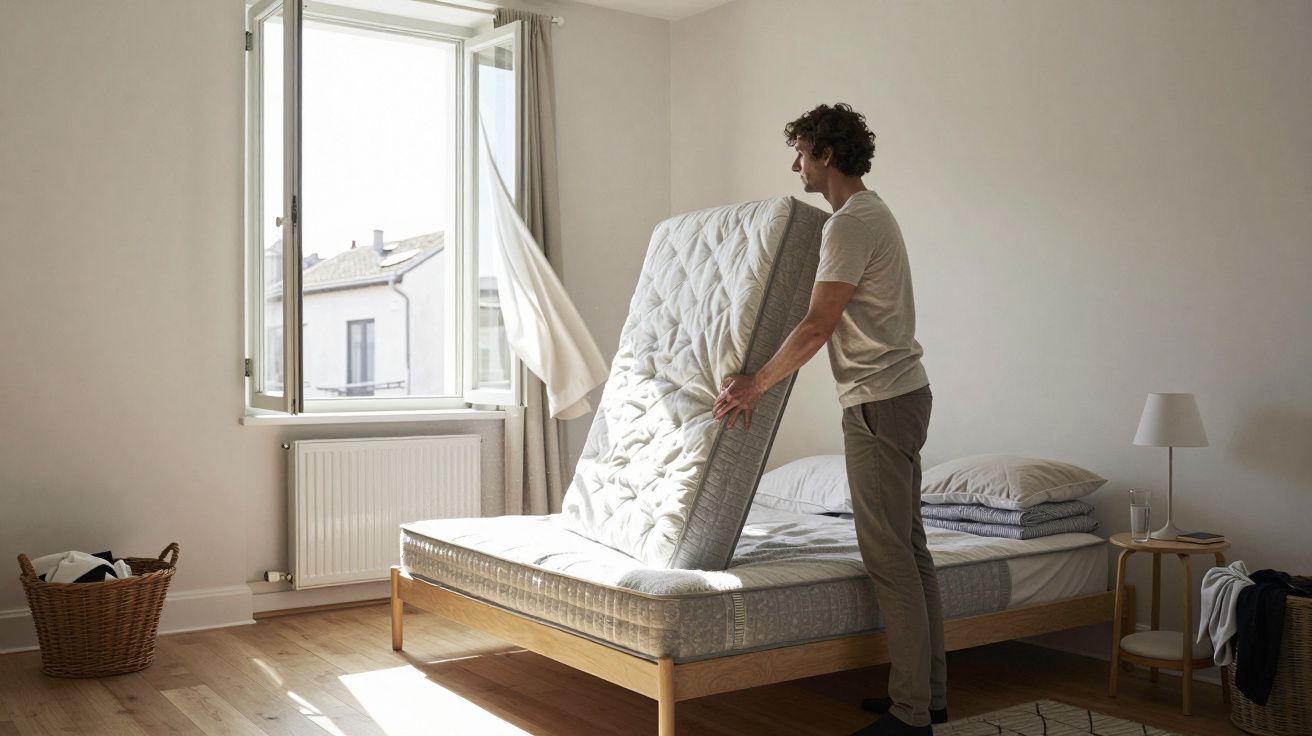
You don’t need a spreadsheet or a new gadget. You need a free half-hour, an open window, and the willingness to tip a heavy rectangle on its side.
Once a month is realistic for most households. More often in summer, less in a draughty old house in January is fine. What matters is rhythm: a predictable reset that interrupts the slow build-up of moisture and allergens.
Here’s a simple pattern that fits into an ordinary weekend:
- Choose a dry day if you can, even in winter.
- Strip all bedding, including protectors and toppers.
- Open the window wide and the bedroom door too, so air can cross the room.
- Tilt the mattress on its side or at least lift it off the slats with sturdy chairs or boxes so air can reach the underside.
- Leave it for 30–60 minutes. If you’re nearby, rotate it once halfway through.
- While it’s up, quickly wipe or hoover the bed base to remove dust.
You’re not trying to sanitise like a hospital. You’re giving the mattress permission to reset, to release what it’s been holding for you every night.
Why new bedding often disappoints on its own
Buying new linen feels like action. It’s instant, visible change, and there’s genuine pleasure in slipping into fresh, well-made sheets. But a lot of the marketing around bedding quietly overpromises.
High thread counts and premium fibres mainly affect texture and durability. They don’t magically cool a bed that’s already running warm from below. Moisture-wicking fabrics can pull sweat away from your skin, but if there’s nowhere dry for that moisture to go, you’ve just improved the journey, not the destination.
There’s also a habit problem. New bedding often arrives with a burst of attention: we wash more regularly, we notice the feel of the bed, we tidy the room. Those changes help sleep for a few weeks, then slide. The mattress stays as it was-damp at its core in places, slightly bowed, quietly hosting a small suburb of dust mites.
Airing the mattress once a month is boring by comparison. No parcel on the doorstep, no new pattern to admire. Yet over a year, it changes more. It keeps the foundation of your bed closer to its original state, so any investment you do make in good bedding actually has something solid to work with.
Small, practical tweaks that compound over time
Think of mattress airing as one spoke in a wheel of simple sleep upgrades. None are dramatic; all add up, especially in the UK where heating, humidity, and small bedrooms often conspire against easy rest.
A few adjustments that work particularly well together:
- Pair airing with sheet change day. You’re stripping the bed anyway; adding 30 minutes of mattress time in fresh air is an easy bolt-on.
- Use a breathable protector, not a plastic shield. Look for ones that say “vapour permeable” so moisture can escape during airing, rather than staying trapped.
- Rotate the mattress seasonally. Combine your monthly airing with a quarter-turn every few months to reduce dips and pressure points.
- Let the bed cool before making it tight. In the evening, pull the duvet back for 20 minutes before you get in to release some of the day’s trapped warmth.
None of this asks for perfection. Missing a month isn’t a failure; it’s simply one more reason to prop the mattress up next time and let it have a longer breath.
When airing matters even more
Some households benefit disproportionately from this small habit. If any of these sound familiar, monthly airing is closer to essential than optional:
- Allergies or asthma. Less moisture and fewer mites can mean clearer breathing and fewer night-time coughs.
- Hot sleepers and those in upstairs bedrooms. Heat rises, and modern insulation holds it. A cooler mattress base makes a bigger difference here.
- Shared beds. Two bodies equal more moisture and movement; the mattress works harder and needs more chances to recover.
- Small rooms with little cross-ventilation. If opening windows is a rarity, the times you do manage it count more.
You don’t have to turn your bedroom into a wind tunnel. Even a single open window on the latch for half an hour, with the mattress propped, can change the feel of the room by evening.
Choosing habits over hype
The sleep industry runs on upgrades: smarter pillows, cooling gels, weighted this and memory-foam that. Some of those innovations help, but they all share the same weakness-they live on top of whatever your mattress has quietly become.
Once a month, you have the chance to do something unglamorous and unusually effective. You take the weight off the mattress, quite literally, and give it back its breath. In return, it gives you something no shopping basket can guarantee: a night where the bed feels like it did when it was new, not because you changed what you see, but because you cared for what you don’t.
The softest luxury in a bedroom isn’t a 1,000-thread-count sheet. It’s a mattress that doesn’t cling, a bed that smells faintly of open air, and the kind of sleep where you don’t think about your bed at all-you just use it, and wake up, and feel like the night did what nights are meant to do.
FAQ:
- How often should I air my mattress? For most people, once a month is enough. In hot weather, or if you have allergies, every two weeks can help, but it’s better to stick to a realistic routine than aim for perfection and give up.
- How long do I need to leave the mattress airing? Thirty to sixty minutes with a window open is usually sufficient. If the room is very still or the mattress is thick and foam-heavy, longer is helpful when you can manage it.
- What if I can’t lift or move my mattress easily? Even sliding it a few centimetres off the wall, pulling back bedding fully, and opening a window helps. If possible, ask someone to help tilt it up a few times a year for a deeper dry-out.
- Can I air my mattress outside? Yes, if you have a clean, dry, shaded space and the mattress isn’t at risk of getting damp or dirty. Avoid direct strong sunlight for long periods, as it can degrade some materials.
- Will airing fix a sagging or very old mattress? No. Airing improves freshness, moisture levels, and allergens, but it can’t correct structural wear. If you wake with pain most mornings or can see deep dips, it may be time to replace the mattress.





Comments (0)
No comments yet. Be the first to comment!
Leave a Comment