Why dog owners should never ignore “reverse sneezing” – vets explain when to worry
The first time it happens, it sounds like your dog is choking on invisible dust. They stand stock still, elbows braced, neck stretched, and start making a loud, snorting inhale through the nose, over and over. No cough, no vomit, just a strange rhythm of “honks” that seems to go on far too long. Then, as suddenly as it started, it’s gone. Your dog shakes, blinks, and trots off for a biscuit.
It looks dramatic and feels frightening. Many owners assume it’s a collapsing airway, an asthma attack, or something stuck in the throat. Vets have a different name for it: paroxysmal inspiratory respiration – better known as reverse sneezing.
Most of the time, it is harmless. But not always.
What reverse sneezing actually is
In a normal sneeze, air blasts out through the nose to clear irritation. In a reverse sneeze, the opposite happens: the dog drags air in sharply and repeatedly through the nose. It’s a sort of nasal “gasping fit” caused by a sudden spasm of the soft palate and the back of the throat.
The triggers are often ordinary:
- A burst of excitement when you come home
- A sudden change in temperature
- A nose full of pollen or dust after a walk
- A lead or collar pressing on the throat
The sound can be alarming – a cross between a goose honk and a blocked hoover. The good news is that a classic reverse sneeze usually lasts less than a minute and resolves on its own without leaving your dog weak or distressed.
Think of it as the nose’s overenthusiastic attempt to reset itself – a reflex, not a disease in its own right.
Why vets say you still shouldn’t ignore it
“Harmless” does not mean “never worth checking”. Reverse sneezing is a sign, not a diagnosis. When it starts happening often, lasts longer, or looks different, it can point to something more serious hiding in the background.
Here’s what vets worry about:
- Chronic irritation – inflamed nasal passages from allergies, smoke, dust or perfumed products
- Foreign bodies – a grass seed, small toy fragment, or piece of plant material lodged in the nasal cavity or throat
- Infections – kennel cough, nasal mites, or fungal infections can all mimic or provoke reverse sneezes
- Structural problems – elongated soft palate, narrow nostrils, or collapsing trachea, particularly in flat-faced breeds
- Tumours or polyps – less common, but important to rule out if one-sided discharge or nosebleeds appear
The reflex may be the only visible clue that something is rubbing, inflaming or blocking the upper airway. Ignoring it entirely is like turning up the radio when your car starts making a new noise. You might still get where you’re going, but you’ve missed a warning light.
How to tell a typical episode from an emergency
You don’t need to panic every time your dog reverse sneezes. You do need to watch closely. The pattern tells you a lot.
A “classic” reverse sneeze usually looks like this
- Starts suddenly, often during excitement or after sniffing
- Dog stands with neck extended, elbows out, mouth usually closed
- Loud snorting or “gasping” noises while air is dragged in through the nose
- Lasts from a few seconds up to about a minute
- Stops as abruptly as it began; dog goes back to normal behaviour
- No collapse, no blue-tinged gums, no obvious struggle for air once it stops
That pattern is uncomfortable to watch but generally not dangerous. Many dogs will have occasional episodes throughout life without any underlying disease.
Red flags that mean “see a vet – soon”
Call your vet promptly if you notice any of the following:
- Episodes happening daily or in clusters, or lasting several minutes
- Your dog seeming distressed or panicked, not just noisy
- Open-mouth breathing, struggling to draw breath, or extended recovery afterwards
- Coughing, gagging or retching before, during or after the fit
- Nasal discharge, especially if thick, bloody, or from one nostril only
- Change in bark, hoarse voice or wheezing at rest
- Any collapse, weakness, or blue/pale gums – this is an emergency
Those signs suggest the problem has moved beyond a simple reflex. You’re no longer just listening to a noisy nose; you’re looking at a potential airway, heart, or lung issue.
The breeds and ages vets watch more closely
All dogs can reverse sneeze, from terriers to retrievers. But some come into the consulting room more often for it.
Flat-faced and small breeds feature heavily on that list:
- Pugs, French Bulldogs, English Bulldogs
- Cavalier King Charles Spaniels
- Shih Tzus, Lhasa Apsos, Pekingese
- Yorkies, Chihuahuas and other toy breeds
Their compressed facial structure and crowded airways mean the soft palate and nasal tissues are more easily irritated or out of alignment. That makes reflex spasms more likely, and it also raises the risk of underlying brachycephalic airway syndrome, which can worsen with age and heat.
Older dogs of any breed that suddenly start reverse sneezing deserve extra attention. New upper-airway noise in a senior dog raises the suspicion of infection, dental disease tracking into the nose, or a mass that needs imaging rather than waiting.
A simple rule vets use: new, more frequent, or different always beats “they’ve always done that” when it comes to deciding whether to investigate.
What you can do during an episode
You can’t “switch off” the reflex, but you can sometimes help your dog ride it out more comfortably. The aim is to break the spasm and encourage a swallow.
Owners and vets commonly suggest:
- Stay calm and speak softly – your anxiety can ramp up your dog’s panic
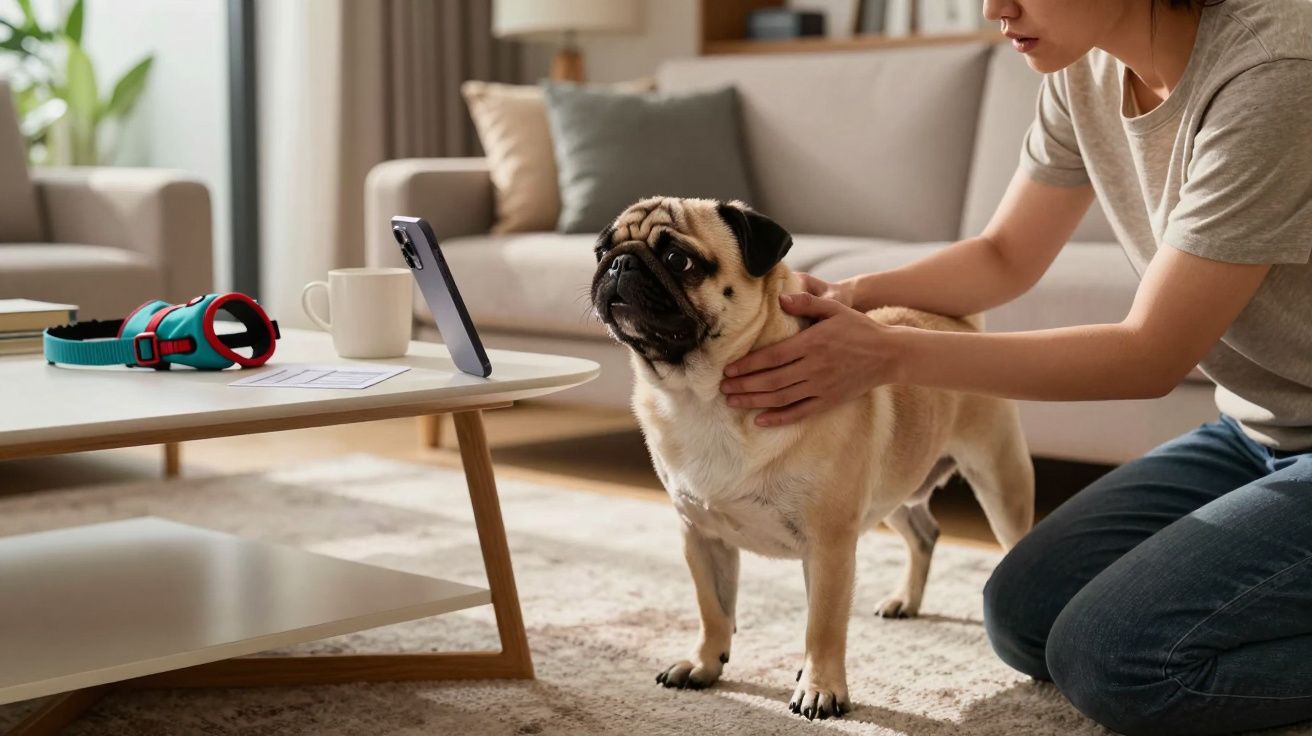
- Gently stroke the throat in a downward motion to stimulate swallowing
- Briefly cover the nostrils with your fingers for one second to prompt a swallow, then release
- If safe, offer a tiny sip of water once the noise starts to ease
- Move away from smoke, strong scents, or cold draughts
Avoid thumping the chest, forcing the mouth open, or sticking fingers or objects in the throat. That risks injury and doesn’t address the spasm itself.
If episodes are frequent, film one on your phone. Vets rarely catch them live in the consulting room; a clear video is often the best diagnostic clue you can bring.
How vets investigate persistent reverse sneezing
When you book an appointment, be ready to answer three questions: how often, how long, and what else? That “what else” covers discharge, cough, changes in behaviour, and any recent exposure to dust, smoke, or other animals with coughs.
From there, a vet may recommend:
- Physical examination – listening to the chest, checking the mouth, throat and soft palate
- Nasal or throat swabs – looking for infections or nasal mites
- X-rays or CT scans – assessing the trachea, lungs, and nasal passages
- Endoscopy or rhinoscopy under anaesthetic – a camera to inspect and sometimes remove foreign bodies or polyps
- Allergy work-up – if signs point towards chronic irritation rather than structural change
Treatment then matches the cause: anti-inflammatories for allergies, antibiotics or antiparasitic drugs for infections, surgical correction for severe soft palate issues, or careful monitoring for benign, mild cases.
The goal is not to “cure” reverse sneezing as an isolated event, but to make sure nothing more worrying is sitting behind it.
Everyday habits that make episodes less likely
You can’t bubble-wrap your dog’s nose, but you can dial down the triggers that set off the reflex.
Small changes genuinely help:
- Use a harness instead of a neck collar to avoid pressure on the throat
- Keep your dog away from cigarette smoke, heavy incense, and strong aerosols
- Avoid frantic “zoomie” games straight from the car or crate; let them settle first
- Wipe your dog down after pollen-heavy walks and limit rough sniffing in long grass during peak allergy seasons
- Keep up with dental care – infected teeth can affect the sinuses and nose
One more habit makes a difference: track episodes. A simple note on your phone – date, time, duration, trigger – turns vague worries into a pattern your vet can actually work with.
Quick guide: when to watch and when to worry
| Situation | What to do |
|---|---|
| Rare, short episodes, dog otherwise normal | Stay calm, film an episode, mention at next routine check-up |
| Frequent, longer fits or new in an older dog | Book a non-urgent vet appointment within a few days |
| Breathing looks laboured, gums pale/blue, dog collapses | Emergency vet immediately – do not wait it out |
The takeaway for dog owners
Reverse sneezing sits in that awkward middle ground: usually benign, occasionally a red flag. Pretending it doesn’t exist is no safer than spiralling into worst-case scenarios every time your dog snorts.
Notice it. Record it. Reduce obvious triggers. And if the pattern shifts or your instincts keep nagging, let a vet look behind the noise.
The sound may be dramatic, but your response doesn’t have to be. Calm observation, a short video, and a timely check-up are often all it takes to turn “Is my dog choking?” into “We understand what’s going on – and we’re on top of it.”
FAQ:
- Is reverse sneezing painful for my dog? It looks uncomfortable but is not usually painful. Most dogs behave completely normally before and after an episode, which is one of the clues that it’s a reflex rather than a full-blown emergency.
- Can I prevent reverse sneezing completely? Not entirely. You can reduce triggers by using a harness, avoiding smoke and strong scents, managing allergies, and keeping excitement transitions calmer, but some dogs will still have occasional episodes.
- Is reverse sneezing the same as kennel cough? No. Kennel cough typically causes a harsh, hacking cough and sometimes retching, often triggered by pressure on the throat. Reverse sneezing is a rapid, noisy inhalation through the nose with a characteristic “snorting” rhythm.
- Should I wake my dog or rush them outside during an episode? Waking gently is fine if it happens in sleep, but there is no need to rush outside. Focus on staying calm, gently stroking the throat, and letting the spasm pass while you observe.
- When should I insist on further tests rather than “watch and wait”? If episodes are increasing, if your dog is older, or if there is discharge, weight loss, behaviour change or any struggle to breathe, ask your vet directly about imaging or referral. Persistent change deserves more than reassurance alone.

Comments (0)
No comments yet. Be the first to comment!
Leave a Comment