Why gardeners swear by planting garlic near roses – and what scientists say about pest control
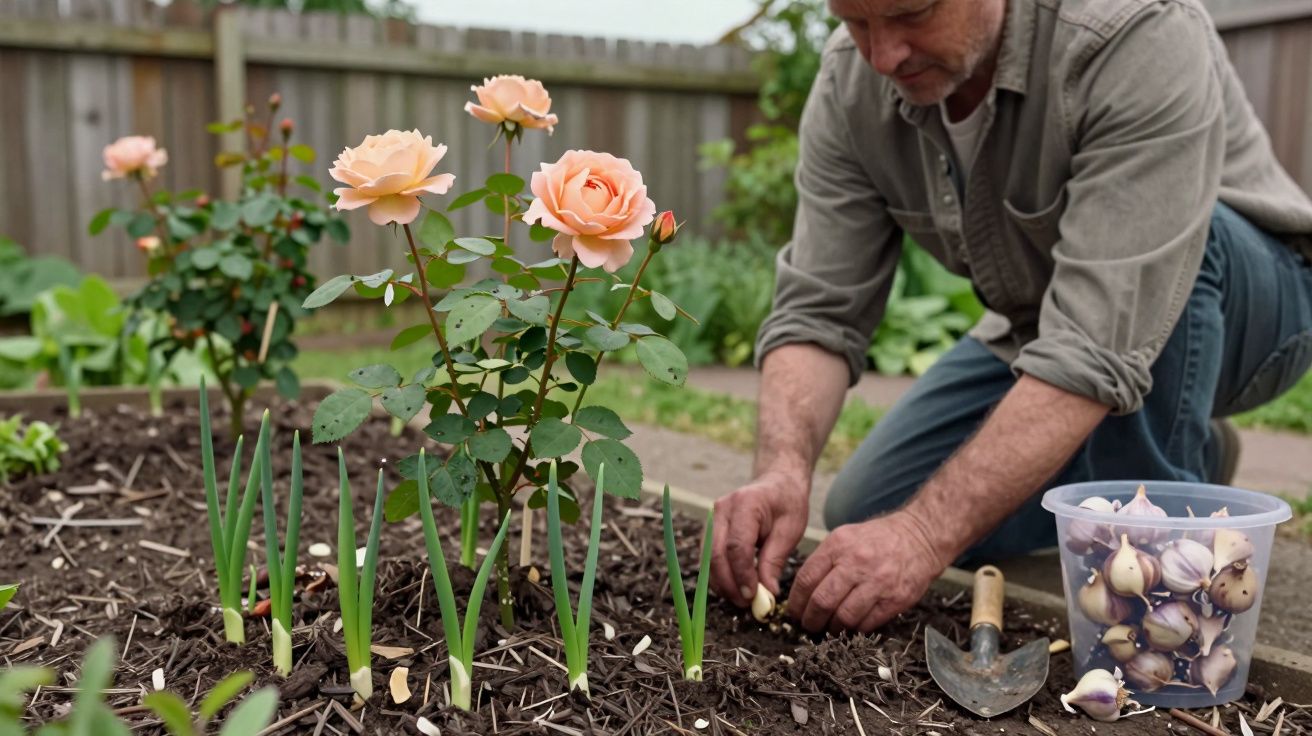
The first time you see it, it looks like a mix‑up. A perfect tea rose, all apricot folds and perfume, with a scruffy ring of garlic cloves poking through the soil like it’s wandered in from the kitchen. I noticed it in a front garden in Sheffield, the kind where every rose has a name and the owner has opinions about mulch. The bed was immaculate, the labels neat, and yet between ‘Gertrude Jekyll’ and ‘Royal Jubilee’ there they were: short garlic shoots, green and blunt, nothing romantic about them at all. The gardener caught me staring and just smiled. “For the aphids,” she said. “And the blackspot. And, frankly, for my nerves.”
We’ve all had that sinking feeling in June, when the buds are ready to burst and you spot the trouble. Fresh, lime‑green aphids stacked like commuters on the soft tips. A faint dust of blackspot starting to creep up the leaves. You can spray, you can squish, you can mutter threats, but the cycle feels endless. So the idea that a cheap bulb from the supermarket might quietly help your roses defend themselves has a certain charm. It sounds almost like folklore. It partly is. It’s also, in some ways, chemistry.
Why garlic and roses ended up side by side
The tradition of planting garlic with roses pops up in old gardening books and on newer Instagram feeds. Some people swear it deepens the colour of blooms. Others say it keeps everything from aphids to deer at bay. The basic claim is simple: garlic’s strong smell and sulphur‑rich compounds repel pests and suppress fungal disease, giving roses a cleaner, calmer season.
Walk around an allotment and you’ll see similar pairings. Carrots near onions. Lettuce under beans. Gardeners have been practising “companion planting” for centuries, long before anyone put Latin names to the things that nibble or nibble not. Garlic falls neatly into that tradition. It grows in cool soil when roses are just waking up, it doesn’t hog water once established, and it offers something invisible in the air and in the soil that many pests apparently dislike.
Underneath the lore, there are a few threads science can actually grab. Garlic is famous in plant pathology labs for its antimicrobial punch. Extracts of garlic bulbs and leaves, rich in sulphur compounds such as allicin, routinely show activity against fungi and some insect pests in test dishes and field trials. The question is not whether garlic can affect pests. It’s whether a few bulbs tucked around your roses do enough in the real, messy world of a British back garden.
What the research really says about garlic and pests
In controlled studies, garlic doesn’t mess about. Researchers grind cloves, mix them into sprays or soil drenches, and then unleash them on fungal spores and insects. Powdery mildew on cucumbers, rust on beans, botrytis on strawberries: time and again, garlic extracts slow growth or reduce infection compared with untreated plants. Small sap‑sucking insects like aphids are often put off by garlic‑based sprays, at least for a while.
Here’s where it gets interesting for roses. Blackspot, that classic rose disease, is caused by a fungus that thrives in damp, splashed leaves. Some lab work suggests that garlic extracts can inhibit closely related fungi, and small garden trials have reported fewer spots on roses treated regularly with homemade garlic sprays. It isn’t a silver bullet, and repeated applications are needed, but there is a line from bulb to leaf to fewer black marks.
On insects, the evidence is more mixed. Strong garlic solutions can certainly repel or even kill soft‑bodied pests on contact. But the effect tends to be temporary and local. In other words, garlic works best where it actually touches the problem or steams around it, not as a vague “protective aura” drifting from a clove underground. That’s the tension between the simple romance of companion planting and the more demanding reality of integrated pest management.
How garlic might still help, even when it’s just planted nearby
So what about those cloves around the base of the rose, quietly doing their thing all season? There are a few plausible mechanisms, even without a spray bottle. Garlic roots and foliage release sulphur‑containing compounds into the surrounding soil and air. At close range, that cocktail may make the area less attractive to some insects searching for a host plant by smell.
Garlic also has a mild antibacterial and antifungal effect in the soil, which might tip the balance against certain pathogens. It’s not going to sterilise a bed, and you would not want it to, but it may slightly alter the microbial “neighbourhood” on leaf litter and mulch where blackspot spores overwinter. At the very least, garlic occupies physical space that might otherwise host weeds or damp debris, both of which can help disease along.
Then there is the simple timing advantage. Garlic is in growth while roses are forming new roots and buds. Its shallow, fibrous root system can help keep the soil structure open, improving drainage around a rose’s graft union. Less standing water, fewer splashes of spore‑laden droplets. It’s not as obviously dramatic as a fungicide spray, yet in gardening, a lot of success comes from small, layered nudges rather than single heroic gestures.
“Garlic isn’t a force field,” says a plant pathologist friend in York. “Think of it more as a nudge to the neighbourhood-slightly less welcoming for some pests, slightly kinder for the rose.”
A simple garlic‑and‑rose routine to try
If you want to give the pairing a quiet, low‑drama test, you can keep the method almost comically simple. No potions, no spreadsheets, just a few habits that lean on what garlic does best.
Plant garlic cloves in autumn or very early spring in a rough circle around each rose, 10–15 cm from the stem. Push them in twice their own depth, pointy end up, and cover. Choose a soft‑neck culinary garlic if you’re not precious, or a named variety if you want to harvest bulbs later. Water once to settle the soil, then let rain take over unless it’s very dry.
Through the season, keep the area mulched but not smothered. When garlic leaves are tall and green, you can snip the occasional leaf to add to a garlic spray without killing the plant. Avoid over‑feeding with high‑nitrogen fertiliser; garlic prefers it lean, and over‑fed roses tend to be softer and more attractive to aphids anyway. If cloves crowd the rose’s base as they swell, pull a few to eat and leave the rest as sentries.
For people who like a bit more structure, you can layer garlic with other gentle measures:
- A weekly pass with a hose to knock aphids off before they build armies.
- Pruning to open up the centre of the bush, so leaves dry quickly after rain.
- Picking off the first blackspotted leaves and binning them, not composting.
None of these actions are dramatic on their own. Together, they make the rose a harder target.
Where garlic fits in real pest control – and where it doesn’t
It is tempting to hope that garlic allows you to ignore the rest. Plant a few cloves, skip the checks, let nature sort itself out. That’s where most disappointments begin. Garlic is best thought of as one tool on a calm, varied bench: low‑risk, cheap, and modestly helpful, but not a replacement for observation or basic rose care.
Some pests barely notice garlic. Rose sawfly larvae (those little green “caterpillars” that skeletonise leaves) will happily chew through a garlic‑bordered bed. Blackspot spores that land directly on wet leaves are not repelled by the smell at soil level. And if your roses are already stressed-dry roots, poor planting depth, or heavy shade-garlic can’t fix that deeper story.
What it can do is slightly shift the odds in your favour without bringing harsh chemicals into a space you might share with pets, children, and your own lungs. For many gardeners, that trade‑off matters as much as the number of aphids per stem. A few cloves quietly working in the background feel more like collaboration than combat.
| Point | Detail | Why it matters |
|---|---|---|
| Garlic releases sulphur compounds | These can deter some pests and suppress certain fungi | Adds gentle, continuous pressure against common rose problems |
| Works best up close | Sprays and nearby planting beat vague “garlic in the bed” ideas | Helps you place garlic where it can actually act |
| Part of a toolkit, not a cure | Needs good hygiene, pruning, and monitoring alongside | Keeps expectations realistic and roses healthier |
FAQ:
- Does garlic planting alone stop blackspot on roses? No. Garlic can modestly reduce fungal pressure, but you still need good air flow, careful watering, and prompt removal of infected leaves to keep blackspot in check.
- Will planting garlic near roses change how they smell? There’s no solid evidence that garlic alters rose fragrance in a noticeable way. The scents sit in different parts of the plant, and most noses only catch garlic if you bruise or harvest the bulbs nearby.
- Can I use shop‑bought garlic cloves, or do I need special seed garlic? You can use supermarket bulbs, though disease‑free seed garlic is safer for long‑term soil health. If your budget is tight, start with what you have and watch for any signs of rot.
- Is a garlic spray better than planting cloves? Sprays give a stronger, direct effect on pests and fungi but need regular re‑application and careful mixing. Planting cloves is slower and subtler, yet easier to maintain once in place.
- Could garlic harm my roses or nearby plants? In normal garden quantities, garlic is a polite neighbour. Avoid planting it so densely that it competes heavily for water, and leave a small gap around the rose stem so you’re not disturbing roots every time you harvest.





Comments (0)
No comments yet. Be the first to comment!
Leave a Comment