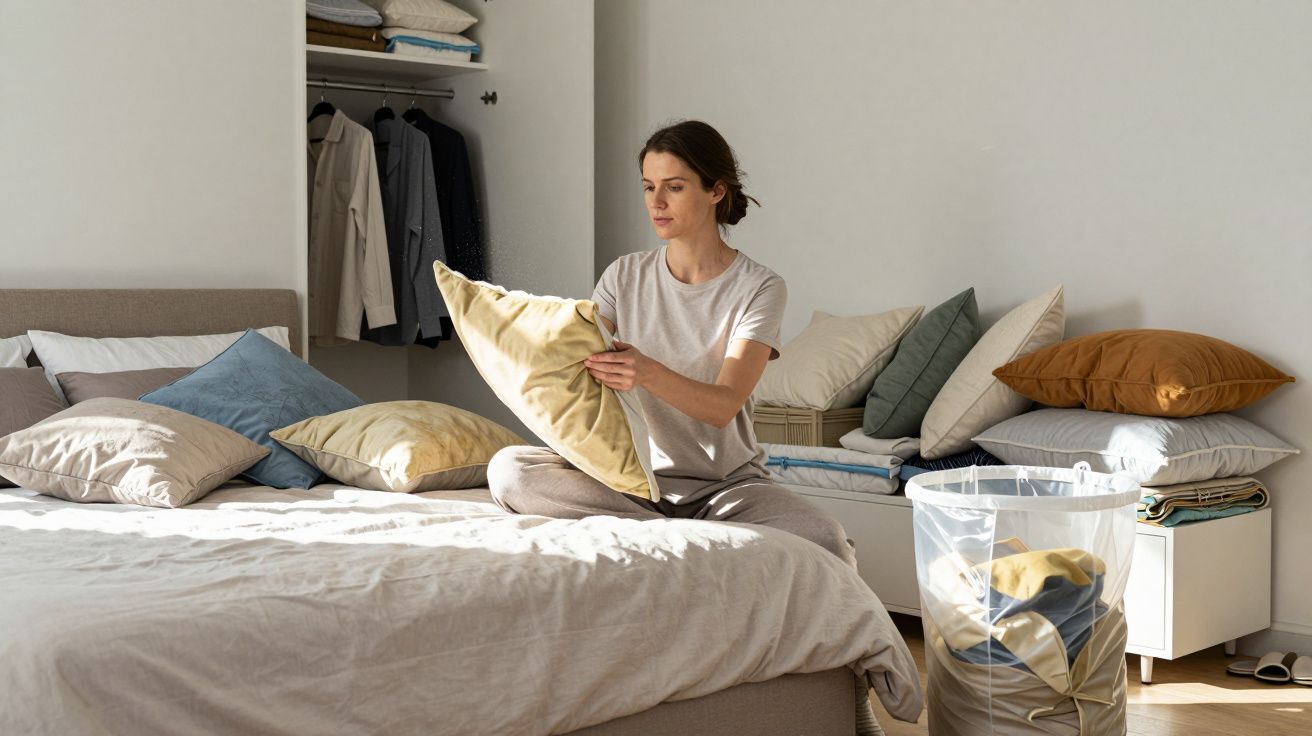
Why hoarding old pillows could be raising dust-mite levels in your bedroom
That sagging pillow at the back of the wardrobe is not just a sentimental relic from your first flat or your child’s toddler bed. As fillings age, flatten and hold on to moisture, they quietly become ideal real estate for dust mites. You may not see them, but your nose, eyes and skin often get the message first.
From London terraces to rural cottages, many bedrooms contain a quiet collection of spare, “just in case” pillows. They wait in ottoman beds, top-of-wardrobe bags and airing cupboards. Add guest cushions, decorative pillows and old favourites that never quite made it to the bin, and you have a stockpile that can significantly lift allergen levels in the room where you spend a third of your life.
The hidden city inside an old pillow
Every night, we shed tiny flakes of skin, hair fragments and traces of sweat and saliva. New, well‑aired pillows release a good portion of this debris during regular washing and drying. Older ones, especially those that are rarely laundered, hold on to this material deep in the filling.
Dust mites thrive precisely where this mixture accumulates. Warmth from your body, moisture from breathing and perspiration, plus a steady supply of skin cells, together create a microclimate far more hospitable than a bare mattress or freshly washed sheet.
Scientists estimate that pillows can double in weight over several years, largely from retained skin flakes, dust and moisture, not just the original filling.
Unlike bed bugs, dust mites do not bite. The problem lies in their droppings and body fragments that break down into fine particles. These become airborne when you plump a pillow, change bed linen or rummage through a stack of old bedding, then settle in your nose, eyes and lungs.
How hoarded pillows raise dust-mite levels
A single well‑used pillow can contain tens of thousands of dust mites. Multiply that by forgotten spares and decorative cushions, and your bedroom’s allergen load rises accordingly. Each additional cushion is another reservoir where mites can feed, breed and spread.
Old pillows stored in cupboards or under beds are not “off duty”. Even unused, they continue to collect dust and act as a long‑term food bank for mites. When you pull them out for guests, wash the covers and put them straight on the bed, you release accumulated particles into the air.
The layout of many UK homes compounds the problem. Small bedrooms, limited storage and damp‑prone walls favour tightly packed wardrobes and under‑bed drawers. Air rarely circulates properly around stored textiles. That trapped humidity helps mites survive even in cooler seasons.
Typical dust-mite hotspots in a pillow-heavy bedroom
- Stacks of spare pillows in plastic bags that trap moisture rather than prevent it.
- Decorative cushions on the bed that are never washed, only vacuumed or shaken.
- Old children’s pillows kept “for when they visit” but not used for years.
- Feather or down pillows without protective covers, absorbing sweat night after night.
Over time, mites do not stay politely where they started. Movement, air currents and routine cleaning spread allergen particles to curtains, carpets, stuffed toys and even clothing stored in the same room.
When symptoms start to tell the story
The first warning signs often appear as low‑level irritation that people attribute to “dust”, “hay fever” or simply bad sleep. Yet the pattern matters. Symptoms that reliably worsen at night or within minutes of getting into bed often point towards bedroom allergens.
Common reactions include a blocked or runny nose, sneezing fits on waking, itchy or watery eyes and a dry cough that lingers in the mornings. Asthma sufferers may notice tighter chests, more frequent inhaler use or disturbed sleep without a clear cold or infection.
For people with eczema, dust-mite exposure can trigger flares on the neck, face and hands where contact with bedding is highest.
Children and older adults are particularly sensitive. A child who sleeps quietly at grandparents’ house but wheezes when staying in a guest room piled with vintage pillows is offering a practical clue about the environment, not their imagination.
Why pillow age and material matter
Not all pillows age at the same pace. Feathers and down tend to clump, leaving pockets that trap moisture and dust. Synthetic fillings can compress into dense mats that are hard to clean through. Foam pillows may crack and crumble over time, providing fresh nooks where dust settles.
Two factors decide how attractive a pillow becomes to mites: how often it is washed and how completely it dries. Airing on a radiator or in a shaded room rarely achieves the high, sustained heat that kills mites and dries the filling properly. Damp cores can stay humid for days.
| Pillow type | Typical lifespan in regular use | Washability / mite control |
|---|---|---|
| Feather / down | 3–5 years | Needs frequent airing, occasional specialist clean; use protectors |
| Synthetic fibre | 2–3 years | Machine‑washable if labelled; high‑heat drying essential |
| Solid memory foam | 3–4 years | Cover washable only; airing and protective casings crucial |
Many experts recommend replacing pillows every two to three years for hygiene reasons alone. Stretching their use beyond this, then storing them “just in case”, extends the mite habitat long after the pillow has stopped supporting your neck properly.
A practical declutter for cleaner air
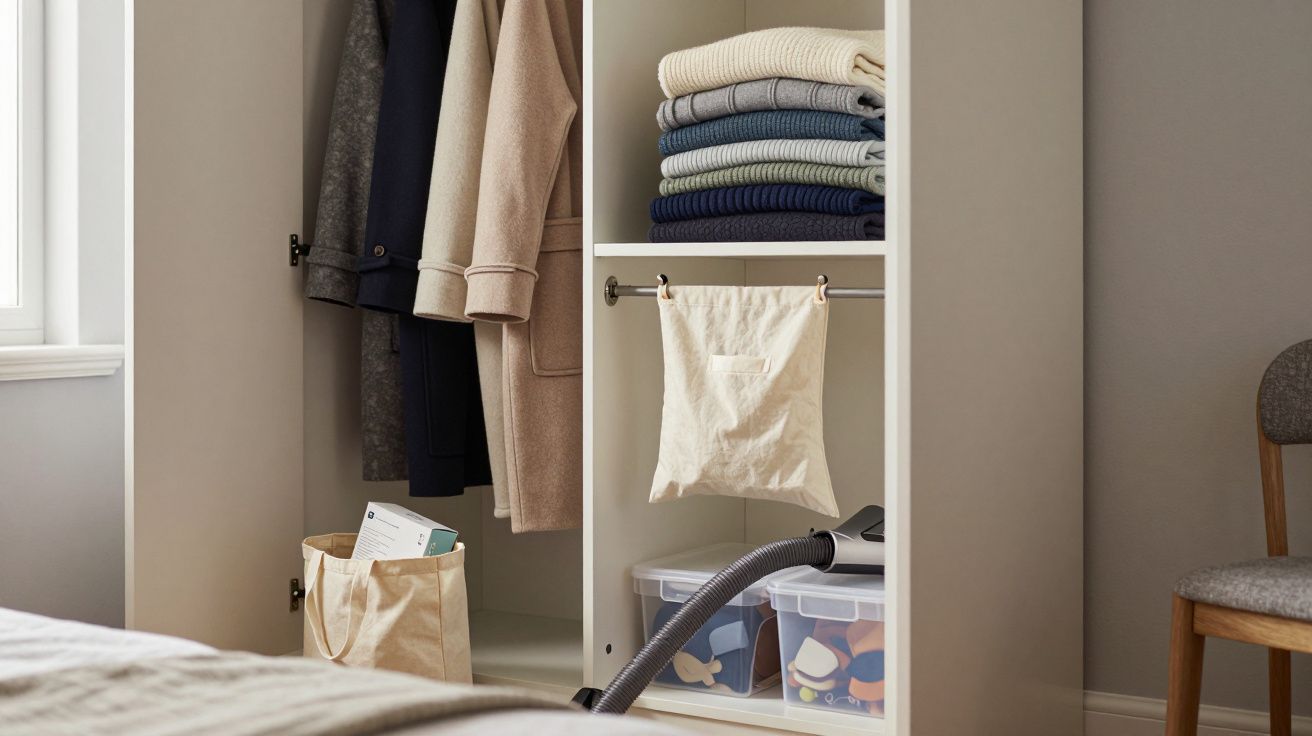
You do not need to strip your bed of every cushion and sleep on a bare mattress. A targeted approach reduces allergen load without sacrificing comfort. The aim is simple: fewer, cleaner pillows in circulation, and minimal long‑term storage of old ones.
Start with an audit. Lay out every pillow and cushion from beds, wardrobes, under‑bed drawers and airing cupboards. Check labels, filling type, odour, stains and structural condition. Anything yellowed, musty, clumped or older than you can reasonably remember becomes a candidate for removal.
A simple decision guide most households can use
- Still supportive and under 3 years old? Keep, but add a washable, tightly woven protector.
- Flat, lumpy or musty despite washing? Retire; do not demote to “spare” or “pet” pillow.
- Guest or decorative pillows rarely washed? Keep only what you can launder properly at least twice a year.
- Stored for sentimental reasons (baby pillows, first home set)? Photograph the item and let the fabric go.
Once you have reduced numbers, focus on rotating what remains. Wash pillow protectors at 60 °C where the care label allows, and aim to launder pillows themselves according to manufacturer instructions. Full drying in a tumble dryer or in direct sun helps reduce residual moisture.
Small habits that starve mites out
Decluttering is only part of the story. Day‑to‑day habits can either support or undermine your efforts. Regular airing, mindful heating and disciplined cleaning form a quiet routine that nudges the bedroom away from “mite friendly” and towards “mite resistant”.
Pull back the duvet each morning to let moisture escape rather than making the bed immediately. Open windows for short bursts, even in winter, to swap humid air for drier outside air. Avoid drying laundry in the bedroom where possible, as this significantly raises humidity.
- Vacuum mattresses, bed frames and skirting boards weekly with a HEPA‑filtered cleaner.
- Wash pillowcases and sheets at 60 °C where fabrics allow, to break down mite allergens.
- Use zipped, dust‑mite‑proof covers on pillows for anyone with asthma or allergies.
- Avoid over‑heating bedrooms at night; slightly cooler conditions discourage mite growth.
Think of your bedroom less as a showpiece and more as a breathable, easy‑to‑clean sleeping space.
Stuffed toys, extra throws and upholstered headboards all add to the fabric load. If reducing them feels drastic, aim to wash or vacuum them on a schedule, not just before visitors arrive or during a spring clean.
When expert help makes sense
If you have pared back old pillows, adopted better washing habits and still notice persistent symptoms, a conversation with a GP or allergy specialist can clarify what is really going on. Simple tests can identify whether dust‑mite allergens are a significant trigger for you.
For severe asthma, nasal polyps or stubborn eczema, clinicians may suggest medicated sprays, antihistamines or immunotherapy alongside environmental controls. Knowing that dust mites are a proven issue can also strengthen your case when requesting adaptations in rental homes or shared housing.
Professional mattress and upholstery cleaning services offer deep extraction of dust and allergens, but they are not a cure‑all if the room still holds piles of rarely washed fabric. Any one‑off treatment works best as part of a broader plan that limits future build‑up.
Beyond the pillow: what your bedroom choices signal
The decision to keep or discard an old pillow often feels minor, even sentimental. Yet, looked at across millions of households, it reflects a wider shift towards understanding home air quality as carefully as we already assess food labels and skin‑care ingredients.
People are starting to question not just how their bedrooms look on an estate agent’s listing, but how they feel at 2 a.m. when breathing is shallow and the room is still. A tidy stack of spare bedding, once a sign of good housekeeping, can quietly undermine that comfort if it never sees a washing machine.
In practice, reclaiming space from hoarded pillows offers a triple benefit: calmer wardrobes, lighter cleaning work and cleaner air overnight. The change is modest-a bag to the textile bank, a scheduled wash, a case zipped over a favourite feather pillow-but over months it shifts the balance in your bedroom ecosystem.
You do not need perfection. You need fewer, better‑kept pillows, and a willingness to let go of the idea that “just in case” is always worth the dust.




Comments (0)
No comments yet. Be the first to comment!
Leave a Comment