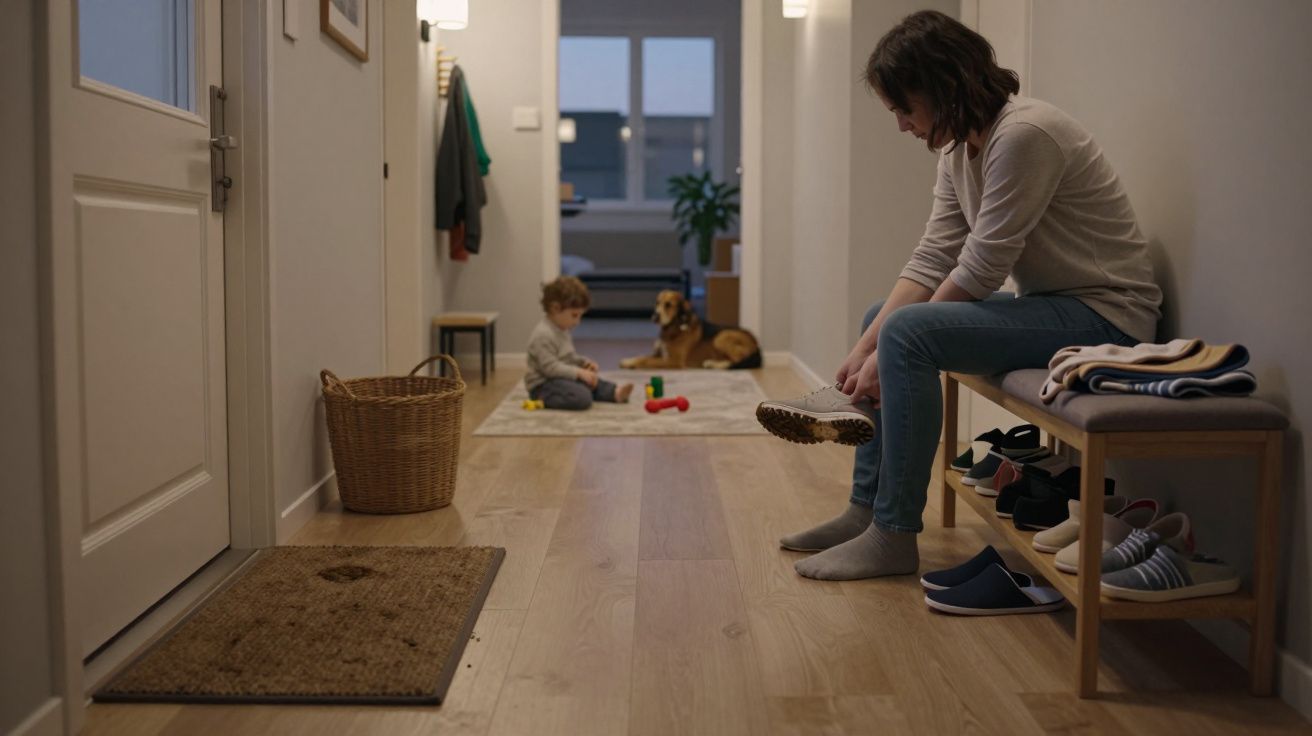
Why keeping shoes on at home could be tracking in more than just dirt, according to microbiologists
The first clue is rarely dramatic. It is a faint, dried mud arc just inside the doorway, the sandy grit that crunches underfoot in the hallway, or the mysterious sticky patch beside the sofa that nobody quite owns up to. Then someone drops a slice of toast on the floor, looks at their sock, then at the doormat, and you realise the question is bigger than crumbs: should we really be wearing shoes indoors?
We treat the doorstep like a thin, polite line between “outside” and “home”. Microbiologists will tell you that line is mostly imaginary. The soles of our shoes are quietly busy, collecting microscopic hitch-hikers from pavements, public loos, office carpets and park paths, then pressing them into the places where we cook, sit and watch telly. The visible dirt is just the part we can see. The rest needs a microscope, and a little imagination.
What actually lives on the bottom of your shoes
When researchers swab shoe soles, they tend to find the same cast of characters. Bacteria from soil and roads, skin microbes from every changing room and bus you have walked through, traces from animal droppings in parks, and fragments from public toilet floors all show up in stubborn numbers. The outside world leaves its calling card in layers, like rings in a tree.
Certain names concentrate the mind. Studies repeatedly pick up E. coli and other faecal bacteria on shoe soles, especially in urban areas where dog mess, pigeon droppings and splash-back from streets mingle. Doorstep mats trap some of it, but not all. The tread grooves and tiny nicks in a sole act like corridors, sheltering microbes from sunlight and casual wiping.
None of this means your hallway is a biohazard. We are already surrounded by bacteria on our skin, in our gut, and in the air. What changes with shoes is the route and concentration. You are effectively bringing in a curated sample of the pavements you have walked, and pressing it into flooring, mats and rugs repeatedly, day after day.
A microbiologist would call it “environmental microbial transfer”. Most of us would call it “walking the street into the living room”.
Why indoors is different from outdoors
Outside, microbes are diluted by wind, rain, UV light and sheer space. Pavement germs have thousands of square metres to spread over, and the next downpour thins them again. Indoors, the rules change. We close the door, warm the air, soften the lighting and introduce carpets, cushions and children’s hands into the picture.
Floors are not just surfaces; they are stages. Toddlers crawl, pets sprawl, someone does yoga in the lounge, and someone else likes to sit cross-legged in front of the television. Food is dropped, toys are mouthed, and that “five-second rule” looks optimistic once you remember where the soles of everyone’s trainers have been.
Microbiologists worry less about a single footprint and more about accumulation. A tiny smear of contamination, walked in dozens of times a week, builds a background layer that standard mopping reduces but rarely erases. The risk is not instant illness; it is the slow, quiet upward nudge in exposure, especially for very young, elderly or immunocompromised people.
How the germs travel once they are inside
The journey does not stop at the doormat. Each step presses and lifts, shedding dried particles that get kicked along skirting boards or dragged further in on socks and slippers. Vacuum cleaners catch a share, but also stir up a faint dust cloud that re-settles. Curtains, cushions and low tables all end up with a fine coating of whatever the house’s traffic has been carrying.
From there, the routes into us are boringly simple: hands, food, and faces. You adjust your shoelaces, then slice a snack without washing your hands. A child rolls a toy car across the floor, then chews the wheel. A pet flops down exactly where you leave your bag, and you stroke its fur while you eat. None of these moments feels dramatic, but under a microscope, each is an exchange.
It is important not to confuse presence with inevitability. Finding bacteria on a floor does not mean everyone in the room will fall ill. Dose, frequency, and the type of germ all matter. Still, microbiologists tend to agree on one thing: if there is a simple, habitual way to reduce that background transfer, it is worth considering.
The case for a no-shoes rule (without becoming obsessive)
The boring power of a shoes-off habit lies in prevention. Remove the main conveyor belt of outside microbes at the door, and you massively cut the amount that needs cleaning later. One small, consistent change does more than an extra hour of scrubbing once a month.
Putting it in place works best when it is framed as comfort, not accusation:
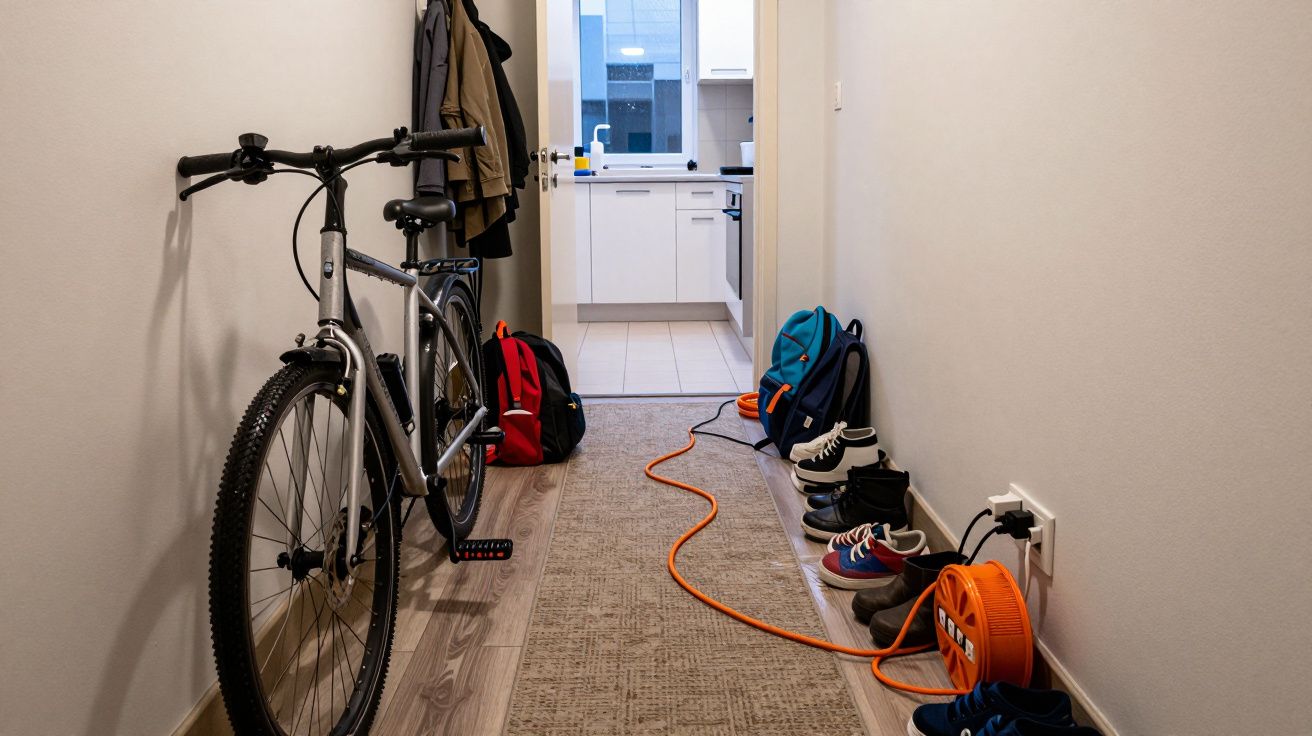
- Place a sturdy mat outside and another washable one just inside.
- Add a small bench or chair so people can sit to remove shoes easily.
- Keep a basket of clean socks or simple house slippers for guests.
- Make the “shoes-off” request normal and friendly, not panicked or apologetic.
Think of it less as a sterile rule and more as a reset. You step out of the day, along with the bus floors, petrol forecourt puddles and pub toilets, and step into a space that belongs more clearly to you. For people with allergies, asthma or crawling babies, that psychological line is backed by a measurable drop in grit, pollen and outdoor contaminants on floors.
One public-health researcher described it as “low-tech infection control, disguised as a cosy habit”.
Cleaning strategies that actually help
Even with a shoes-off policy, life happens. Parcels arrive, workmen keep boots on, someone forgets in a rush. The aim is not perfection. It is a routine that keeps the microbial load gently tilted in your favour rather than the pavement’s.
Microbiologists suggest a few practical habits that make a real difference:
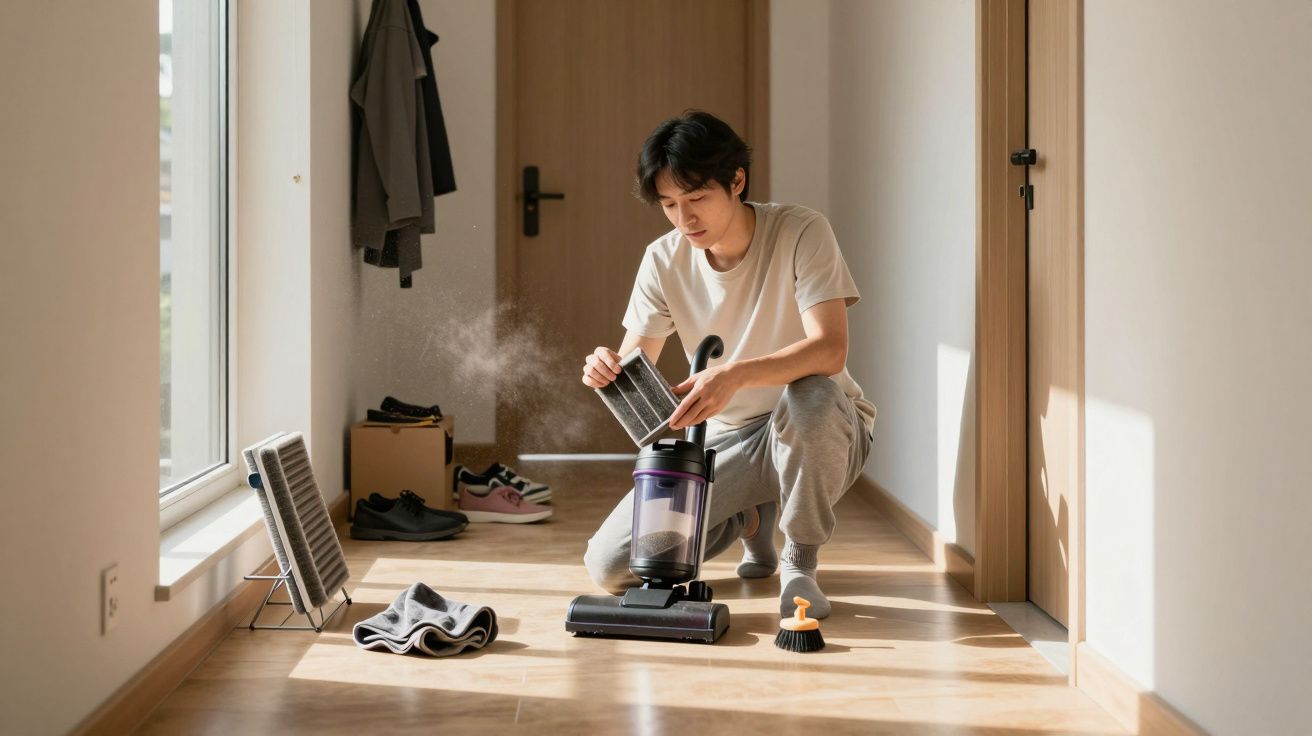
- Vacuum high-traffic areas several times a week, using a HEPA filter if someone in the home is vulnerable.
- Damp-mop hard floors instead of dry sweeping, which simply redistributes fine dust and microbes.
- Wash door mats regularly at the highest temperature their care label allows; they are filters, and filters need changing.
- Designate “outside” and “inside” footwear if you prefer shoes on indoors - for example, a clean pair of house-only trainers.
The quiet hero is consistency. A quick mop on Saturday and a shoes-off habit every day will beat an occasional deep-clean in a shoes-on house that treats the hall like a public corridor.
Simple comparison of habits
| Habit or choice | Microbiologist’s view |
|---|---|
| Shoes on throughout home | Higher import of outdoor microbes |
| Shoes off at the door | Lower transfer, easier to keep clean |
| Weekly damp-mop of hard floors | Cuts accumulated contamination |
What this really changes in day-to-day life
Most of us will never culture bacteria from our hallway and line them up in neat rows on a Petri dish. The changes show up in quieter ways: fewer mysterious sticky patches, less grit underfoot, and a floor that feels like somewhere you would happily drop onto for a stretch without thinking twice.
For parents, it can mean being able to let a toddler crawl without picturing them licking the bus-stop floor in slow motion. For pet owners, it is one less layer of city dust settling into fur. For anyone who shares a home with an older relative or someone with a sensitive immune system, it is another gentle nudge towards safety that costs almost nothing.
The bigger shift is mental. Once you see your shoes as tiny, patterned sampling tools of everywhere you have been that day, leaving them at the door feels less fussy and more logical. A house will never be a laboratory. It does not need to be. It just needs enough small, thoughtful barriers so that the outside world stays outside most of the time, instead of creeping in quietly on every sole.
FAQ:
- Are shoe-borne microbes really dangerous for healthy people? For most healthy adults, the risk from shoe-borne microbes is low on any given day. The concern is more about cumulative exposure for babies crawling on floors, older people, or anyone with a weakened immune system. A shoes-off habit and regular cleaning nudge that background risk down.
- If I mop regularly, do I still need a no-shoes rule? Mopping helps, especially with a proper detergent and damp method, but it is easier to prevent contamination than to chase it. Combining a shoes-off habit with routine cleaning gives you the biggest benefit for the least extra effort.
- Do slippers and socks spread germs as well? Yes, but generally far fewer outdoor microbes than street shoes, especially if they are only worn indoors. Think of them as low-traffic carriers compared with trainers that have been through public loos and pavements.
- What about cultural or practical reasons to keep shoes on? If shoes-on is non-negotiable, consider “house shoes” that never go outdoors, plus robust mats and frequent cleaning of high-traffic areas. Even that separation significantly reduces what comes in.
- Is this about hygiene or just cleanliness preferences? It is both. Microbiologists focus on reducing avoidable paths for potentially harmful microbes. Many households simply enjoy the side-effect: cleaner floors, fewer marks on carpets, and a subtle feeling that the home is more of a haven than an extension of the street.
Comments (0)
No comments yet. Be the first to comment!
Leave a Comment