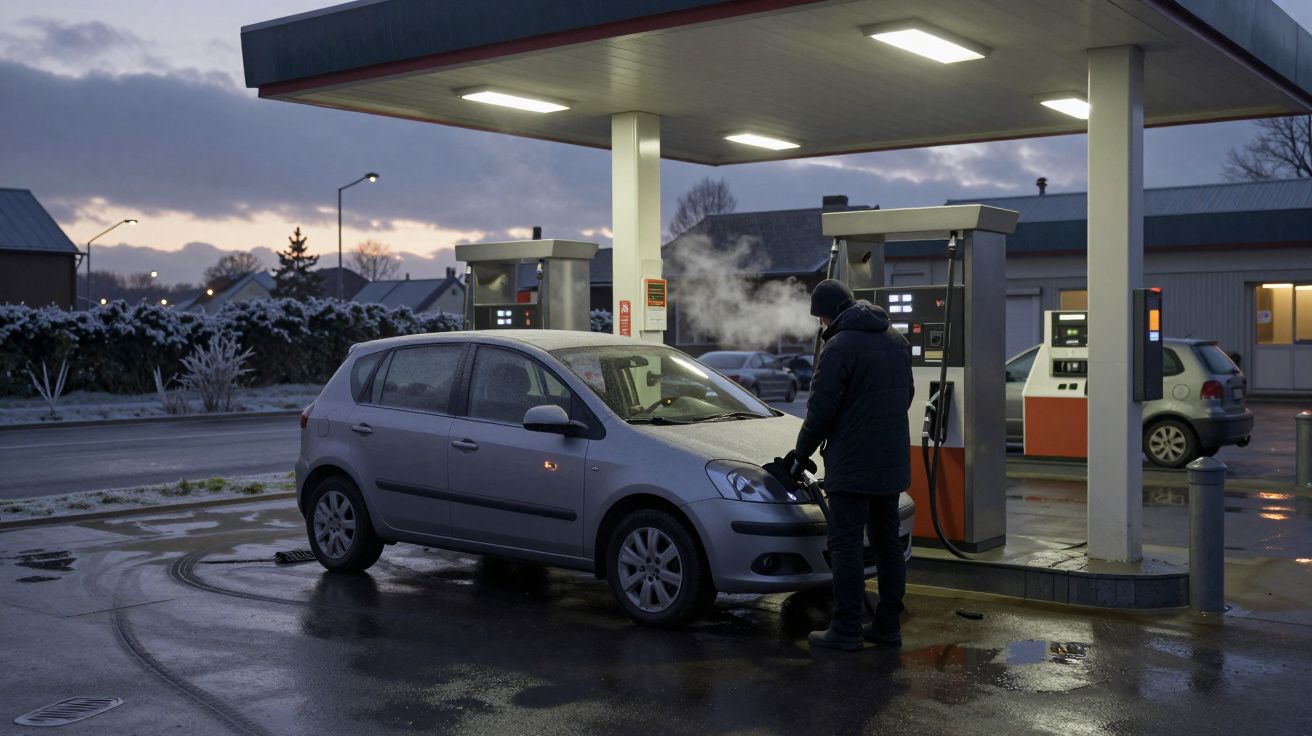
Why leaving your car’s fuel tank almost empty in winter can quietly damage the engine
There’s a particular kind of dread that only appears on a cold, dark morning.
You turn the key, the dashboard wakes up, and there it is: the fuel warning light, glowing accusingly just above a layer of frost on the windscreen. The car starts, more or less, so you tell yourself you’ll “fill up later”. The school run, the commute, the supermarket dash all get done on vapour. Weeks go by like this.
From the outside, nothing dramatic happens. No bangs, no smoke, no spectacular breakdown in the fast lane. The car carries on, just a little more reluctant on cold starts, a little rougher at idle. It feels like winter being winter.
But under the bonnet, running on fumes in cold weather is quietly nudging several systems in the wrong direction.
Why winter makes low fuel less forgiving
A near-empty tank isn’t automatically catastrophic in July. In January, it behaves very differently.
Modern cars circulate fuel from the tank to the engine and back again. That fuel isn’t just energy; it also cools the fuel pump and stabilises the system against temperature swings. When there’s plenty of petrol or diesel in the tank, it acts like a thermal buffer. In winter, when the level is low, two problems creep in at once: cold, damp air and rapid cooling.
Cold air can carry surprising amounts of moisture. Each night, as temperatures fall, the air in a part-empty tank cools and contracts. Fresh, slightly wetter air is drawn in through the tank’s ventilation system. Water condenses on the cold inner walls and drips down into the fuel. One tankful doesn’t turn into a puddle, but over dozens of short winter journeys, the water content builds up where you least want it.
At the same time, a fuel pump sitting in a shallow pool of cold fuel works harder to maintain pressure. It’s less cushioned, less cooled and more exposed to any impurities that have settled at the bottom of the tank.
The quiet cocktail at the bottom of the tank
Every fuel tank has a bottom layer that you don’t usually think about. Tiny particles from the filling station, corrosion from the tank itself, wax crystals from diesel in extreme cold – they all slowly sink.
When you routinely run with “just enough” fuel, you live closer to that sediment line. The pump’s pick-up point starts drawing from the dirtiest part of the tank more often. On a bitter morning, those fine particles and droplets of water are more likely to be dragged into the fuel filter, and eventually towards injectors that really don’t appreciate grit.
The first signs are subtle:
- Slight hesitation when you accelerate from low revs
- Rough idle after a cold start that improves as the engine warms
- A fuel pump that becomes noisier, with a faint whine from the rear of the car
None of these scream “empty tank” on their own. Together, particularly in winter, they point to a system under chronic low-level stress.
Diesel cars are especially sensitive. At low temperatures, diesel can form waxy crystals that clog filters. Add condensed water and sediment, and the margin between “starts every time” and “cranks but won’t fire” becomes painfully thin.
How this quietly wears out your engine and fuel system
Water in fuel is not just about starting issues. It changes how combustion happens inside the engine.
Small amounts of water can corrode metal components over time. Fuel injectors, high-pressure pumps and fine internal passages are designed with clear tolerances. When they meet a steady diet of micro-rust and moisture, they age faster. In direct injection engines, where fuel is sprayed straight into the combustion chamber, deposits on injector tips can distort the spray pattern. That leads to incomplete combustion, more soot and, in some cases, higher fuel consumption.
A system that was finely tuned at the factory slowly drifts out of balance when its fuel supply is compromised.
Then there’s the pump itself. Electric in-tank pumps rely on being submerged in fuel for both lubrication and cooling. Running consistently low means the pump spends more time exposed. It runs hotter, its bearings wear faster and, over years, the risk of an early failure climbs. Replacement is rarely cheap.
Cold starts compound everything. Thickened oil, cold metal and impatient morning traffic already make winter a hard season for engines. Add a marginal fuel supply with more water and debris, and the number of rough, abrasive starts over a winter can be enough to accelerate wear that only shows up much later.
A simple winter rule that mechanics quietly swear by
Talk privately to mechanics who see the same cars year after year, and a pattern emerges. Drivers who habitually hover on the warning light, especially in colder months, tend to present more often with clogged filters, failing pumps and grumpy cold-start behaviour.
The habit that quietly helps?
Keeping at least a quarter to a third of a tank as your personal “empty” in winter.
That doesn’t mean brim the car every time you pass a forecourt. It means treating the last quarter as a reserve, not as the normal operating range. In day-to-day terms, that might look like:
- Topping up when the gauge drops below half, instead of waiting for the light
- Planning a fuel stop before long night journeys, rather than “seeing how far it goes”
- Avoiding leaving the car parked for days in freezing, damp conditions with almost no fuel inside
It’s a small behavioural tweak that changes the environment inside the tank: less air, less moisture cycling in and out, more stable temperatures and better pump cooling.
Practical winter refuelling habits that protect your car
You don’t need to become obsessive or start carrying jerrycans. A few winter-specific habits go a long way.
Use busy, reputable filling stations
High turnover reduces the chance of stale or contaminated fuel, which matters more when cold weather is already stressing the system.Fill before a cold snap, not during it
Topping up before a forecast freeze means the tank goes into the cold spell with minimal air space for condensation to form.Avoid repeated short “£10 top-ups” in deep winter
They keep you hovering near the bottom of the tank, right where sediment and water accumulate.For diesels, consider winter-grade fuel or additives where appropriate
In very low temperatures, a quality winter diesel or a manufacturer-approved additive can help limit waxing and keep injectors cleaner.
On older cars or those that have already had fuel system issues, some owners also schedule a fuel filter change ahead of winter, rather than discovering a marginal filter on the first frosty Monday.
| Winter risk | What’s happening | Simple countermeasure |
|---|---|---|
| Condensation in tank | Cold air, warm air and low fuel create repeated moisture build-up | Keep at least ¼–⅓ tank, fuel up before cold snaps |
| Sediment and debris | Pump draws from “dirty” bottom layer more often | Avoid chronic low-fuel running, change filters on schedule |
| Pump overheating | Less fuel around pump, especially on long runs | Treat warning light as emergency only, not normal |
Let winter be hard on the weather, not on your engine
There’s a certain satisfaction in ignoring the low-fuel light and “beating the system” to the last possible mile. In summer, you might just get away with it. In winter, the quiet costs stack up where you can’t see them.
Deciding that your real empty starts somewhere around a quarter of a tank is one of those underwhelming habits that pays you back months and years later. The car starts more cleanly, the pump works less frantically, and you’re less likely to meet a tow truck on a freezing hard shoulder.
It won’t make your engine immortal. But alongside basic servicing and sane driving, it’s one of the few winter habits you can adopt in five seconds, standing at a pump, that your future self – and your mechanic – are likely to thank you for.
FAQ:
- Is it ever actually dangerous to run very low on fuel in winter?
Yes. Beyond long-term wear, there’s the immediate risk of running out on a dark, icy road or motorway hard shoulder, where breakdowns are more hazardous in poor visibility and cold conditions.- Can modern fuel systems handle a bit of water without damage?
They are designed with some tolerance, and filters catch a lot. The issue is chronic exposure: repeated condensation and low-level contamination slowly overwhelm that safety margin.- Does this advice apply to hybrid and electric cars?
Hybrids with combustion engines still benefit from avoiding very low fuel levels in winter. Pure EVs don’t have fuel tanks, but have their own cold-weather concerns, mainly battery temperature and charge level.- If my tank has been run low all winter, should I do anything in spring?
It’s sensible to fill the tank fully, then stick to higher levels for a while. If you notice rough running, hard starts or increased pump noise, asking a garage to check the fuel filter and system isn’t over-cautious.- Is keeping the tank fuller really worth the extra cost upfront?
You’re not buying more fuel overall, just buying it a bit earlier. The potential savings come from avoiding premature pump or injector failures, which are far more expensive than changing when you top up.





Comments (0)
No comments yet. Be the first to comment!
Leave a Comment