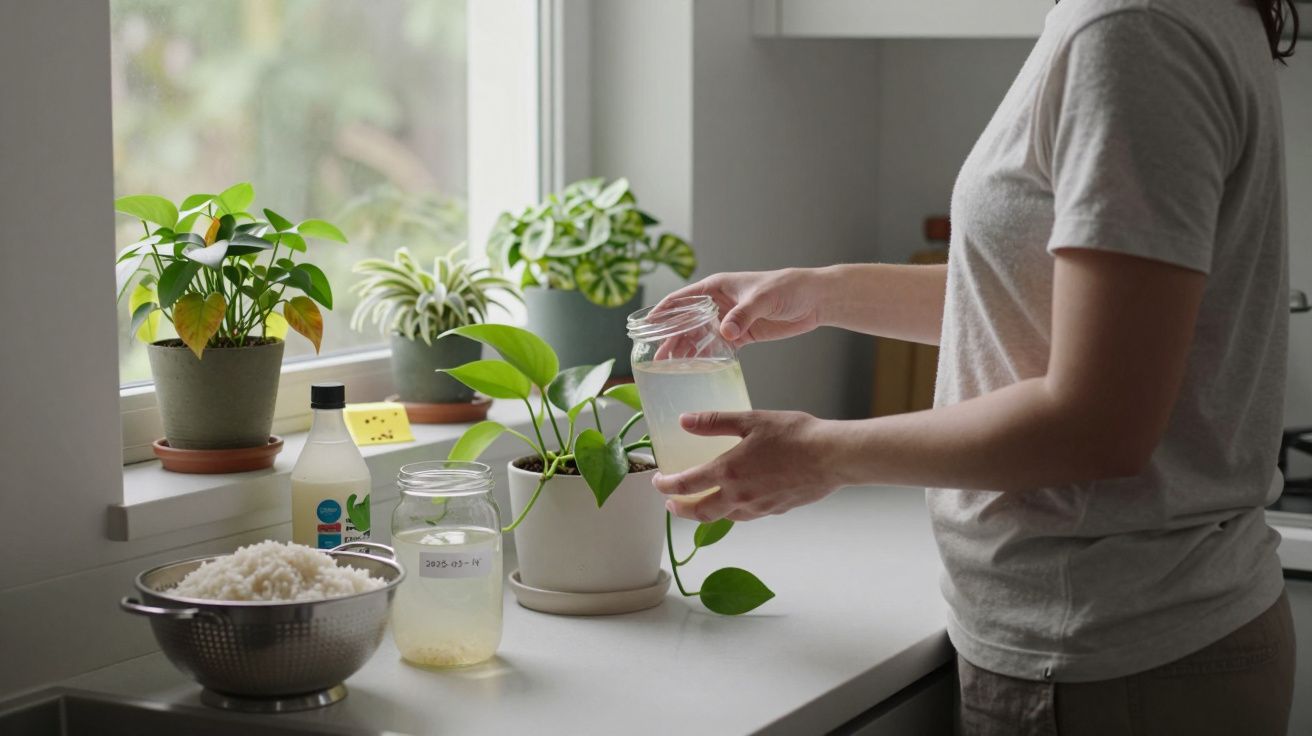
Why pouring rice water on houseplants is trending – and when botanists say it backfires
A cloudy jar on the worktop, a swirl of starch in the sink, the quick instinct to tip it away. Then TikTok says: stop. That water is “liquid fertiliser”, “K‑pop plant care”, “zero‑waste magic”. Millions of views later, people are straining rice into jam jars and heading to their monstera with the zeal of a convert.
The idea taps into something tidy and satisfying: less waste from the kitchen, more growth on the windowsill. It sounds folk‑wise and modern at once. But plant physiologists watching the trend wince at some of the advice – because the same cloudy water that feeds a peace lily can also suffocate a ficus when used the wrong way.
What rice water actually is – and why plants sometimes like it
At its simplest, rice water is just the water you soak or rinse rice in. A bit of surface starch, a trace of B‑vitamins and amino acids from the grain, and – if you leave it sitting for long – a bloom of bacteria and yeast. That last part is where the story splits.
Used fresh and diluted, rice water behaves like a very weak organic feed. Soil microbes nibble at the starches, releasing a trickle of nutrients and making existing minerals slightly easier for roots to absorb. On poor potting mixes or tired garden soil, that small boost can be enough to green up foliage and nudge new growth.
Botanists describe it less as “miracle fertiliser” and more as a mild tonic: a nudge for the soil ecosystem rather than a meal for the plant itself.
The gains are usually modest but real. A few controlled trials on leafy vegetables show slightly higher chlorophyll content and faster early growth when watered occasionally with diluted rice rinse compared with plain tap water. On houseplants, the effect is harder to see – and far easier to overdo.
Why the trend exploded on social media
The appeal is obvious. You are already washing rice. The water looks vaguely nutrient‑rich. It feels wasteful to pour it down the drain, especially when the cost of plant feeds adds up and “natural” tips are algorithm catnip.
Creators film time‑lapses of pothos vines thickening, orchids sending roots across bark, succulents plumping up – all paired with captions crediting rice water. The conversions are compelling, even if they rarely mention other variables: fresh repotting, better light, a new grow light off‑camera. Correlation quietly puts on the crown of causation.
There is also the zero‑waste romance. In an age of compost caddies and refill shops, turning a by‑product into plant care feels like a small domestic victory. The problem is that the internet rarely pauses for the fine print.
When rice water helps – and when it doesn’t
Houseplants are not all doing the same job in the same soil. Some sit in chunky bark, others in heavy peat. Some drink deeply, others prefer their roots almost dry. The same cloudy liquid lands very differently in each pot.
- Thirsty, leafy plants in free‑draining compost (pothos, spider plants, peace lilies) cope best with occasional rice water.
- Orchids and aroids in airy mixes can use small amounts, but excess starch easily clogs their bark and perlite.
- Cacti and succulents dislike extra organic mush: they evolved for lean, fast‑draining conditions.
The upshot from researchers: rice water is a “sometimes” drink, not a new tap. It can play a supporting role alongside balanced fertiliser and decent substrate, but it will not fix poor light, cramped roots or chronic over‑watering.
Where botanists see it backfire
The problems show up quietly at first. A fortnight later, the pot surface looks slick, the compost smells faintly sour, and fungus gnats party where you once had tidy soil. The same carbohydrates that microbes love can turn a pot into a slow‑motion compost bin.
Two mechanisms do most of the damage:
- Oxygen crash in the root zone. As microbes gorge on starch, they burn through the oxygen dissolved in water and trapped between soil particles. Roots forced to sit in low‑oxygen, constantly damp media start to suffocate and rot.
- Imbalanced nutrition. Rice water is not a complete fertiliser. It adds traces of some nutrients but almost no nitrogen, phosphorus or potassium compared with commercial feeds. Plants stretch weak and pale if it replaces proper feeding.
Let’s be honest: hardly anyone on TikTok is measuring dilution ratios or noting which pots already have slow‑release fertiliser mixed in. That is how a “natural booster” becomes a slow root‑rot experiment.
Common ways rice water causes trouble
- Using it undiluted, every watering. This loads the soil with starch faster than microbes can process it.
- Letting it ferment on the counter for days, then pouring it on thick. Fermented rice water is often praised; in practice, strong odours suggest a bacterial broth that can shock roots and invite gnats.
- Applying to already soggy plants. Any extra liquid on waterlogged compost worsens oxygen stress.
- Using it in closed containers with no drainage. Terrariums, cachepots and decorative planters without holes give microbes nowhere to vent and salts nowhere to go.
Plant scientists sum it up bluntly: too much rice water turns soil from breathable to boggy. Roots might not show the damage instantly, but weeks later yellowing, leaf drop and mould on the compost tell the story.
How to use rice water with fewer regrets
For those who still like the thrift and don’t mind a bit of measuring, the method can be made a lot safer. Think “light tonic, rarely”, not “miracle feed, always”.
The basic pattern many botanists are comfortable with:
- Use only fresh rice rinse water, ideally from the first or second rinse.
- Dilute at least 1:3 with plain water (one part rice water to three parts tap or rainwater).
- Apply no more than once every 3–4 weeks during active growth, and skip it entirely in winter for most houseplants.
- Always pour until you see a little run‑off from the drainage holes, then let the pot drain fully.
If you would not happily drink the rice water yourself because of the smell, your roots probably won’t enjoy it either.
Which plants cope best – and which to spare
| Plant type | Rice water tolerance | Notes |
|---|---|---|
| Fast‑growing foliage (pothos, spider plants, tradescantia) | Generally forgiving | Use diluted, monthly at most |
| Aroids & orchids (monstera, phalaenopsis) | Moderate | Only on well‑draining mixes, sparingly |
| Cacti & succulents | Low | Usually better avoided |
Seedlings and cuttings are a special case. Their young roots are sensitive to both nutrient swings and microbes. Most propagation specialists prefer plain water or a mild, balanced nutrient solution rather than homemade brews.
Practical tips for “low‑risk” rice water experiments
If curiosity wins – and for many of us it will – treat rice water like you’d treat a new fertiliser: cautiously, on a few test subjects first.
- Start with one or two sturdy plants. Avoid your rare hoya or sentimental ficus.
- Record the date and dilution. A note on your phone helps you see whether yellowing leaves appear after one enthusiastic month.
- Sniff and look at the soil. If odours or white fuzz appear, pause use and let the pot dry more thoroughly between waterings.
- Alternate with plain water. Never use rice water twice in a row on the same plant.
- Keep using proper fertiliser. A balanced liquid feed or slow‑release pellets remain the backbone for nutrition.
In small flats where ventilation is poor, remember that any organic additive increases the risk of fungus gnats. Sticky traps help, but the best prevention is not turning every pot into a wet buffet.
When to pour it down the sink instead
There are moments when even rice‑water fans agree the drain is the friendlier option:
- The rice water has sat at room temperature for more than 24 hours and smells like sour milk or drain cleaner.
- The plant pot has no drainage hole, and repotting is not on the cards.
- The plant is already stressed: recent repot, pest treatment, or visible root rot.
- You are dealing with succulents, cacti or Mediterranean shrubs indoors.
In those cases, the risk of worsening things outweighs any faint nutritional gain. As one horticulturist put it: “If you want to spoil the plant, give it light, not leftovers.”
The deeper lesson: it’s about the soil, not the hack
Beneath the trend is a genuinely useful reminder: plants live through their roots, and roots live or die by the condition of their substrate. Anything that encourages people to look at soil texture, drainage and watering habits is a quiet win.
Rice water happens to sit at the junction of all three. Used very lightly, it nudges the soil life in a positive direction. Used carelessly, it exposes every weakness in the pot: poor aeration, no drainage, chronic damp. The same video that sells “miracle growth” rarely shows those outcomes.
If there is a rule of thumb botanists wish would trend next, it is simpler and less cinematic: good light, good drainage, measured fertiliser. Rice water can join that routine as an occasional cameo. It just should not be allowed to rewrite the script.
FAQ:
- Is rice water a fertiliser replacement? No. It contains only small amounts of nutrients and cannot replace a balanced fertiliser. Think of it as a mild supplement, not a main feed.
- Can I store rice water in the fridge for later? You can keep it tightly covered for up to 24 hours in the fridge, but discard it if it smells sour or yeasty. Fermented batches are more likely to upset roots and attract gnats.
- How often is “safe enough” for most houseplants? For tolerant foliage plants in good light, about once a month in growing season, well diluted, is usually fine. More frequent use increases the risk of soggy, oxygen‑poor soil.
- Why do some people swear by it then? Many see improvements because they are paying more attention to their plants, watering more consistently, or have recently repotted. Rice water gets the credit for a bundle of changes.
- Is there anyone who should definitely avoid using it? If you struggle with over‑watering, fungus gnats, or keep mainly succulents and cacti, you are better off skipping rice water entirely and focusing on drainage and light.





Comments (0)
No comments yet. Be the first to comment!
Leave a Comment