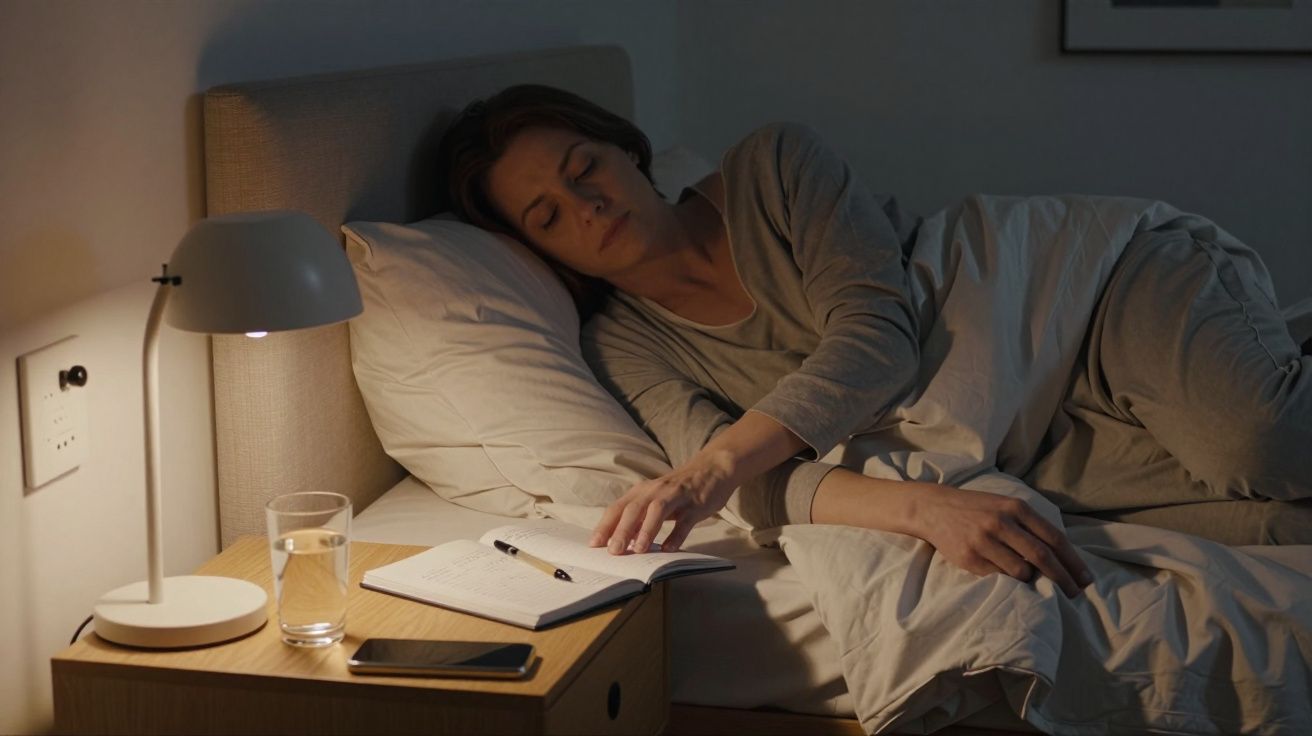
Why putting a notebook on the bedside table helps you fall asleep faster, therapists say
From crowded GP waiting rooms to late‑night TikTok scrolls, the same complaint echoes: “I’m exhausted, but the moment I lie down my brain starts talking.” Therapists are increasingly prescribing something surprisingly simple alongside the usual sleep‑hygiene advice: a cheap notebook and a pen on the bedside table.
It looks almost too basic. No smart features, no guided audio, no blue‑light filter. Just paper where your thumb used to sit on a social‑media app. Yet clinicians and sleep researchers say this tiny change can shorten the time it takes to drift off and make 3 a.m. wake‑ups less dramatic.
The goal is not a perfect journal. It’s giving your brain a place to put things down so it stops carrying them into sleep.
What your racing thoughts are trying to do
Night‑time overthinking is rarely random. The same brain that gets you through meetings, childcare and traffic is suddenly unsupervised in a dark, quiet room. With no emails to answer and no washing‑up to distract it, your mind starts sorting, planning and replaying.
Therapists describe this as “unfinished business”. Loose ends from the day, half‑made decisions and unnamed feelings float up when external noise fades. Your nervous system reads them as tasks. That task‑mode is the opposite of the relaxed drift your body needs for sleep.
Picture it. You climb into bed, scroll quite honestly longer than you meant to, then switch off the light. Within minutes you’re designing tomorrow’s presentation slide by slide, replaying a slightly awkward comment from lunch, and wondering if you’ve actually booked the MOT. Your heart rate creeps up. You turn the pillow. Sleep backs away.
A notebook interrupts that loop. Writing tasks and worries down sends a clear “noted, will be handled” signal to the rational brain. It downgrades the urgency. Instead of your mind holding everything in fragile working memory, it hands the load to paper.
How a bedside notebook calms the brain
A pen and page sound primitive in a world of apps and wearables. Yet precisely that simplicity helps. There are no alerts, no battery, no temptation to check news headlines when you only meant to jot one thought.
Several mechanisms work together:
- Externalising worries. Thoughts that bounce around your head feel bigger than ones pinned to a page. Once they’re written, the mind can let go sooner.
- Creating closure. A tiny ritual of “capturing the day” signals to your nervous system that active solving time is over.
- Slowing the pace. The hand moves slower than thought. You literally cannot ruminate at the same speed while forming letters.
- Shifting from emotion to structure. Listing steps or naming feelings engages more organised parts of the brain instead of staying in fuzzy dread.
Therapists often call this “parking”. You’re not denying worries exist; you’re parking them somewhere safe for the night.
A 5‑minute bedside routine therapists actually see people keep
No elaborate bullet‑journal spreads. No need for artistic headings. The methods that stick tend to be short, boring on purpose, and repeatable on the most tired evenings.
The basic “brain dump” in three lines
Keep a simple notebook and pen on the bedside table. Ten minutes before you want to sleep, dim the lights, put your phone out of reach and sit up against the headboard.
On one page, write three quick sections:
- Today: 3–5 bullet points of what actually happened. Not a diary, just headlines.
- Tomorrow: 3–5 tasks or decisions you want to remember.
- Worries / thoughts: anything looping or loud in your head, uncensored.
Close the notebook when the page feels “full enough”, switch off the light, and lie down. If thoughts pop back, remind yourself, “It’s in the notebook. I’ll deal with it in the morning.”
When 3 a.m. thoughts show up
You don’t need to switch on the big light or start a new essay. Keep a softer pen (gel or felt‑tip) and, if possible, a tiny clip‑on light.
- Write a line or two: “Wide awake, thinking about X because of Y.”
- Add one small next step for “future you”: “Will email HR after 10 a.m.” or “Check bank app at lunch.”
You’ve turned a shapeless worry into an item with a time slot and a first move. That is usually enough to let the nervous system stand down again.
What to actually write (and what not to force)
People often stall because they think they need the “right” journal prompt. Therapists see better results when rules stay loose but intentions clear.
Simple formats that work for many
- Three lines of gratitude: not grand statements, just specific details from the last 24 hours.
- A tiny to‑do for tomorrow: no more than five tasks, written in plain language.
- One sentence each on:
- something that went well
- something that was hard
- something you’ll leave for tomorrow
- something that went well
If you thrive on structure, you can keep the same template every night. If routine bores you, rotate between two or three formats so it stays fresh.
Things you don’t have to do
You do not need to:
- Analyse every childhood memory that surfaces.
- Write full paragraphs if bullet points feel easier.
- Produce something “worth reading” later.
- Keep perfect continuity if you miss a night.
The notebook is a tool, not a performance. Its only job is to hold mental clutter so your brain doesn’t have to.
Paper, not pixels: why therapists suggest analogue over apps
Plenty of sleep apps offer digital journals and prompts. For some people, those help. For many, they quietly backfire.
Phones and tablets carry work emails, social feeds and news alerts. Even with notifications off, the conditioned association is strong. Your body tenses a little when you pick them up, expecting input.
Pen and paper send a different signal:
- No blue light: nothing shining straight into your eyes at the hardest moment for melatonin.
- Single‑purpose: your notebook never suddenly shows an urgent message from your boss.
- Physical end point: closing a cover feels more final than locking a screen.
Sleep specialists often talk about “sleep cues”. A cheap notebook used only at night becomes a cue that now is the time to wind down.
If you truly cannot imagine going fully analogue, try at least using a paper notebook for the last five minutes before lights out, even if you’ve made earlier notes in an app.
Turning a notebook into a sleep cue, not another task
The most common complaint therapists hear about any new habit is, “I forget to do it,” followed by, “It feels like homework.” The trick is to reduce friction until the notebook is easier to use than not.
Make it impossible to miss
- Keep the notebook on the pillow during the day, move it to the bedside when you get in. You can’t lie down without touching it.
- Put the pen through the spiral or under the notebook so you’re never hunting for it.
- If you use a lamp, rest the notebook partly under its base so you see it each time you switch the light.
Anchor it to an existing ritual
Link the notebook to something you already do every night:
- After brushing your teeth, you come back to bed and write three lines.
- Once you’ve set your alarm, you place the phone face‑down and pick up the notebook.
- After you turn off the main light, you write under the bedside lamp, then switch that off.
You are not chasing motivation. You are building a small rhythm that becomes as automatic as rinsing your mug.
What this tiny habit can and cannot fix
A bedside notebook is not a cure‑all. It will not treat sleep apnoea, fix chronic pain, or replace medication prescribed for anxiety or depression. Therapists frame it as one piece of a wider sleep puzzle.
Where it tends to help most:
- Sleep onset insomnia fuelled by racing thoughts or planning loops.
- Middle‑of‑the‑night waking where you become mentally busy very quickly.
- Stressful seasons such as exams, work deadlines or caring responsibilities, when your brain carries more than usual.
Where it’s less likely to be enough on its own:
- Persistent insomnia for months with no clear stressor.
- Snoring, gasping or morning headaches suggesting breathing issues.
- Very erratic sleep and energy tied to mood swings.
If your sleep problems are severe or long‑lasting, the notebook is a gentle support, not a substitute for medical advice.
Still, for many people, a £2 pad and a pen do something that sleep podcasts and herbal teas alone do not: they give the mind a place to unload in real time.
A one‑week trial to see if it helps you
Commit to seven nights. Set a reminder on your phone for 30 minutes before your ideal bedtime.
- Nights 1–2: Use the three‑section page (Today / Tomorrow / Worries). Keep it under five minutes.
- Nights 3–4: Add three small gratitudes at the end of the page.
- Nights 5–7: If you wake in the night, write one or two lines rather than trying to solve things in your head.
Each morning, quickly rate the previous night’s sleep in your notes: time to fall asleep (roughly), number of wake‑ups, and how rested you feel out of 10. After a week, skim back. You are not looking for perfection, just signs of less frantic thinking and shorter settling times.
FAQ:
- Won’t writing about worries make me even more anxious before bed? For most people, the opposite happens. Naming a worry and adding a small next step reduces its size. If you notice yourself getting more wound up, switch to more neutral prompts at night (such as gratitudes) and move heavier processing to earlier in the evening.
- What if I’m too tired to write a whole page? Then write a single line. “Today was long, tomorrow I will do X first.” The consistency matters more than volume. Short, repeatable entries still give your brain the sense that things are captured.
- Can I use my phone notes instead? You can, but try to keep the last few minutes before sleep strictly off‑screen. If you must use a device, activate night mode, turn off data, and open only a blank notes app. Many people still find a physical notebook more calming.
- How quickly should I expect results? Some notice easier drop‑off within a few nights; for others it takes a couple of weeks for the routine to become a strong cue. If there is no change at all after two to three weeks, consider discussing wider sleep strategies with a GP or therapist.
- Is this suitable for children or teenagers? Yes, with lighter structure. A simple “three things from today and one thing for tomorrow” works well for older children. It can be a gentler alternative to lying awake worrying about school, friendships or exams.



Comments (0)
No comments yet. Be the first to comment!
Leave a Comment