Why putting your handbag on the floor is a hygiene risk, according to microbiologists
You drop your bag by your chair “just for a minute”. The café’s busy, the train’s packed, the loos were… best not recalled. Hours later, that same handbag lands on your kitchen worktop, your bed, or the nursery floor. It feels harmless, almost invisible. Microbiologists wince.
The objects we treat as extensions of our bodies follow us everywhere, but we rarely think of them as surfaces that touch dozens of micro‑environments a day. Door handles get cleaned. Floors get mopped. Handbags? They’re the quiet hitch‑hikers that rarely see a wipe.
What actually lives on the bottom of your bag
Ask a microbiologist to swab the base of a handbag and the list that comes back is rarely pretty. Floors in public spaces collect a soup of skin flakes, soil, food crumbs, spit drops, pet dander, traces from shoes and wheels. Your bag does not “just touch” that surface; it rests in it.
In lab tests on everyday objects, researchers typically find:
- Faecal indicator bacteria (from toilets, pavements, and public transport)
- Staphylococcus species from skin and noses
- Environmental bacteria from soil and dust
- Viruses and fungal spores in smaller, often undetected amounts
Most of these microbes will not make a healthy adult ill on contact. The issue is accumulation and transfer. A bag that hits multiple dirty floors each week, then meets kitchen counters, dining tables, or cot sides, acts as a courier. It moves germs from high‑risk zones to places you assume are reasonably clean.
“From a microbiology point of view, the underside of a handbag behaves much like the soles of your shoes,” says one hospital infection‑control scientist. “You simply wouldn’t place your shoes on the work surface where you prepare food.”
Toilets, trains and café floors: why location matters
Not all floors are equal. The carpet under your desk at home is one thing; the tiles by a public loo are another story entirely. Every flush, every hand that doesn’t quite meet the soap, every splash from a nappy change adds to the invisible film.
On a typical day out, your handbag might travel through:
- Public toilets and baby‑changing areas
- Train or bus floors with muddy shoes and spilled drinks
- Café and restaurant floors with dropped food and mop water
- Chemist and GP waiting rooms with coughs, colds and worse
Moisture is a key amplifier. Damp floors help certain bacteria and viruses survive longer, and organic matter (crumbs, spills, dust) provides a buffet. Set your bag down in one of these spots and its base becomes a landing pad. Dry surfaces at home can then re‑aerosolise tiny particles when the bag moves or is brushed.
We tend to imagine risk only in the moment we see dirt. Microbiologists think in transfer chains: floor to bag, bag to hands, hands to mouth, phone, snacks, child. The more links you add in that chain, the easier it becomes for a small initial load of germs to find a vulnerable host.
When a dirty handbag really becomes a problem
Most people will carry a contaminated bag and never connect it to feeling unwell. Infections are multi‑factor events: dose, route, timing, and the state of your immune system all matter. Still, some scenarios raise more eyebrows than others.
Higher‑risk patterns include:
- Placing handbags on kitchen worktops, chopping boards or dining tables
- Parking bags on baby mats, cot edges or changing tables at home
- Storing handbags on pillows, duvets or directly on sofas where you nap
- Rummaging in your bag for snacks with unwashed hands, then eating on the go
If the bag’s base has picked up faecal bacteria from a toilet floor, then touches a work surface where salad is prepped without a wash in between, you’ve created a classic “hand‑to‑mouth” route. In households with toddlers, older adults, pregnant people or anyone with a weakened immune system, that extra layer of caution can be the difference between nothing happening and a bout of diarrhoea, a skin infection or a flare‑up of existing illness.
The aim is not to treat your leather tote as biohazard waste. It is to stop it quietly upgrading itself from accessory to vector.
Simple rules that make your handbag less of a germ taxi
Microbiologists rarely recommend elaborate rituals for everyday life; they look for realistic habits that trim risk. With handbags, small shifts go surprisingly far.
Think in three steps: where you put it, how often you clean it, and what it touches afterwards.
1. Where you park it
- Use hooks, chair backs or dedicated bag stands in cafés and restaurants
- On trains and buses, keep it on your lap or on a luggage rack where possible
- In public toilets, hang it on the door hook rather than placing it by the loo
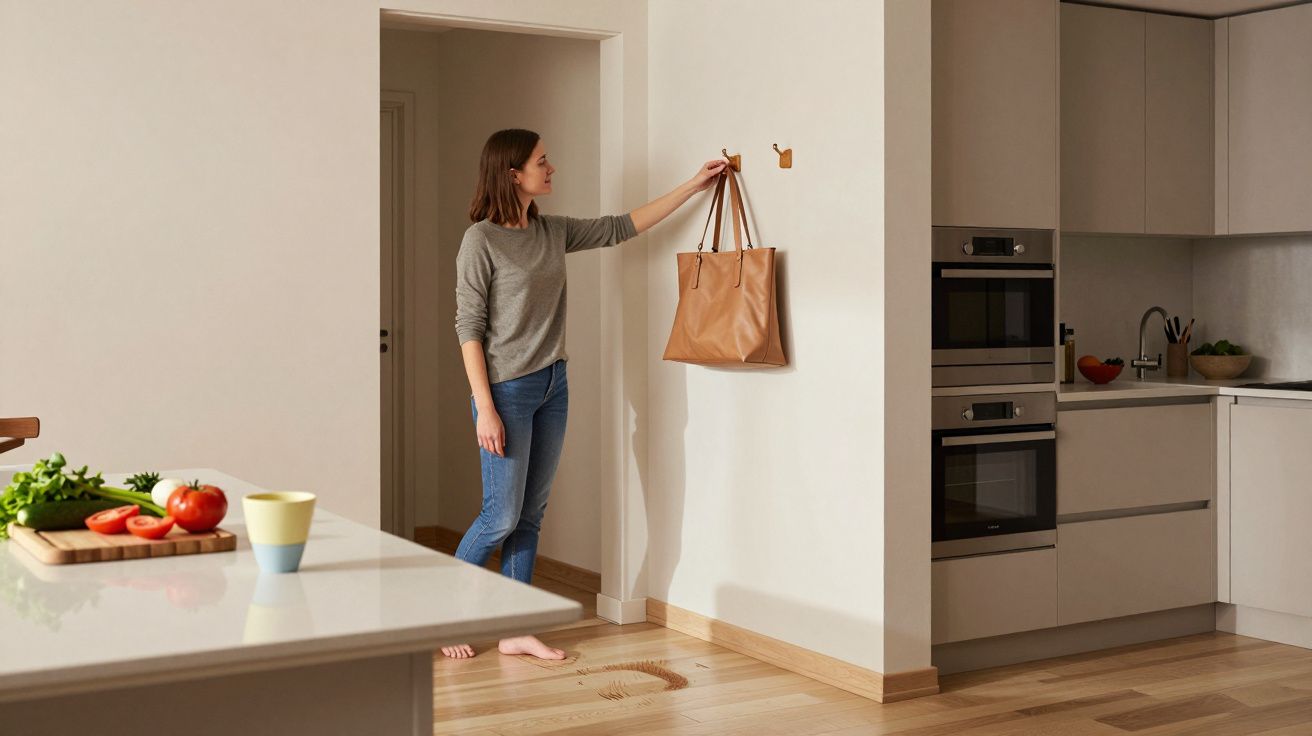
- At home, create a “landing zone” on a shelf, hook rail or dedicated tray
Treat the bottom of your bag more like the bottom of your shoes than the surface of your phone. That single shift in mindset nudges you away from counters, beds and carpets without needing constant effort.
2. How you clean it
Different materials tolerate different approaches, but the principle is the same: a periodic, gentle clean of high‑contact areas (handles and base) is enough for most people.
For many handbags:
- Wipe the base and handles weekly with a lightly soapy cloth or a disinfectant wipe suitable for the material
- For fabric bags, check the label; many allow spot cleaning with mild detergent
- Empty crumbs and dust from internal pockets and linings regularly
- Let the bag dry fully before storing to avoid encouraging mould
Hospital infection teams talk about “visible cleanliness” as a proxy for lower microbial burden. If a bag base looks grimy, sticky or stained, it is more likely to harbour higher counts of bacteria. A quick wipe down after visibly dirty journeys (festivals, muddy parks, long train trips) is a low‑effort way of resetting.
3. What it touches when you get home
Build one or two “never” rules that suit your space:
- Never on kitchen worktops or dining tables
- Never on the baby’s play mat or cot
- Ideally, not on beds or pillows
Add a positive rule to replace the habit:
- Always on the hallway hook or shelf
- Always on the back of the bedroom chair
- Always in a specific cubby or basket by the door
Habits that piggy‑back on existing movements stick. If you hang your coat by the door, hang your bag next to it. If you drop your keys in a bowl, place a tray for your bag underneath.
The psychology of “it’s only a minute”
We struggle with invisible risk. If putting your handbag on the floor left a muddy ring, most people would rethink. Because microbes don’t announce themselves with smears and smells, we rely on feelings: the floor looks “clean enough”, the café is “nice”, the train is “posh”. Microbiologists know that surface appearance and microbial load do not always match.
We also lean on polite norms. People worry it looks fussy to hang a bag rather than park it by their feet. They don’t want to seem “over the top” by avoiding putting a designer handbag on the kitchen island. Yet the same people will happily wash their hands when they get home, or rinse fruit before eating it. Those are social habits now, not eccentricities.
Think of your handbag in the same category: a high‑traffic item, like your phone or keys, that deserves a small hygiene script. No one can, or should, sterilise their life. The practical goal is to stop obvious shortcuts for germs into places you hope stay relatively clean.
“We’re not trying to make people anxious,” notes one environmental microbiologist. “We’re trying to make the hidden routes visible enough that simple changes feel worth it.”
Quick reference: handbag hygiene at a glance
| Focus area | What to do | Why it helps |
|---|---|---|
| Placement in public | Use hooks, laps, racks; avoid toilet and train floors | Cuts contact with the dirtiest surfaces |
| At‑home habits | Give your bag a fixed, off‑floor parking spot | Prevents kitchen, bed and nursery contamination |
| Cleaning routine | Wipe base and handles regularly, empty crumbs | Lowers microbial load and removes food residue |
FAQ:
- Is it really worse to put my handbag on the floor than my coat? Coats usually hang, while bag bases are more likely to sit in pooled moisture and grime. The underside of a bag often meets toilets, train aisles and café floors, then gets placed on high‑contact surfaces like tables and beds, making its transfer routes more direct.
- Can I disinfect my leather bag without ruining it? Use leather‑safe wipes or a cloth very lightly dampened with diluted, pH‑balanced cleaner. Avoid soaking, harsh bleach sprays or alcohol flooding, which can dry and crack leather. Focus on the base and handles rather than the entire surface every time.
- How often should I clean the bottom of my bag? For everyday use, a weekly wipe is a reasonable baseline. If you’ve set it on visibly dirty or wet floors-public loos, festival sites, muddy trains-wipe it the same day once you’re home.
- Is this more important if I have young children? Yes. Small children touch floors, soft furnishings and bag straps, then put fingers and objects in their mouths more often than adults. Keeping bags off food prep areas and play spaces, and cleaning them regularly, removes one easy exposure path.
- Do I need to start sanitising everything my bag touches? No. Focus on blocking the highest‑risk combinations: dirty public floors plus food surfaces, beds and baby zones. Combine that with normal home cleaning and hand‑washing, and you’ve addressed the bulk of the realistic risk without turning your house into a lab.

Comments (0)
No comments yet. Be the first to comment!
Leave a Comment