Why sitting on the edge of the bed for 60 seconds can prevent morning dizziness after 65
The light was just beginning to leak round the curtains when he swung his legs out of bed. For forty years he had done it in one movement: wake, sit, stand, walk. Only this time the room tipped sideways. The wardrobe slid past his eyes, his knees buckled, and he caught the bedside table with a thud that brought his partner running. Blood pressure, the GP said later. Not uncommon. Not “nothing”, either.
After 65, the simple act of getting out of bed becomes a little physics experiment. Overnight, your blood settles, your blood vessels relax, and your inner balance system goes off duty. When you go from lying flat to standing tall in one go, your circulation has to play catch‑up. For some, that’s a brief head rush. For others, it’s a fall, a fracture, and a long stay they never planned for. The fix is surprisingly small: sixty quiet seconds on the edge of the bed.
What really happens when you “jump up” in the morning
Your heart and blood vessels spend the night in low‑gear. Lying flat means gravity is taking a break; blood reaches your brain without much effort. The moment you stand, gravity remembers its job. Blood slides towards your legs and belly, and the pressure in your brain can drop for a few seconds. That drop is what doctors call orthostatic, or postural, hypotension.
The body has a built‑in rescue team. Sensors in your neck and chest spot the pressure dip and tell your heart to beat faster, your vessels to tighten, and your muscles to help push blood back up. After 65, that reflex is often slower, especially if you live with diabetes, Parkinson’s, heart disease, or you take certain tablets for blood pressure, prostate problems, or depression. Dehydration after a hot night, a glass of wine, or a poor sleep can blunt it further. The room doesn’t spin because you are “weak”; it spins because your brain is briefly under‑supplied.
For a twenty‑year‑old, that lag is usually too short to notice. For a seventy‑five‑year‑old on three different prescriptions, it can be ten or fifteen wobbly seconds. If you go from flat to standing in one movement, you live those seconds on your feet, sometimes on one foot as you reach for a dressing gown. That’s when carpets catch toes and bedside mats become trip hazards. A fall in that window is not bad luck; it’s a predictable outcome of rushing a system that needs a beat.
The quiet power of the 60‑second “edge of bed” pause
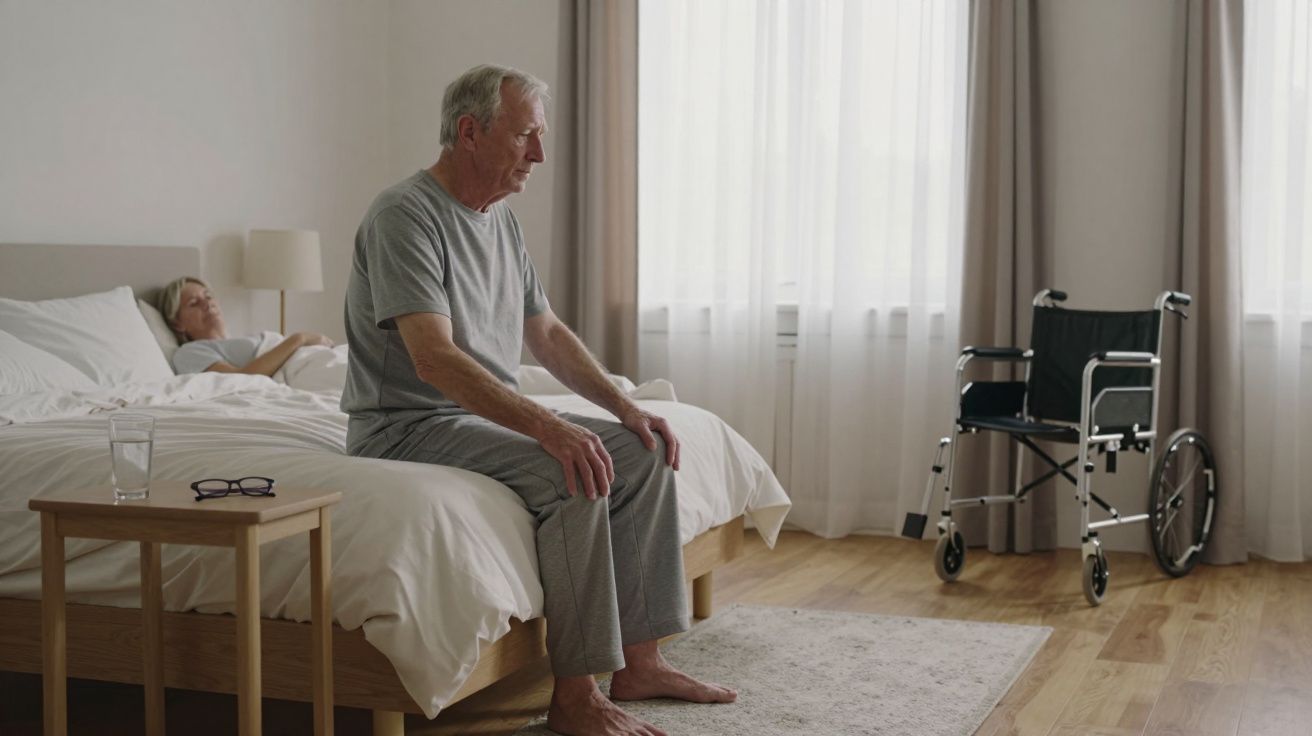
The sixty‑second rule is almost comically simple: wake, roll to your side, push up to sitting, place your feet flat on the floor, and just… stay there. Hands on your thighs, back supported by the headboard if you like, eyes open so your brain can orientate to the room. It looks like a pause; in reality, it’s a rehearsal space for your circulation.
In that minute, blood redistributes from your chest to your abdomen and legs in a controlled way. Your pressure sensors fire up, your heart finds its new rhythm, and your vessels tighten just enough. You may feel a mild wave of light‑headedness while you are still sitting. That’s the whole point: dizziness is safer at mattress level than three steps away on a wooden floor. By the time you stand, the worst has already happened and passed.
Some geriatric wards now teach this as standard. Nurses call it the “sit before you stand” routine and thread it into everything: morning blood tests, trips to the bathroom, even getting back into bed. Families notice the difference. An older woman who used to sway and clutch furniture on the way to the loo reports that, after two weeks of practising the pause, she can stand, take a breath, and walk with a frame that feels like help, not rescue. The change is not heroic; it is incremental and quiet.
How to build the 60‑second habit into your mornings
Habits stick when they are easier to follow than to skip. The trick is to redesign the first minute after waking so sitting is the default, not the exception.
Start by rehearsing in the daytime. Lie down on the bed, then:
- Roll onto your side, bringing your knees slightly up.
- Let your legs slide over the edge of the bed.
- Push yourself up with your hands to a sitting position.
- Plant both feet flat on the floor, hip‑width apart.
- Rest your hands on your thighs and breathe slowly for 60 seconds.
Count slowly, hum a song you know lasts about a minute, or use a small kitchen timer on the bedside table. That minute is also a check‑in: notice if the room tilts, if you feel nausea, if your vision greys at the edges. If it does, stay seated until it passes. Only then stand, perhaps using the bed frame for light support, not as a climbing frame you haul yourself up on.
Build reminders into the environment. A small card taped to the lampshade with “Sit first” in big letters, a bright strip of tape on the floor where your feet should land, or a message on your alarm screen can nudge memory that’s still foggy from sleep. If you share a bed, make it a shared rule. Partners who gently remind rather than rush often prevent the falls they once had to pick up.
Small adjustments that make the pause work better
The sixty‑second sit is powerful, but it works best with a few supporting moves. Think of them as the rails around the habit.
- Tidy the landing zone. Clear the floor beside the bed of books, shoes, loose rugs and trailing chargers. The place where your feet land and where you stand should be flat, grippy and predictable.
- Check the bed height. A very low mattress makes standing harder work; too high and your feet dangle, defeating the “feet flat” cue. Aim for a height where, sitting, your knees are roughly level with your hips.
- Hydrate gently. A small glass of water on the bedside table can help, especially if you’re on diuretics or wake to use the loo at night. Sips, not gulps; you are topping up, not flooding.
- Review medicines. If you notice regular morning dizziness, ask your GP or pharmacist to look at your list. Blood pressure tablets taken late at night, or several drugs that all relax blood vessels, can combine in ways that mornings expose.
- Use the pause during the day. After a nap in an armchair, after sitting a long time in the car, or getting up from the loo, practice the same “sit, breathe, stand” rhythm. The pattern becomes muscle memory.
Let’s be honest: nobody thinks of “getting out of bed” as a skill. Yet, after 65, it is exactly that-a small daily manoeuvre that deserves as much care as going down a flight of stairs.
Why this tiny ritual prevents big problems
Falls after 65 are rarely just about clumsiness. They are about timing, fatigue, medication, carpets, poor lighting, and bodies that no longer compensate in a heartbeat. The sixty‑second sit carves a safe space in that tangle. It reduces the steepness of the change your body has to manage in one go.
Research in older adults with postural hypotension shows that breaking the move into stages-lying to sitting, sitting to standing-reduces symptoms and improves stability. Occupational therapists teach “staged standing” because it cuts near‑falls and gives people time to notice if today is a wobblier day than usual. The edge‑of‑bed pause is simply the home version of that clinical wisdom.
There is a psychological win, too. When mornings begin with a controlled, intentional action rather than a lurch, confidence creeps back. People who have fallen once often move like they are made of glass; the fear of another fall tightens everything. A ritual that reliably delivers a stable first step tells the nervous system: you have options. You are not at the mercy of the next head rush.
| Key point | What it means | Why it matters after 65 |
|---|---|---|
| 60‑second sit | Pause on the bed edge before standing | Gives blood pressure time to adjust safely |
| Staged movements | Lying → sitting → standing, not all at once | Reduces dizzy spells and near‑falls |
| Safe surroundings | Clear floor, right bed height, good light | Turns a fragile moment into a routine one |
Making it a family conversation, not a lecture
Telling a parent or partner “Don’t jump out of bed” rarely changes anything. Inviting them into the story does. Share what the GP or nurse explained. Ask if they’ve ever had that grey‑out or sudden sway and simply not mentioned it. Treat the sixty seconds as a shared experiment, not a rule handed down.
One woman in her late seventies started putting the radio on a one‑minute timer for the news headlines as she sat on the edge of the bed. By the time the short bulletin finished, she knew it was safe to rise. Her grandson called it her “launch countdown”. The name stuck, and so did the habit. Sometimes the strongest safety device in a house is a small family joke that everyone understands.
You cannot erase age or illness with a posture trick. You can, however, turn the most dangerous ten seconds of the day into the calmest sixty.
FAQ:
- Is morning dizziness always just low blood pressure? No. While postural hypotension is common, especially after 65, persistent or severe dizziness can signal heart rhythm problems, inner ear issues, strokes or side‑effects of medication. If symptoms are new, worsening, or occur with chest pain, weakness, speech problems or double vision, seek medical help urgently.
- What if I still feel dizzy after sitting for 60 seconds? Stay seated, lower your head slightly towards your knees if you can, and take slow breaths. Do not try to stand until the feeling passes. Mention these episodes to your GP; your medicines, hydration, or even your target blood pressure may need adjusting.
- Does this help if I use a walking frame or stick? Yes. The principle is the same: let your circulation catch up before you load your legs and balance. Sit on the edge of the bed, then stand up holding your frame or stick once you feel steady, not while the room is still moving.
- Can I skip this if I feel fine most mornings? You can, but symptoms can vary day to day with sleep, heat, illness or medication timings. Making the 60‑second sit a routine means it is there on the days you unexpectedly need it, without you having to remember in a rush.
- Is there anyone who shouldn’t use this method? Very rarely, people with severe spinal problems or extreme weakness may need help to move from lying to sitting safely. If getting to the edge of the bed itself makes you very breathless or painful, talk to your doctor or physiotherapist about safer techniques or equipment.





Comments (0)
No comments yet. Be the first to comment!
Leave a Comment