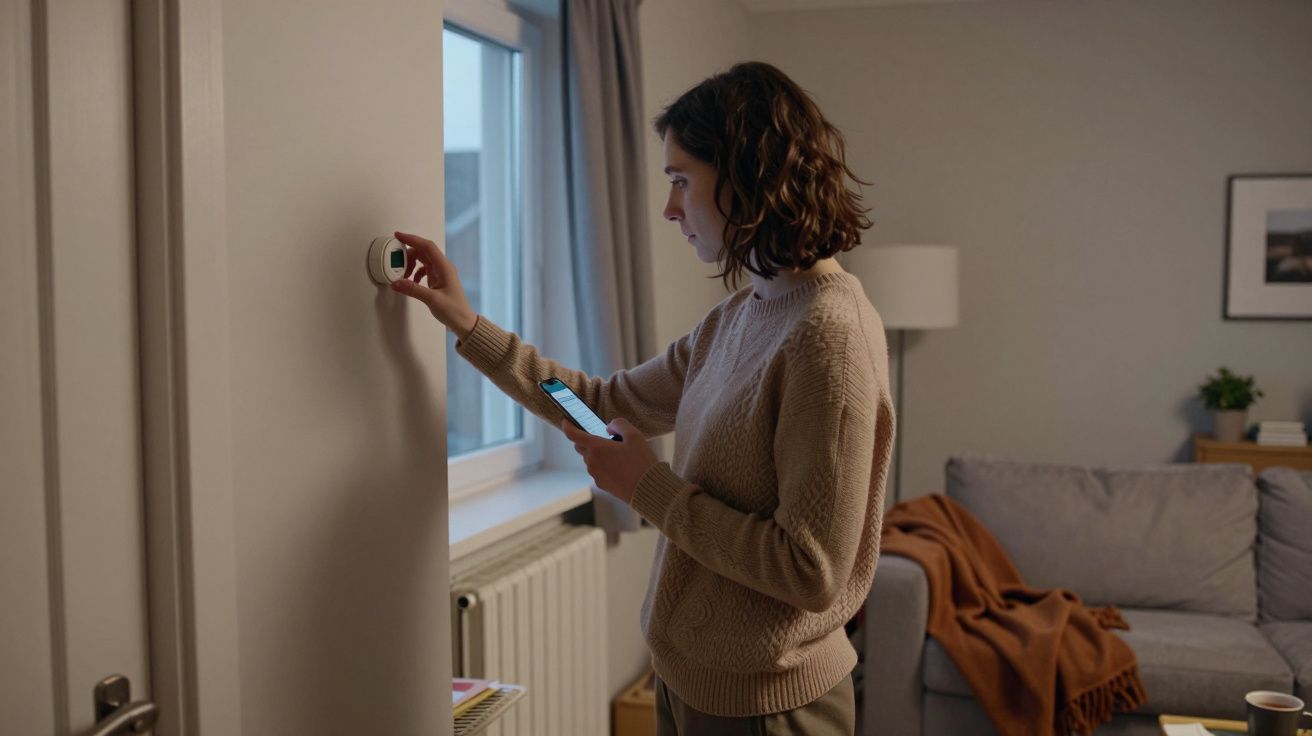
Why turning your thermostat up “to heat faster” is a myth energy experts want to kill
The habit is almost automatic. You walk into a chilly house, feel the draught in your sleeves, and jab the thermostat up to 26°C “just to take the edge off”. Friends swear it warms the place more quickly. It doesn’t. What it does do, quietly, is burn more gas or electricity than you meant to and overshoot to a stuffy, headachey heat.
Heating engineers and energy advisers are trying to retire this reflex. They know most modern systems don’t work the way our thumbs think they do. The dial is not an accelerator pedal. It’s more like a target sign: a number you’ll hit eventually, no matter how hard you stab at it.
What your thermostat actually does (and doesn’t do)
A room thermostat is a switch with a brain, not a tap you “open more” to get quicker heat. It tells your boiler or heat pump: keep going until this room reaches 19°C, or 20°C, or whatever you’ve set. The system then cycles on and off to hover around that point. The heat output of the boiler or heat pump is limited by its design, not by how impatient you’re feeling.
Turn the stat from 18°C to 28°C and the boiler doesn’t suddenly become ten times fiercer. It simply stays on for longer, because you’ve told it to keep running until the room is almost tropically hot. The warm-up speed depends on insulation, radiator size, water temperature and outdoor weather. None of those move any faster just because the target number is higher.
Cranking the thermostat only changes how far you heat, not how fast you get there.
Why this myth hangs on: memories of old systems
Many of us grew up with single gas fires, storage heaters or ancient boilers that behaved differently. If you turned a knob or pulled a cord, you could feel an instant blast. That “more twist = more heat” lesson stuck, even as central heating and smart controls took over.
Modern condensing boilers and heat pumps are designed to modulate gently. They’re happiest ticking along, not roaring. Smart thermostatic radiator valves (TRVs) quietly trim each room. Programmable stats phase heat up in advance. The invisible cleverness makes it feel as if nothing is happening, so people poke the thermostat harder, assuming it needs encouragement.
The result is a strange mismatch: twenty‑first century kit run with twentieth‑century habits. Energy bills, not comfort, usually pay the price.
What really changes when you “blast it”
When you push the thermostat far above your comfort level, three things tend to happen, none of them helpful.
First, the boiler stays on longer than you need. You probably only wanted 19°C. The system heads for 23°C before you remember to turn it down. Those extra hours of burn show up directly on your bill.
Second, the house overshoots. Central heating is slow to respond. By the time the walls and furniture have soaked up heat, the air temperature keeps climbing even after the boiler switches off. You end up cracking a window to cool down, literally throwing paid‑for warmth outside.
Third, you wear out kit just a little faster. Longer run times and big swings in temperature mean more expansion, contraction and cycling. Nothing dramatic in a day, but over years it adds to the background wear.
In most British homes, the cheapest heat is steady heat, not boom‑and‑bust bursts.
The smarter way: set, wait, and pre‑heat on purpose
The alternative is calmer and, in practice, more comfortable. Pick a realistic temperature – many people settle between 18°C and 21°C for living spaces – and leave the thermostat there for the heating period. Resist the urge to “bump it up for a bit” whenever you feel a chill.
If you know you hate cold mornings, don’t lurch from 14°C to 21°C at 7am and expect miracles. Use your programmer instead:
- Set the stat to your real comfort point (say 19°C).
- Tell the heating to come on earlier (for example 30–60 minutes before you get up).
- Let the system warm the house gradually towards that stable level.
Some smart thermostats learn how fast your home heats and start earlier automatically. The controls do the thinking, so you don’t have to slam the dial around.
Small tweaks that actually help you feel warmer
Instead of cranking the stat, target the things that change how your body reads temperature:
- Shut doors to keep heat in lived‑in rooms.
- Close curtains and blinds at dusk to cut window losses.
- Block obvious draughts around letterboxes and gaps.
- Use TRVs to keep bedrooms cooler and living rooms cosier.
These steps alter the feel of warmth at the same thermostat setting, rather than paying for extra degrees you don’t need.
Common heating myths that empty wallets
The “turn it up to heat faster” idea sits with a whole family of half‑truths. Knocking them out together saves you more than changing one habit.
“Leaving the heating on low all day is cheaper than turning it on and off.”
In a typical UK home, you lose heat constantly. Heating for hours when you’re out just compensates for those losses. Timed on/off, with a sensible thermostat setting, usually wins.“Radiators get hotter if I shut some of them off.”
Modern boilers modulate; many have automatic bypasses. Shutting lots of rads can cause short‑cycling and uneven flow, not magical extra heat in the remaining ones.“My boiler ‘likes’ running flat out.”
Condensing boilers and heat pumps usually work more efficiently at lower flow temperatures and steady loads. Constant full‑tilt running raises fuel use and may cut life expectancy.“Electric fan heaters are always cheaper because they warm me directly.”
They’re 100% efficient at turning electricity into heat, but electricity is much pricier per kWh than gas. For whole‑room heating, they’re often the most expensive option, not the cheapest.
A quick comparison: helpful habits vs costly ones
| Habit | What it actually does |
|---|---|
| Cranking thermostat way up | Heats to a higher temperature, not faster; raises bills and overshoot |
| Setting one stable comfort temp | Keeps rooms more even, reduces waste and fiddling |
| Using timer/programmer properly | Matches heat to when you’re home; cuts hours of unnecessary running |
| Improving draught‑proofing | Makes existing heat feel warmer without touching the thermostat |
When controls, not habits, are the real problem
Sometimes the “blast it” habit is covering for a system fault. If your house takes hours to budge a degree, or one room is Arctic while another bakes, it’s worth a check‑up.
Sludged radiators, unbalanced circuits, broken TRVs, mis‑set boiler flow temperatures and missing insulation all slow warm‑up times. People respond by cranking stats, thinking they’re the issue. An afternoon with a competent heating engineer may recover lost performance, so 19°C actually feels like 19°C again.
If you have a heat pump and are forever jabbing the thermostat, speak to your installer or an independent adviser. Heat pumps like low, steady flow temperatures and long runs. Constant fiddling makes them less efficient and less comfortable.
If you’re always tempted to “just whack it up a bit”, that’s a sign the system or settings need attention, not that you need warmer fingers.
FAQ:
- Does turning individual radiator valves up make a room heat faster? Only slightly, and only if they were partly closed. TRVs control the maximum heat allowed into each room; they don’t turbo‑charge the boiler. Set them to a sensible level and leave them to do their job.
- Is there ever a time to turn the thermostat up? Yes: if your chosen temperature still feels too cold once the house has had time to settle, increase it by 1°C and wait a few hours. Make changes in small steps, not big swings.
- What about electric storage heaters – do the rules change? Storage heaters are charged overnight and release heat during the day. Turning the room thermostat up doesn’t make them charge faster; using the “input” and “output” controls correctly and improving insulation makes the bigger difference.
- Will a smart thermostat heat my home faster? It won’t change the physics of your radiators, but it can start heating at better times and avoid overheating, which often feels like “faster” because the warmth matches your routine.
- Is 21°C the ‘right’ temperature for everyone? No. It’s a common reference point, not a rule. Many people are comfortable at 18–20°C with good clothing layers. The right setting is the lowest you find genuinely comfortable.


Comments (0)
No comments yet. Be the first to comment!
Leave a Comment