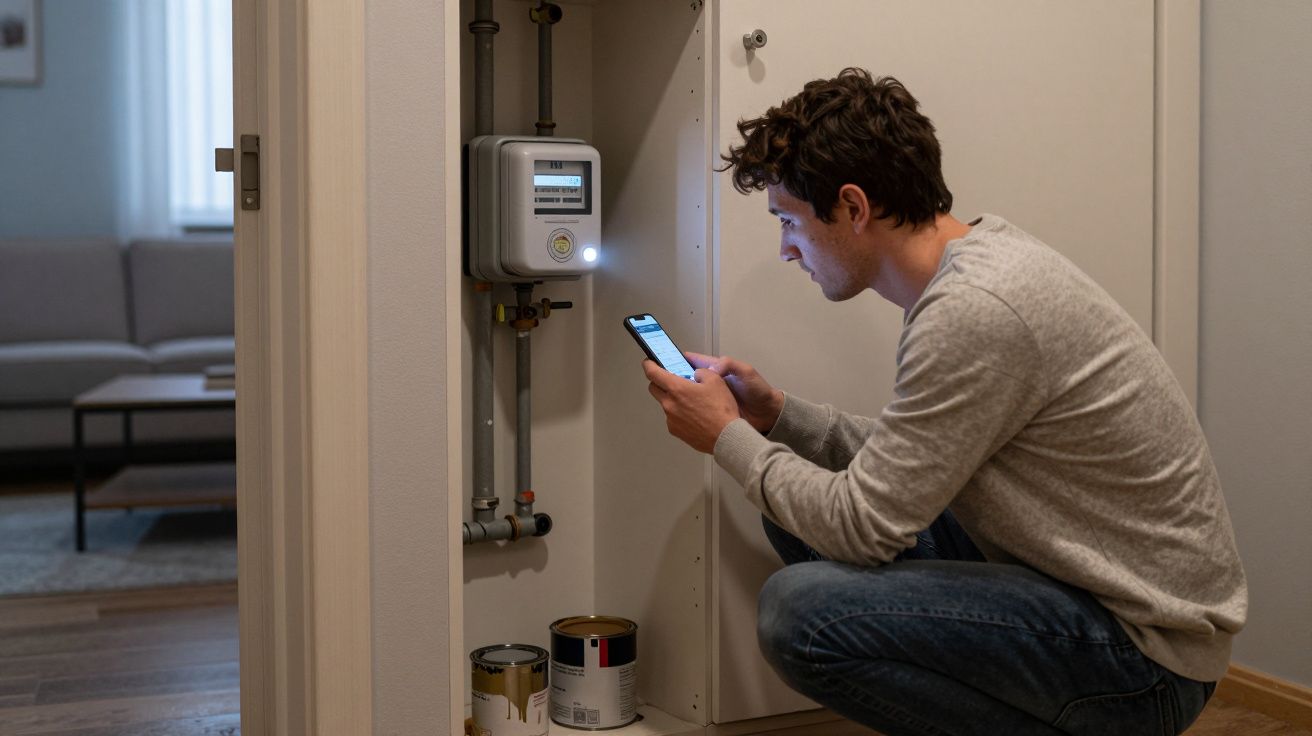
Why you should always photograph your meter readings before switching suppliers
The email lands with a cheery subject line: “Welcome to your new energy supplier!” A better tariff, a slick app, maybe a free smart thermostat if you’re lucky. Then, a few weeks later, the first bill arrives and your stomach drops. The numbers are wrong, the estimate is wild, and suddenly that bargain switch feels like an expensive mistake you now have to prove.
This is the moment a single photo could have saved you hours of calls, form-filling, and arguments over who owes what. Not a fancy gadget, not a special app. Just your phone camera pointed at a row of dusty digits.
The tiny habit that stops big billing rows
The idea is almost embarrassingly simple: take clear, timestamped photos of your gas and electricity meters before you switch suppliers, and again on the actual handover date. Those images become your quiet insurance policy when numbers start to wobble.
People share stories online of “missing” opening readings, wildly inflated estimates, and back‑bills that arrive months later. One renter spent weeks trying to explain that she had not, in fact, used an extra winter’s worth of gas in April. Another discovered that a neighbour’s reading had been logged against his property. In both cases, the question boiled down to the same thing: “Can you prove what your meter actually said that day?”
A photo cuts through the fog. It shows the reading, the meter serial number, and often the date and time in your phone’s metadata. It is much harder to dispute a crisp image than a vague memory of “around 23,000‑something” written on the back of an envelope. The habit takes seconds; the arguments it avoids can drag on for months.
How meter mix‑ups really happen
Behind the scenes, switching is mostly automated. Old supplier, new supplier, central databases, smart meters phoning home; it feels seamless when it works. When it does not, it fails in very ordinary ways.
Sometimes the handover reading is “validated” by an industry estimator that simply adjusts your last known reading based on historic use. If no one can find the real number in time, the estimate becomes the official truth. Other times, a human typo flips digits, or the wrong meter is matched to your address after renovation work, flat conversions or meter changes.
The most common pattern is dull but costly: an estimated opening reading that is too low for the old supplier and too high for the new one.
That gap does not vanish; it becomes a block of usage that both companies try to bill you for in different ways. Without proof, you are left arguing about shadows. With photos, you can say, “Here is my electricity meter at 07:42 on the day of the switch, and here is the same meter a week later.” The story becomes visible.
How to photograph your meters so they actually help
You do not need a special app. Any phone that can take a clear picture will do. What matters is what is in the frame and how easy it will be, six months from now, for someone who is not you to understand what they are looking at.
Find the right meters and labels
Match the meter to the fuel (electricity or gas) and note any labels your supplier uses, such as “MPAN” or “MPRN”. If you are in a flat, check that the meter number on the box or plate matches the one on your bill.Turn on every light you can
Dark cupboards, basements and communal meter rooms are where legible evidence goes to die. Use your phone torch, an extra lamp, anything that stops shadows from smudging digits.Frame more than just the numbers
Capture the entire display plus the meter’s serial number and any stickers. If your phone shows the date and time on screen, keep it in the shot. Take one wider picture for context, then a close‑up for detail.Take two or three shots, not just one
Blurry images look fine on a small screen and terrible when zoomed in by a complaints team. A short burst of photos gives you choice later.Save them somewhere you will actually find them
Create an album called “Energy switch 2025” or similar. You will not remember the exact day next year; the label will do the remembering for you.
Repeat the process on the agreed switch date, or as close as practically possible. If you forget on the day, do it as soon as you realise and note the circumstances (“taken the next morning; no big appliances used overnight”).
When those photos become your best evidence
Most of the time, your photos will sit quietly in your gallery and you will never need them. When something does go wrong, they suddenly move centre stage.
When the opening reading looks wrong on your first bill
Compare the billed reading with the digits in your photo. If they do not match, send the image with a short explanation. You are not asking for a favour; you are asking them to correct a record.When you are blamed for someone else’s usage
In shared buildings, meters and flats are occasionally crossed. A wide shot showing your front door number, the meter bank, and your meter’s serial number goes a long way towards unwinding the mess.When a back‑bill arrives months later
Suppliers can, in some circumstances, bill you for past under‑charges. Your timeline of photos - and their timestamps - helps establish what you actually used during the disputed period, and who was supplying you when.When you move house as well as supplier
Photographing at the old property (before you leave) and the new one (when you arrive) helps draw a clean line under your responsibilities in both places.
The tone of the conversation changes when you can attach a file called “Electricity‑meter‑switch‑date.jpg” rather than relying on memory. You are not a vague complainer; you are someone with documents.
Common pitfalls to avoid when you snap your readings
The protection a photo gives you depends on how legible and precise it is. A few small mistakes crop up again and again, and all of them are easy to fix.
Only shooting the numbers, not the serial
Without the meter serial number, a supplier can argue that you photographed a different device. Always include the identification plate.Cutting off the decimal places or tariff labels
Gas meters in cubic metres and kWh displays on some smart meters can be misread if you slice off the end. Capture the full line, including any “kWh” or “m³” marking.Using flash too close to reflective covers
A bright white flare right over the digits looks dramatic and tells nobody anything. If reflections are a problem, step back slightly, change angle, and use the torch rather than the camera flash.Deleting “old” photos to clear space
The images matter most long after you take them. Before you hit delete, offload them to cloud storage or email them to yourself with a meaningful subject line.
Think of these shots the way you think of photos of your passport or driving licence. Boring, yes. Invaluable when the one person who needs convincing is sitting behind a screen miles away.
Why this small ritual is worth keeping
At first glance, photographing your meters feels fussy, almost paranoid. Your supplier is regulated, the switching system is standardised, and you are busy. Yet the very ordinariness of the process is what lulls people into assuming it cannot go wrong for them.
Energy prices, standing charges and usage patterns have all become more volatile. A single mis‑read or duplicated block of consumption can add tens or hundreds of pounds to a bill. The time it takes to challenge that - locating old statements, sitting in call queues, composing formal complaints - dwarfs the 60 seconds you would have spent opening your camera.
There is also a quiet psychological shift. Taking photos of your meters nudges you, however briefly, into noticing your own consumption. You see the numbers change at different times of year. You become the person who knows what a “normal” reading looks like for your home. That awareness does not just defend you; it gives you more control in a system that often feels opaque.
In a world of direct debits and invisible data flows, a few concrete images bring the whole thing back down to earth. You do not have to trust blindly, and you do not have to fight blindly either. You simply have proof.
| Key step | What to do | Why it matters |
|---|---|---|
| Before the switch | Photograph gas and electricity meters, including serials | Sets a clear baseline for your final bill and opening reading |
| On the switch date | Take new photos with date/time visible if possible | Anchors the official handover reading to real evidence |
| When billed | Compare statements with your images and query mismatches | Helps correct errors quickly and prevents overcharging |
FAQ:
- Do I still need photos if I have a smart meter? Yes. Smart meters fail, lose signal or are read incorrectly more often than you would expect. A photo gives you a human‑readable backup if the automated data is wrong or missing.
- Will suppliers actually accept my photos as evidence? They are not obliged to accept them blindly, but in practice many billing teams welcome clear images because they help resolve disputes faster. If a complaint escalates, photos also carry weight with ombudsman services.
- What if I forgot to take a photo on the exact switch date? Take one as soon as you remember and explain the gap in writing. Combine it with any emails showing when the switch occurred. An approximate but documented reading is still far better than a pure estimate.
- Should I send the photos straight away or keep them? Submit your readings through the normal channels when asked, but keep the photos for your records. Only send them if the numbers on your bill do not match what you provided or if a dispute arises.


Comments (0)
No comments yet. Be the first to comment!
Leave a Comment