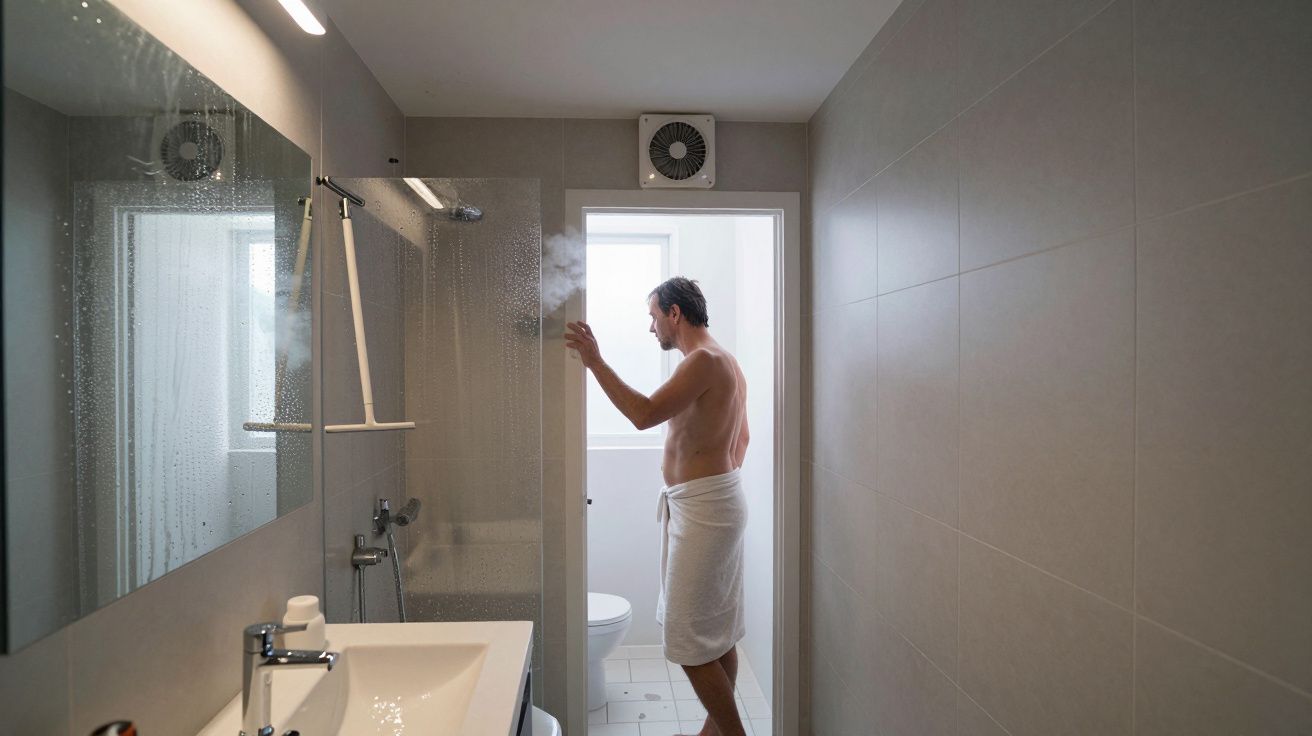
Why your bathroom fan should run longer than your shower, say mould specialists
The water turned off five minutes ago, but the mirror is still blind with steam and the ceiling glistens in patches. Somewhere behind that fog, your bathroom paint, grout and plaster are making quiet calculations about how much moisture they can absorb today. You grab your towel, flick the light off, and with it the fan dies mid-whirr. For mould specialists, this is the exact second the trouble starts.
What looks like harmless mist is, in building terms, a damp event. Every shower pumps litres of water into the air as warm vapour. The fan’s job is not to chase steam as it forms, but to clear the room back to dry, stable air once you’ve left. That job simply takes longer than your shampoo.
Why mould experts care about the “post‑shower” minutes
Ask building surveyors where they see black mould most often and they will point to small, badly ventilated bathrooms. Not because people are dirty, but because the air never quite recovers between uses. Moisture clings to cold corners, behind cabinets, inside plasterboard and under vinyl flooring. It doesn’t shout. It just sits and feeds spores.
Fungus does not need puddles; it needs humidity and time. Above about 70% relative humidity, mould colonies can begin to grow on paint, silicone and even dust on the ceiling. After a hot shower, UK bathrooms can spike well above that, especially in winter. Turn the fan off with the light and you trap that humid air at its peak, right when the room most needs help to dry out.
Mould assessors talk less about “leaks” and more about “wet air”. The steamy half hour after a shower matters as much as the five minutes under the water.
Why your shower length is not the right timer
A quick body rinse might last five minutes; a fan clearing moisture might need 15–30. That gap feels annoying until you think about the physics. Warm air holds more water. As the room cools after you step out, that water has to go somewhere. If it cannot escape outdoors, it condenses on the coldest surfaces and soaks in.
Fans are sized around air changes per hour: how many times they can swap the air in a room. In a typical British bathroom with a small, basic fan, two or three total air changes after a shower is a reasonable target. For many homes, that equates to at least 15 minutes of extra run time; for windowless internal bathrooms or families taking back‑to‑back showers, 20–30 minutes is more realistic.
The quiet cost of switching the fan off too soon
The first sign is usually cosmetic. Speckles of grey in grout, a fuzzy halo above the shower screen, silicone turning from bright white to tea‑stain beige. Many people scrub and bleach, but the stains keep returning. What they are really cleaning is the symptom of a moisture pattern, not the source.
Left alone, that pattern bites deeper. Paint begins to blister, plaster softens, and extractor fans themselves gum up with lint and moisture. Mould spores drift into adjoining rooms, where they may trigger coughing, sneezing or asthma flares in sensitive people. A cheap fan saving pennies on electricity can quietly usher in a much bigger repair bill.
Mould specialists would rather see a fan run half an hour too long than five minutes too short. Power is cheap compared with ripping out a rotten bathroom ceiling.
Why “cracking a window” usually isn’t enough
In theory, opening a window lets moist air escape. In practice, UK bathrooms often sit on sheltered sides of houses, with small tilt‑and‑turn openings and not much natural draw. On cold days, people understandably slam them shut quickly. The result is a token gesture of ventilation, not a real change in air.
Mechanical extraction is predictable. A fan with a duct to the outside gives humid air a dedicated exit, even on still, damp days when outdoor air already feels heavy. Windows help, especially if you can create a cross‑breeze with another open window or door, but mould inspectors consistently see better outcomes in bathrooms with appropriately sized fans that run long enough.
What mould specialists want every household to do
They do not expect you to buy industrial kit or live with a roaring fan all evening. They ask for four simple shifts: run the fan longer, keep it clean, give steam an easy path out, and avoid feeding mould with extra moisture.
Here’s the routine many professionals now recommend:
- Run‑on time: Set (or fit) a fan with an overrun timer of at least 15 minutes; 20–30 minutes in windowless or high‑use bathrooms.
- Door gap: Keep a 10–15 mm gap under the bathroom door or use a grille so fresh air can enter while the fan runs.
- Surfaces: After especially hot showers, pull a cheap squeegee down tiles and glass; this removes a surprising amount of water.
- Cleaning: Dust or vacuum the fan grille monthly. A clogged fan can lose much of its rated power without anyone noticing.
Think of it as a small post‑shower ritual. Water off, squeegee, light off, fan stays on. You leave the room; the fan finishes the job you started.
Signs your fan isn’t doing enough
You don’t need a moisture meter to know when a bathroom is struggling. Mould inspectors look for everyday clues:
- The mirror stays fogged more than 10–15 minutes after a shower
- The ceiling paint near the shower looks patchy, dull or slightly “furry”
- The room smells sweet‑stale or musty, even when it looks clean
- Black spots keep returning at ceiling corners or on window reveals
Any of those suggest your current combination-fan power, run time, and habits-is not keeping humidity low enough for long enough. Extending the fan time is often the cheapest first step, before you touch paint or call a contractor.
How long should your bathroom fan run?
Mould specialists rarely give a single magic number. Instead, they work from a simple rule: keep the fan running until the room feels dry and surfaces stay clear.
As a starting guide:
| Bathroom type | Typical minimum fan run‑on |
|---|---|
| Small bathroom with a window, one shower | 15 minutes |
| Internal bathroom, no window | 20–30 minutes |
| Busy family bathroom, several showers in a row | 30 minutes after the last shower |
These are baselines, not hard laws. If your mirror clears in five minutes and walls feel dry, you may be fine nearer the lower end. If condensation hangs around, bump the timer up and see if mould stops coming back over a few weeks.
The goal isn’t bone‑dry air; it’s avoiding long stretches above that mould‑friendly humidity zone.
Choosing or upgrading the right fan
If your current unit wheezes more than it extracts, no amount of extra run time will fully compensate. When replacing or upgrading, mould specialists suggest you:
- Check the fan’s extraction rate (measured in m³/h) matches or exceeds your bathroom size
- Prefer models with built‑in overrun timers or humidity sensors
- Ensure ducting is as short and straight as possible, with the outlet actually venting outdoors
A competent electrician can often add a timer module to an existing fan that currently stops with the light. It’s a modest one‑off cost that pays back in fewer mould treatments and repainting sessions.
Everyday habits that silently help (or hurt)
Fan timing is the main lever, but your small choices add up. Keeping the bathroom door closed during showers concentrates moisture in one room, which is good, as long as the fan has a clear air path and stays running afterwards. Leaving damp towels heaped in the corner, however, turns the space into a slow‑release humidifier.
Try to:
- Hang towels and bathmats so that air can circulate around them
- Avoid drying clothes in the bathroom unless the fan is running and the door is closed
- Wipe obvious condensation from windowsills and cold pipes
Each action shaves a little off the humidity curve, making it easier for the fan to bring the room back to a safe, mould‑unfriendly baseline.
FAQ:
- Won’t running the fan longer use lots of electricity? Most domestic bathroom fans use between 8 and 20 watts. Running one for an extra 20 minutes costs only a few pence per week, far less than dealing with damp damage or repeated mould cleaning.
- If I have a window, can I skip the fan altogether? In mild, dry weather with a decent cross‑breeze, an open window may be enough. In cold or wet conditions, or in very small rooms, mould specialists still recommend a properly sized fan with an overrun timer.
- Do I need a fancy humidity‑sensing fan? Not necessarily. A basic fan with a simple timer, correctly set, is a big step up from one that cuts off with the light. Humidity‑sensing models can add convenience, especially in internal bathrooms.
- Is visible mould the only concern? No. Even when you can’t see growth, persistent high humidity can weaken plaster, swell timber and encourage dust mites, which may aggravate allergies and asthma.
- How soon should mould improve if I extend fan time? Surface spots often stop spreading within a few weeks of better ventilation. Clean existing mould safely, adjust the fan run‑on, and monitor corners and grout lines over the next month. If staining returns quickly despite those changes, it’s worth seeking professional advice.





Comments (0)
No comments yet. Be the first to comment!
Leave a Comment