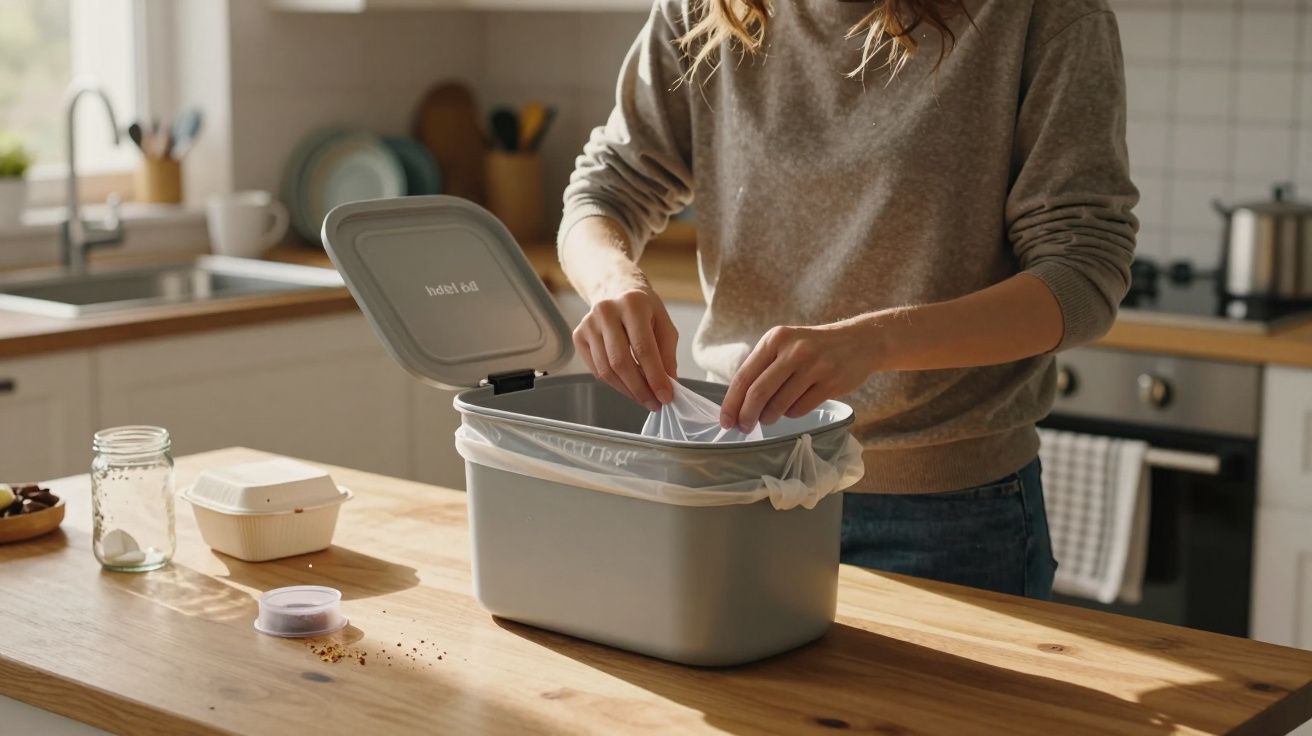
Why your bin bags keep slipping – and the one folding trick hotel staff use to stop it
You hear it before you see it.
That dull, wet thud from the kitchen, followed by a slow, defeated rustle. By the time you get there, the bin bag has collapsed into the bottom of the bin, half of last night’s dinner welded to the sides, and you’re elbow‑deep trying not to tear the plastic.
It never seems to happen when the bin is politely half full. It’s always when you’re already running late, balancing a plate in one hand and trying to do “just one quick tidy” before leaving the house.
You’re not imagining it: most supermarket bin bags are just good enough to sell, not good enough to stay put. But the people who empty dozens of bins a day in hotels, offices and hospitals rarely fight with slipping liners. They quietly use one small folding trick that locks the bag into place before the first teabag even hits the bottom.
Why your bin bags keep sliding into the abyss
If you’ve ever blamed “cheap bin bags”, you’re only half wrong. The plastic quality matters, but the design of your bin matters more.
Most modern kitchen bins are smooth plastic tubes: straight sides, rounded rim, almost nothing for a liner to grip. When you drop rubbish in, it does three unhelpful things at once:
- Pushes air down, ballooning the bag upwards.
- Drags the liner away from the sides.
- Pulls the edge of the bag inwards, centimetre by centimetre.
Add anything even slightly sticky or heavy – a curry container, a glass bottle, coffee grounds – and the bag starts to creep. You don’t see the damage straight away. You just notice the liner sitting lower each day, until that one final item tips the whole lot over.
Hotel housekeeping staff see this constantly in public bins. They also have one non‑negotiable brief: the liner must not slip. They do not have time to scrub out banana mash from the bottom of a tall stainless‑steel bin between check‑outs.
So they cheat physics a little, using the bag’s own material to create tension around the rim.
The “hotel fold”: how professionals lock a liner in 10 seconds
If you watch someone experienced line a bin, it looks casually fast. Underneath that speed is a simple pattern they repeat without thinking.
Here’s the step‑by‑step version, slowed down:
Choose a slightly bigger bag than you think you need.
The liner should overhang the rim by a good 10–15 cm all the way round, not just barely cover it. That extra plastic is your anchor.Drop the bag in and push it right into the corners.
Press the base of the liner firmly into the bottom of the bin. Squeeze out trapped air so the bag hugs the sides instead of hovering like a balloon.Gather the excess at the rim and twist once.
Standing at the “front” of the bin (the side you usually face), take the overhanging plastic at the back edge and give it a small twist, as if you’re starting to close the bag. This twist tightens the liner all the way around the inside.Fold the twisted section back over the rim.
Bend that twist down over the back of the bin like a small hook. You’ve now got the bag pulling inwards and downwards instead of just upwards.Create two small “ears” and tuck them under.
On the left and right sides, pinch a little extra plastic, pull it tight, and fold it under the rim as if you’re turning a bedsheet corner. Housekeepers sometimes call this “making bin corners”. Those ears act like wedges against slipping.
The net effect is simple: instead of the weight of your rubbish pulling the liner straight down into the bin, the folds and twist create tension points that bite into the rim. The more you fill the bag, the more firmly those tension points hold.
Nothing fancy. No gadgets. Just using excess plastic in three places – back, left, right – so gravity stops working against you.
Small adjustments that make any bin behave better
The folding trick does most of the work, but a couple of quiet tweaks make it far more reliable in a normal home.
First, match the bag to the bin properly. Those vague “30–50L” labels are optimism, not engineering. If your 40L bin routinely swallows “40L” liners whole, move up a size. In hotels, staff almost always choose one capacity larger than the bin itself. The extra costs pence, the saved mess feels priceless at 11pm.
Second, stop tying the handles tight around the rim. It seems logical, but when you cinch drawstring handles, you create one large point of pressure. As rubbish piles up, the tension concentrates on that band and the whole loop can suddenly slip in. Leaving the handles loose and relying on the fold spreads the load and hangs on longer.
Third, avoid polished‑to‑a‑shine bin rims. If you’ve scrubbed yours smooth with years of cleaning sprays, a quick wipe with a damp cloth and a touch of washing‑up liquid residue removed is enough. You want it clean, not slippery like glass.
Finally, think about where the heaviest items land. Dropping dense leftovers from a height directly against one side gives the bag a sideways yank. Sliding them gently in, or tipping the bin slightly towards you as you add them, reduces the violent pull that starts the slow slump.
“We don’t have time for drama bins,” a hotel supervisor in Birmingham told me. “If a bag slips, that’s five minutes lost. Multiply that by 40 rooms and your day is ruined. So we make it impossible for the liner to move in the first place.”
A 30‑second ritual that quietly stops gross bin moments
Soyons honnêtes : personne ne refait consciencieusement son pliage de sac poubelle à chaque vidage. Most of us are half distracted, trying to get kids to eat or a pan not to burn.
That’s why professionals turn it into a tiny ritual they can’t forget. Every new bag, same three moves:
- Press the liner flat to the bottom and sides.
- Twist the back overhang once and fold it down.
- Make two side “ears” and tuck them under the rim.
Done properly, it adds maybe 10 seconds per change. What you get back is not glamorous. No one is proud of a bin that behaves. You just stop having those quiet moments of rage when you realise the bag fell in, leaked, and you now need rubber gloves and a deep sigh.
On a busy weekday morning, the bin becomes one less thing that misbehaves. On a Sunday night when you finally tackle the kitchen, you lift out a bag that comes out cleanly instead of welding itself halfway down.
Over time, that tiny folding habit quietly changes how your whole kitchen feels. Less sticky liquid creeping into seams. Less mysterious smell you can’t quite place. Fewer annoyed texts about “who dropped tomato soup in the bin again”.
| Key point | Detail | Why it helps you |
|---|---|---|
| Use a bigger liner | Let the bag overhang the rim by 10–15 cm | Gives you enough plastic to twist, fold and anchor |
| Apply the hotel fold | Twist at the back, fold over, tuck “ears” at the sides | Creates tension that stops the bag slipping in |
| Tweak your routine | Don’t over‑tighten handles, avoid hard side‑drops | Reduces the pulls and jolts that make liners collapse |
FAQ:
- Will this work with pedal bins and swing‑top lids? Yes. The trick is done around the rim inside; as long as the lid can still close, the folds and tucks will hold the liner in place.
- Do I need special “grip” bin bags? No. Standard supermarket liners work fine if they’re slightly oversized. “Grip” designs can help, but the folding method does most of the real work.
- My bin has an inner bucket – does the trick still help? It does. Line the inner bucket using the same twist‑and‑tuck method before you drop it back into the outer shell, and the bag will be much less likely to ride down.
- What if the rim is very thin metal or oval‑shaped? You may need smaller, tighter folds, but the principle is the same: twist one section to create tension, then tuck two small ears under the rim where the liner naturally wants to slip.
- Is it worth doing this if I only fill the bin halfway? Probably. Even half‑filled bins see liners creep and leak. Once the folding habit is automatic, it takes so little time that it’s easier to do it than to think about when you “really” need it.




Comments (0)
No comments yet. Be the first to comment!
Leave a Comment