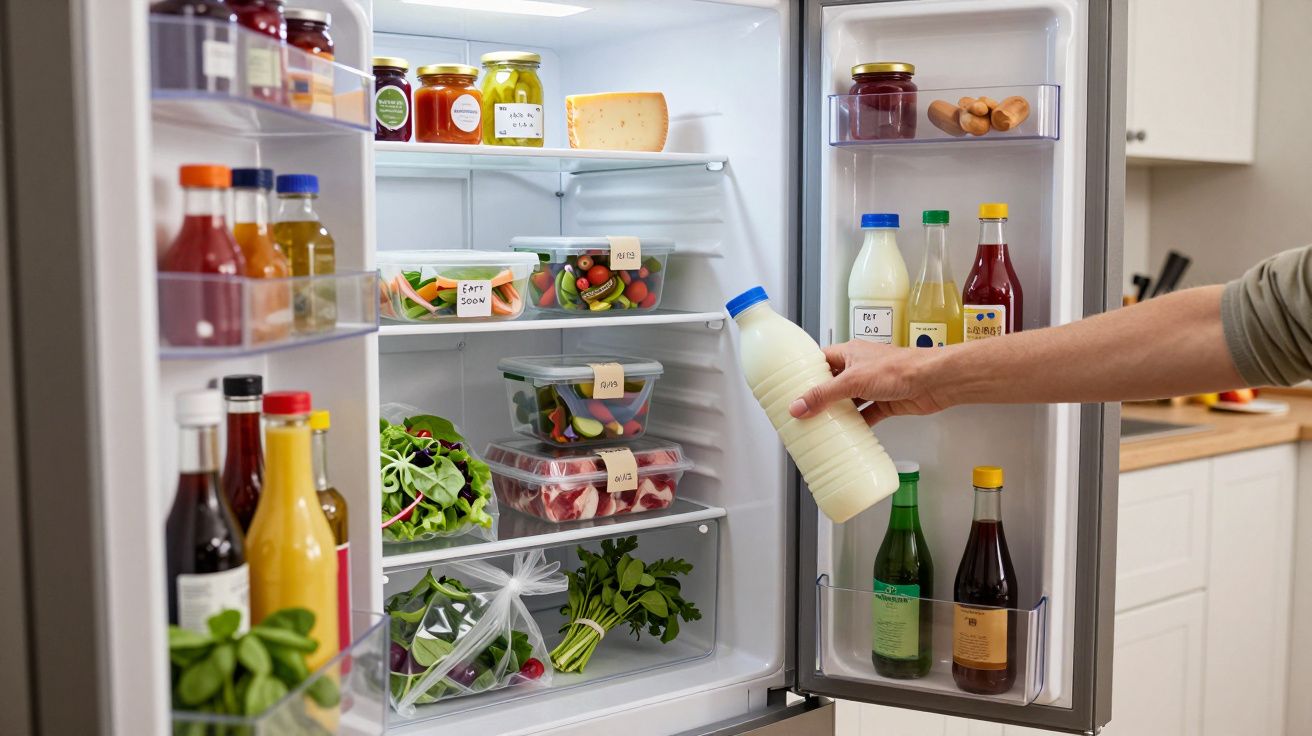
Your fridge’s top shelf is the warmest: how rearranging food cuts waste and keeps milk fresher
You open the fridge, shove the milk wherever there’s space, and shut the door with a nudge of your hip. Ten minutes later someone else does the same with leftovers and a jar of pesto. By the end of the week, there’s mystery slime in the salad drawer and milk that smells older than it is. The fridge is humming, the light is on, and yet food keeps dying on you.
A friend once pointed to my fridge and raised an eyebrow. Milk on the top shelf, yoghurt crammed behind jam, salad leaves nowhere near the crisper. He shut the door, then opened it again like a stage reveal. “You know the top’s the warmest, right?” I didn’t. I’d been giving my most fragile food the worst seat in the house.
The change started with one small swap: milk and raw meat down, condiments and cooked food up. No new appliances, no fancy organisers. Just working with the fridge that was already there. The difference showed up within a week-fewer fuzzy leftovers, calmer mornings, less suspicious sniffing.
This is really a story about invisible temperature ladders and how they quietly control what spoils first.
Why the top shelf is gently cooking your groceries
Fridges don’t chill every corner equally. Cold air sinks, doors warm up each time you open them, and many fridge designs push cool air from the back or near the top that then drops down. The result is a vertical gradient: *warmest at the top, coldest at the back of the bottom shelf and drawers*.
Manufacturers may quote 4°C, but that’s an average. In a busy family fridge you can see a swing from 0–2°C near the back of the bottom shelf to 7–8°C near the top front, especially after a cooking session when the door becomes a revolving one. That’s the difference between safe milk and iffy milk three days faster than you’d like.
Dairy, raw meat, and leftovers don’t just age with time; they age with temperature. The warmer the shelf, the faster bacteria multiply and the quicker flavours go sour or strange. It’s not that your fridge is broken. It’s that you’re storing food in the wrong part of a working machine.
Most people use whatever space is free, because the layout looks like one big neutral box. It isn’t. Once you understand the temperature pattern, the shelves start to look less like a jumble and more like zones with jobs.
The simple shelf shuffle that keeps food fresher for longer
Think of your fridge in three main zones: coldest bottom, steady middle, and forgiving top. You don’t need a thermometer to start; you need a plan.
- Bottom shelf and drawers (coldest): raw meat and fish, milk, cream, bagged salad, herbs that wilt easily.
- Middle shelves (stable): cooked leftovers, opened yoghurt, cheeses, eggs (if not kept in a cool cupboard).
- Top shelf (warmest): jams, pickles, sauces, drinks, hard cheese, food that’s already sturdy.
- Door shelves (most variable): condiments, juices, butter if you like it spreadable.
Milk jugs like the bottom shelf far more than the door. Every door opening gives a small warm hit, and that daily swing shaves days off its best taste. Raw chicken and mince deserve the lowest, coldest shelf in a tray, both for safety and to catch drips.
Leftovers sit happily on the middle shelf, where temperature is even and you’ll see them when you open the door. That visibility alone cuts waste: if you can’t see the lasagne, you’ll forget it exists. Salsas, mustards, and pickles belong up top; their salt, sugar, or acid make them robust against mild warmth.
The goal isn’t perfection; it’s to match the fussiest food with the steadiest cold and let the hardy jars take the heat.
How to rearrange your fridge in 15 minutes tonight
Treat this like a quick reset, not a spring clean. You’re aiming for “better”, not “Pinterest”.
- Empty by category, not by shelf. Take out all dairy first, then raw meat, then leftovers and snacks. This stops you putting things back where they were out of habit.
- Assign zones. Decide now: bottom left for raw meat, bottom right for milk and cream, middle for “eat soon”, top for “long keep”. Stick with that map.
- Create an “urgent” box. Use a shallow container on the middle shelf for food that needs eating in the next two days-half-avocados, open hummus, cooked rice.
- Move door milk onto a shelf. Park the bottle at the back of the bottom or middle shelf, depending on height. Door space becomes condiment lane.
- Leave breathing room. Don’t pack shelves solid; cold air needs to flow. Aim for small gaps between containers rather than a single dense wall.
You don’t need matching tubs, just lids that seal and labels you can read in dim light. A strip of masking tape and a date written in pen turns “random box” into “eat this by Thursday”.
The first shop after your reset will feel odd. You’ll pause before putting something away, then remember the zone. That pause is the new habit forming.
The quiet savings: fewer bin trips, calmer breakfasts
Food waste rarely feels dramatic. It’s the half-tub of cottage cheese, the grey herbs, the pot of soup you meant to eat. Rearranging the fridge chips away at that slow, expensive drip.
Milk that last three days longer means one fewer emergency dash to the corner shop. Raw meat stored where it’s genuinely cold cuts the risk of having to throw it out because you’re not quite sure if it’s safe. Leftovers you can see turn into tomorrow’s lunch rather than a science experiment.
There’s an emotional shift, too. A tidy, zoned fridge takes decisions off your plate when you’re tired. You open the door and the layout tells you what to reach for: the “urgent” box for tonight, the bottom shelf for breakfast, the top shelf when you’re hunting for a sauce. *You’re not just chilling food; you’re cooling chaos.*
You also buy less. A quick glance shows you how much yoghurt is left, what veg is waiting, and whether you really need more cheese. That quiet feedback loop trims duplicate purchases without any spreadsheet in sight.
A fast reference map for your next shop
Use this as a cheat sheet until the zones feel obvious.
| Zone | What belongs there | Why it works |
|---|---|---|
| Bottom shelf & drawers | Raw meat/fish, milk, cream, salad leaves, soft herbs | Coldest, most stable, best for high‑risk and quick‑wilt foods |
| Middle shelves | Leftovers, opened yoghurt, blocks of cheese, ready‑to‑eat meals | Even temperature, easy to see and use up |
| Top shelf & door | Jams, pickles, sauces, drinks, butter, hard cheese | Warmest spots, fine for sturdy, salty, or acidic foods |
FAQ:
- Is the top shelf always the warmest in every fridge? In most upright fridges, yes: warm air rises, cold air sinks, and door openings heat the upper area more. There are exceptions with special airflow designs, but as a rule, treat the top as the gentlest chill.
- Can I keep eggs in the door rack? You can, but the temperature there swings the most. If you bake or care about shelf life, keep eggs in their carton on a middle shelf instead.
- Do I really need a thermometer? It helps but isn’t essential. If you want to be precise, place one in a glass of water on the middle shelf and aim for about 4°C. Then adjust shelves around that.
- What about fruit and veg that don’t like the fridge? Tomatoes, whole onions, and bananas prefer room temperature. Use the salad drawer mainly for leafy greens, herbs, carrots, and cut veg.
- How often should I reset the fridge layout? Once you’ve zoned it, only tweak when your household changes-new baby, more batch cooking, or different diet. A quick five‑minute tidy each week is usually enough to keep the system working.
Comments (0)
No comments yet. Be the first to comment!
Leave a Comment